Posts

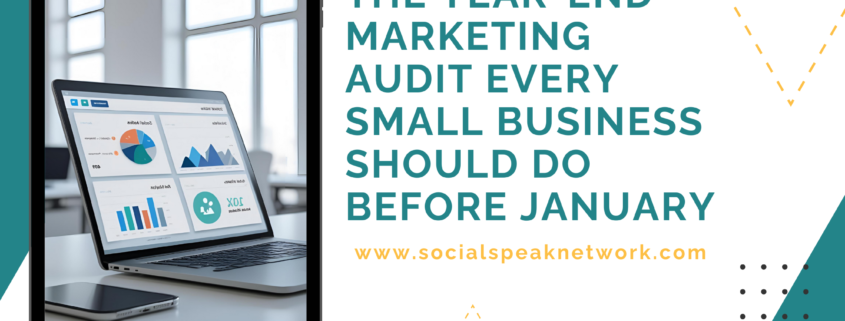
The Year-End Marketing Audit Every Small Business Should Do Before January

Every January, small business owners set big goals. More leads. Better visibility. Higher sales. Stronger online presence.

The problem: Most businesses start the new year without a clear understanding of what actually worked the previous year.

Instead of reviewing data and performance, many jump straight into action. They post more often. They try new platforms. They invest in new tools or run new ads, hoping this will bring better results. 

Without examining the data, businesses often recycle the same strategies that underperformed, waste time on platforms that didn’t convert, and overlook the tactics that did move the needle. This is how marketing becomes overwhelming, expensive, and frustrating.

A year-end marketing audit changes that.  It allows you to plan from a place of confidence instead of urgency. You enter the new year knowing what deserves your time and budget, rather than scrambling to figure it out.

What a Year-End Marketing Audit Really Is (and What It’s Not)

A marketing audit is simply a structured review of your efforts and outcomes. It helps you answer a few critical questions:

  • What worked? 
  • What didn’t work? 
  • What deserves more attention next year?

An audit is NOT about reviewing every single metric available or criticizing the decisions you made this year. Rather, it’s about helping you identify patterns in performance, engagement, and customer response so you can focus your energy where it matters most.

Think of it as a reset button. Instead of carrying every unfinished idea or underperforming tactic into the new year, you walk into January knowing exactly what to keep, what to refine, and what to let go.

Why Doing a Marketing Audit Before January Gives You an Advantage

Timing matters more than most business owners realize. By the time January arrives, many businesses feel pressure to act fast, set goals quickly, and “hit the ground running.” 

New year. New goals. New expectations. That urgency often leads to rushed decisions. 

Conducting a marketing audit at the end of the year removes that pressure. It allows you to invest energy where it counts, avoid repeating mistakes, and build strategies based on evidence rather than assumptions. And that shift alone can change how the entire year unfolds.


What to Review in Your Year-End Marketing Audit (and Why It Matters)

Conducting an audit doesn’t mean you have to review everything all at once. Some metrics matter far more than others, especially for small businesses with limited time and resources.

Your Website Performance

Your website is the foundation of your marketing. Every social post, ad, email, or search result ultimately leads people there. That’s why it should be the first thing you review.

Look at how much traffic your website received this year and where that traffic came from. Did visitors come from social media, Google search, paid ads, or email? More importantly, what happened after they landed on your site?

If people landed on your site but didn’t take action, it could mean your messaging wasn’t clear, your offer wasn’t compelling enough, or your site wasn’t optimized for conversion. A marketing audit helps you spot these gaps before investing more traffic into the same pages next year.

Social Media Performance

One of the biggest mistakes businesses make is judging social media success based on likes or follower count.

Here are some things you need to take note of:

  • Which posts sparked real engagement?
  • Which content formats consistently performed better?
  • Which platforms actually led to inquiries, bookings, or sales?

An audit helps you identify the type of content or topics that resonate with your audience, allowing you to focus on those. 

Your Email Marketing Results

Email is often overlooked, yet it consistently delivers one of the highest returns in digital marketing.

Review open rates, click-through rates, and which emails led to replies or sales. Also, take a look at your educational or value-driven emails. These often build trust that leads to future conversions, even if they don’t generate immediate sales.

What to Stop Doing Next Year (This Is Where Most Growth Happens)

Growth doesn’t always come from doing more. Often, it comes from letting go of what isn’t working.

Stop Spreading Yourself Too Thin

Many businesses try to be everywhere: every platform, every trend, every content format. The result is burnout and diluted messaging.

Your audit will likely show that only one or two platforms consistently produced results. Focusing your energy on where your audience already engages allows you to create better content with less stress.

Stop Chasing Vanity Metrics

Likes, views, and followers look good, but they don’t always translate into business growth.

If a post went viral but didn’t lead to inquiries, clicks, or engagement with your brand, it’s not necessarily a win. A year-end audit helps you separate attention from impact and refocus on metrics that actually support your business goals.

Stop Repeating Campaigns That Didn’t Convert

Many businesses repeat promotions, offers, or content types simply because they’re familiar.

Your audit gives you permission to stop. If a campaign doesn’t perform well, it doesn’t mean you’ve failed… It taught you a lesson. Carrying that insight into the new year prevents wasted time and budget.

What to Double Down On Next Year

Once you’ve identified what worked and what didn’t, the next step becomes clear: reinforce what’s already effective. This is where a marketing audit becomes a growth tool. 

Double Down on Proven Content Themes

Look for recurring themes in your top-performing content. These are the topics that consistently resonate with your audience. Rather than reinventing the wheel, refine what already works. 

Strengthen High-Performing Channels

If one platform consistently drives traffic or leads, it deserves more attention in the coming year. That might mean posting more strategically, experimenting with new formats, or supporting organic content with paid promotion.

Focusing on fewer channels, but doing them well, often leads to better results than trying to be everywhere.

Build on Momentum, Not Guesswork

A year-end audit removes guesswork from your planning. You’re no longer relying on trends or assumptions. You’re building on real data, real behavior, and real results.

That confidence carries into the new year. You know what to prioritize, what to improve, and where to invest your time and budget for the biggest return.

A Smarter Year Starts With Clarity

The most successful businesses don’t wait for the new year to “start fresh.” They pause, review, and make intentional decisions based on what actually happened, rather than what they had hoped would happen.

A year-end marketing audit gives you clarity. It shows you where your efforts paid off, where time and budget were wasted, and what deserves your attention moving forward. I

The businesses that grow faster next year won’t be the ones doing more. They’ll be the ones doing less of what doesn’t work and more of what already does.

If you’d like help reviewing your marketing performance and building a smarter, more focused strategy for the year ahead, we’re here to help.

Schedule a free consultation, and let’s create a marketing plan that works for your business, not just in January, but all year long.
The Year-End Marketing Audit Every Small Business Should Do Before January

The Year-End Marketing Audit Every Small Business Should Do Before January

The Year-End Marketing Audit Every Small Business Should Do Before January

Why Engagement Matters More Than Follower Count

“10,000 followers. Zero sales.”

It’s a familiar story. And if you’ve ever looked at a competitor’s massive following and wondered, “How are they getting clients?” you’re not alone.

Many small business owners work hard to grow their social media followers, thinking it’s the key to success. But here’s the truth: follower count is just a number. It may look impressive, but if no one’s liking, commenting, clicking, or buying? That big number isn’t doing much for your business.

What moves the needle? Engagement.

In this article, we’ll discuss why engagement matters more than your follower count and how you can start focusing on what truly grows your business online.

Follower Count vs. Engagement: What’s the Real Difference?

Let’s start with a quick breakdown:

  • Follower Count is the number of people who have hit the “Follow” button on your account.
  • Engagement includes likes, comments, shares, saves, clicks, direct messages (DMs), and replies to your content.

Here’s the key thing to remember: 

  • Follower count measures reach. 
  • Engagement measures relationships.

One is a vanity metric. The other is a value metric.

You can have 5,000 followers and barely get a like on your posts. Or you can have 500 followers who consistently interact, comment, ask questions, and click your links. 

Why Engagement Matters More

1. The Algorithm Rewards Interaction

Social platforms like Instagram, Facebook, and LinkedIn use engagement to decide what content gets seen.

If people like, comment, or share your post, the algorithm says, “This is valuable. Let’s show it to more people.”

That means higher engagement = more visibility without spending a dime on ads.

2. Engagement Builds Trust

Trust isn’t built with a single post. It’s built over time through repeated, meaningful interactions.

When people see you show up regularly, answer questions, reply to comments, and genuinely offer value, they begin to trust your brand. And trust is what leads to action.

  1. Engagement Drives Sales

People don’t buy because you have a big following. They buy because you’ve built a relationship with them.

A thoughtful comment or a helpful post can turn into a DM. That DM can turn into a consultation, a booking, or a sale. Engagement is what opens the door.

  1. Engagement Gives You Insights

Engagement is like real-time market research.

It helps you understand:

  • Which posts spark conversation
  • Which ones get ignored
  • Which topics lead to website clicks or replies

Your audience is telling you what they care about if you’re paying attention.

How a Small, Engaged Audience Can Outperform a Massive One

You don’t need to go viral to get results.

Let’s say you have 1,000 followers. If 10% regularly engage with your content, that’s 100 people who are listening, learning, and potentially buying. That’s powerful.

Now, compare that to an account with 10,000 followers, but only 0.5% engagement. That’s just 50 people interacting. It’s half the engagement with ten times the audience.

It’s not about how many people follow you. It’s about who’s actually paying attention and cares about what you do. 

How to Improve Engagement (Without Being Online 24/7)

Worried you don’t have the time to “engage all day”? Good news: you don’t need to.

Here are five expert-backed tips to improve your engagement strategically:

1. Create Content Your Audience Cares About

Skip the generic quotes. Focus on your audience’s questions, challenges, and goals. Helpful tips, how-to guides, and behind-the-scenes content work well. Build your content around that.

Quick Tip: Use the “you” test. If your post focuses more on your audience than your business, you’re on the right track.

2. Post Consistently (Not Constantly)

You don’t need to post every day. Even 2–3 well-crafted posts per week can keep your brand top of mind. Set a schedule you can stick to. 

3. Ask Questions and Start Conversations

People love sharing their opinions. So instead of just posting about your business or sharing tips, ask them to join the conversation. Use polls, “this or that” posts, or simply ask your audience to weigh in.

4. Be Human, Not Just a Brand

Show your face. Share a behind-the-scenes look. Tell your story.

People connect with people, not perfect brands. And when your content feels more personal, your engagement will naturally increase.

5. Track What’s Working

Look at your analytics. Which posts got the most likes, comments, saves, or clicks?

Keep a list of top-performing posts, and use that data to guide future content.

Don’t Chase Numbers, Build Relationships

A huge follower count might look good on paper, but they don’t pay the bills.

Engagement is what turns followers into fans, and fans into paying customers. So the next time you feel discouraged by slow follower growth, shift your focus. 

Remember, you don’t need tens of thousands of followers to grow your business. You need a loyal, engaged audience that trusts you and wants what you offer.

At Social Speak Network, we help small business owners create meaningful content that drives engagement, builds community, and supports their bottom line.

Book a free consultation and let’s build a smarter strategy that works for your business. Let’s turn those likes into leads and those followers into fans.

Why Engagement Matters More Than Follower Count

Why Engagement Matters More Than Follower CountWhy Engagement Matters More Than Follower Count

45 Social Media Questions That Will Get Your Audience Talking

Social media is an excellent platform for promoting your business and reaching your audience.

With billions of users logging in on their accounts almost every day, there is no doubt that social media can help you grow and scale your brand over time.

But the truth is that having an audience isn’t enough. If you want to grow a fanbase, you need to interact with your audience and keep them engaged. One of the best ways to get the conversation started is by asking questions.

Asking questions will not only help you genuinely connect with your audience, but it can also help you improve your organic reach.

But before we give you a list of social media questions, here are some tips to further pump up your engagement when asking questions.

Ask questions that are easy to answer

This is supposed to be a fun activity, so don’t let your audience think too hard. The easier it is for your audience to answer the questions, the more likely will they participate.

While some may not always engage, but fun and easy questions may encourage people to stop and be interested enough to read the comments.

Make use of visuals  

Studies suggest that social media posts with images get 2.3 times more engagement than those without. So if you want to grab people’s attention, we highly suggest that you include a visually appealing image with it. But make sure that it is relevant to your content.

Post when your audience are most active

Just like any other social media content, you want to post the questions when your audience are actively engaging on the platform. Keep in mind, though, that the best time varies from platform to platform. So be sure to do some research.

Choose relevant and on-trend topics

If you’re struggling to find questions to ask your audience, just hop on to Google and do some research. There are also lots of tools available that can help you find trending topics in your industry.

Questions to ask on social media

Just for fun questions

Social media is a great place to ask just for fun question. The answers people give you aren’t really important. What matter most is that you’re

  1. If you were planning a dream vacation where would you be going?
  2. What movie would be the most fun to live in?
  3. If you got offered a reset button for your life would you push it?
  4. What movie have you watched more than five times?
  5. If you could only have one snack for the rest of your life what would you pick?
  6. If you were stuck on a deserted island, what three items would you bring?
  7. What job would your pet have it was human?
  8. What would the title of your autobiography be?.
  9. What weird talent do you possess?
  10. What shows are you binging on Netflix right now?

Business-specific questions

Asking business-related questions is not only a great way to engage your customers, but also helps you get insights from your customers. 

  1. If we gave you $100 to spend in our shop, which products or services would you stock up on?
  2. Which do you prefer, [product A] or [product B]?
  3. What kind of [industry] content would you like to learn about?
  4. Do you prefer podcasts, videos, or blog posts?
  5. What’s the #1 thing you struggle with when it comes to [industry]?
  6. What’s one product/service you’d like us to start offering?
  7. What deal would you prefer to get? 15% off or free shipping?
  8. What’s the #1 thing you look for in a [your product or service]?
  9. Would you be sad if we discontinued [product]?
  10. What questions do you have about [product-related topic]?

Food-related questions

People love food. In fact, most people enjoy taking a snap of their food and posting them on social media. Asking food-related question will surely get them talking.

  1. What’s your favorite food?
  2. What’s your specialty dish?
  3. If you could only eat at one fast-food restaurant for the rest of your life, which one would it be?
  4. If you could cook with any celebrity chef, who would it be?
  5. What’s your favorite healthy snack/food?
  6. What’s the most adventurous meal you’ve ever eaten?
  7. What’s the best meal you’ve ever eaten?
  8. If you could only eat one meal for the rest of your life, what would it be?
  9. If you could buy any type of food right now, what would you buy?
  10. What was your favorite food as a kid?

Gratitude-related or motivation questions

More and more people are being drawn to the idea on reflecting on their lives. As such, people are more open to talking about what motivates them, what they’re grateful for, and other positive thoughts. Asking these types of questions are sure to boost your social media engagement.

  1. What’s one thoughtful thing someone did for you recently?
  2. What are you grateful for today?
  3. What’s a difficult lesson that you were grateful to learn?
  4. What’s the nicest thing someone has ever done for you? (Tag that person)
  5. Who is someone that really listens when you talk? (Tag them below)
  6. What was the last thing you got really excited about?
  7. What’s one thing you hope to accomplish this week?
  8. What’s your #1 goal for this year?
  9. What kinds of things motivate you in life?
  10. When was the last time you felt truly motivated

Would you rather questions

Would you rather questions are fun. They’re great for long road trips and are equally as good on social media. You can post them as regular content or post them as stories to drive engagement.

  1. Would you rather be unable to use search engines or unable to use social media?
  2. Would you rather live alone in a beautiful countryside or work hard and live in the city around the people you love?
  3. Would you rather receive a free world tour opportunity or never have to pay for food at restaurants?
  4. Would you rather know all of someone’s darkest secrets or have the ability to read minds
  5. Would you rather travel to the past or travel to the future

45 Social Media Questions That Will Get Your Audience Talking

45 Social Media Questions That Will Get Your Audience Talking45 Social Media Questions That Will Get Your Audience Talking


6 Social Media Content Ideas to Increase Engagement

Social media remains to be one of the best ways to reach out and engage with your audience. You already know who your target market is and social media platform they’re using. Now, you just have to come up with interesting posts that can get their attention and join on the conversation.

Here are 6 social media content ideas for boosting engagement on your social media pages.

Video content

People love video content. In fact, videos get more shares than photos or plain text contents. It’s no surprise why Tiktok rose to popularity over the last few year.

Go ahead and try to be as creative as you can with your videos. You can share behind the scenes videos, do a product demo, create how-to videos, or host an AMA. The possibilities are endless.

Ask questions

Questions are a fun way to get to know your followers. Plus, it gives you a better understanding of what they want.

You can ask random questions about your industry just to get the conversation started. Or you can ask for your audience’s opinions about your products or services.

While asking questions is a powerful strategy, be sure to use it sparingly.

Fill-in-the-blanks

Fill-in-the-blanks posts is another fun way to get comments and responses from your audience.

Get creative with it, and see what you can come up with. Make sure, thought, that it’s something easy to answer. You can ask about random stuff or get people talking about your brand.

Here’s an example:

Fill in the blank: My favorite thing about [BRAND] is ________.

Trending topics

One of the easiest ways to boost your engagement rate is to post about trending topics. People are already talking about it, so try to join in on the conversation. While this can be a great strategy, be sure to only post about topics that are relevant to your niche.

Tease a new product

Everyone loves being the first to see new products. If you’re planning to launch a new product, try to consistently give your audience sneak peek of the product. Not only can it help generate buzz around the launch, but it also helps boost engagement.

Challenges

People love a challenge, especially when everyone else is doing it. Today, more and more brands are using challenges to engage with their audience and further grow their community.

Challenge your audience to do things, but make sure it runs for a short period only. 5 to 7-day challenges are ideal. Also, make sure that the challenge is easy enough for participants to complete. After all, the goal is to help them gain quick wins.

Final thoughts

Social media marketing can be challenging. It takes time. It requires a lot of effort. But once you find what works best for your audience, you’ll be able to grow your fanbase and build a relationship with them.

If you need help writing social media posts that will capture the attention of your target audience and boost your engagement rate, we’re here to help. Schedule a free 30-minute call with us and we’ll help you fill your social media content calendar with quality posts.

6 Social Media Content Ideas to Increase Engagement

6 Social Media Content Ideas to Increase Engagement6 Social Media Content Ideas to Increase Engagement

The beauty of social media is that it is not just another advertising platform.  Social media does not have to be limited, and this is something to take advantage of. Abandon your campaign-focused mindset and adopt a strategic one. Your mindset should treat social media as an opportunity to connect, engage with, and learn form your consumers in an uninhibited space. Social media is generally not limited by budget – this is huge. This means that your advertising activity is not restricted to a few campaigns per year. Companies tend to conduct two to three campaigns on social media per year. It is important to place equal focus on your social media activity the rest of the time, your strategy.

Responding to your audience will better your  social media strategy. Social media allows you to talk directly to your customers, capitalize on that. This is invaluable feedback that you cannot get as easily or as quickly with other advertising platforms. Get to know your customers by using social media as a resource. You have easy access to what pages they are “Liking” on Facebook and who they are following on Twitter. Use this information to find out what matters to your customers. By gathering this insight, you can more effectively engage. Once you have this insight and customer data, use social media to drive action for your business. Develop your online presence by improving your strategy. Keep it relevant to your company, and engage with your audience.

Social media is generally not limited by budget – this is huge. The beauty of social media is that it is not just another advertising platform. This means that your advertising activity is not restricted to a few campaigns per year. Companies tend to conduct two to three campaigns on social media per year. It is important to place equal focus on your social media activity the rest of the time. Social media does not have to be limited, and this is something to take advantage of. Abandon your campaign-focused mindset and adopt a strategic one. Your mindset should treat social media as an opportunity to connect, engage with, and learn form your consumers in an uninhibited space.


Social media allows you to talk directly to them, capitalize on that. To better your social strategy, respond to your audience. . This is invaluable feedback that you cannot get as easily or as quickly with other advertising platforms. Get to know your customers by using social media as a resource. You have easy access to what pages they are “Liking” on Facebook and who they are following on Twitter. Use this information to find out what matters to your customers. By gathering this insight, you can more effectively engage. Once you have this insight and customer data, use social media to drive action for your business. Keep in mind that being personal and active on social media can go along way. Your online presence can do wonders for your company if you are sure to use it the right way.