
Posts

Why Consistent Marketing Matters More Than Occasional Big Campaigns

For many small businesses, marketing happens in bursts. There may be a major push when launching a new service, promoting a seasonal offer, or when sales slow down. Then, once things get busy again, marketing efforts often fade into the background.

This pattern can feel productive in the moment, especially when a campaign generates an increase in inquiries or sales. However, relying on occasional big promotions rarely leads to steady, long-term growth.

Businesses that grow consistently tend to follow a different approach. Instead of marketing only when they need immediate results, they maintain a regular presence that keeps them visible, builds trust, and attracts opportunities over time.

Let’s explore why consistent marketing is more effective than sporadic campaigns, and how small businesses can make it sustainable.


Why Occasional Big Campaigns Don’t Deliver Long-Term Results

People Forget About Your Business Quickly

Today’s consumers are exposed to countless pieces of content every day. Social feeds refresh constantly, inboxes fill up, and new competitors appear regularly. In this environment, attention is short-lived.

If you only publish content occasionally, potential customers may forget you exist. Even people who were interested at one point can move on to another provider who appears more visible and active.

When a need finally arises, customers usually choose the business they remember first, not necessarily the one that promoted itself months ago.

Trust Takes Repetition, Not One-Time Exposure

Most purchasing decisions involve some level of risk, especially when hiring a service provider or making a significant purchase. Before committing, people want reassurance that they are making a good choice.

Trust is rarely built through a single advertisement or announcement. It develops gradually through repeated exposure to helpful, credible information.

Seeing a business consistently share insights, updates, or useful resources signals stability and reliability. Over time, this familiarity reduces hesitation and makes customers more comfortable reaching out.

Inconsistent Marketing Creates Unpredictable Sales

Short-term campaigns often produce spikes in activity followed by long, quiet periods. While those peaks can feel encouraging, they do not create a stable pipeline of opportunities.

This unpredictability makes planning difficult. Staffing, inventory, and financial decisions become reactive instead of strategic. Business owners may find themselves alternating between being overwhelmed during busy periods and anxious during slow ones.

Consistent marketing helps smooth out these extremes by generating a steadier flow of interest.


What Consistent Marketing Actually Does for Your Business

Keeps You Visible to Potential Customers

Not everyone who sees your business today needs your services right away. Many people research options long before making a decision, while others may not have an immediate need at all.

Regular communication ensures that your business remains visible when the timing is right. It also allows new audiences to discover you continuously, rather than only during promotional bursts.

Being present consistently increases the likelihood that potential customers will think of you first when they are ready to act.

Builds Credibility and Authority

Businesses that communicate regularly appear more established and professional. Sharing helpful information, answering common questions, or showcasing your expertise demonstrates that you understand your field and care about your customers.

Over time, this positions your business as a trusted resource rather than just another option.

Authority is especially important for small businesses competing with larger companies. While big brands may have name recognition, smaller businesses can build strong reputations through consistent, meaningful engagement.

Generates Steady Leads Instead of Sudden Spikes

Consistent marketing doesn’t usually produce dramatic overnight results, but it creates something far more valuable: reliability.

When your business maintains visibility, trust, and accessibility, inquiries tend to arrive more regularly. This steady flow of opportunities makes it easier to plan, forecast, and grow with confidence.

Rather than scrambling to fill gaps between campaigns, you develop a system that supports ongoing demand.


What “Consistent Marketing” Really Means (And What It Doesn’t)

For many business owners, the idea of consistent marketing can feel overwhelming. Some assume it requires posting every day, producing large amounts of content, or constantly launching new campaigns.

It Doesn’t Mean Marketing Every Day

Trying to maintain an unrealistic marketing schedule often leads to frustration and burnout. When expectations are too high, businesses may start strong but quickly lose momentum.

Effective marketing should be sustainable. For many small businesses, posting on social media a few times per week, publishing occasional blog articles, or sending a monthly email newsletter can already create meaningful results.

It Means Showing Up Regularly

Consistency means maintaining a reliable presence. Whether it’s weekly updates, monthly blog posts, or periodic newsletters, the key is to create a schedule you can stick to over time.

When your audience sees that your business communicates regularly and reliably, it strengthens the perception that your brand is active, engaged, and dependable.


Simple Ways Small Businesses Can Stay Consistent

Maintaining consistent marketing doesn’t require a large team or a significant time investment. A few practical strategies can make the process much easier.

Create a Simple Marketing Plan

A basic marketing plan or content calendar helps remove the guesswork from your marketing efforts.

Instead of deciding what to post at the last minute, you can outline topics in advance and schedule content over time. This approach reduces stress while helping ensure your business maintains a steady presence.

Repurpose Content

One piece of content can often be used in multiple ways. For example, a blog article can be shared on social media, turned into several smaller posts, or included in an email newsletter.

Repurposing content allows you to stay visible without constantly creating new material from scratch.

Use Tools and Automation

Many digital tools make it easier to maintain consistent marketing. Social media scheduling platforms allow posts to be prepared in advance. Email marketing systems automate communication with subscribers. Websites and blog content continue attracting visitors long after they’re published.

These tools help marketing continue working in the background while you focus on running your business.


Sustainable Growth Comes From Showing Up Regularly

Small business owners already juggle countless responsibilities. Marketing should not feel like a constant emergency that demands attention only when sales decline.

By establishing a steady approach, marketing becomes part of your regular operations rather than a reactive task. Over time, this reduces stress and helps create more predictable growth.

Consistency also strengthens relationships with existing customers, encouraging repeat business and referrals, both of which are essential for long-term success.

If you’d like help creating a marketing strategy that supports steady business growth, schedule a free consultation with us. We’ll help you build a plan that keeps your business visible, credible, and connected with the customers you want to reach.


 

How to Turn Your Website Into a 24/7 Sales Tool for Your Business

For many small businesses, a website is simply a place to display information. It lists services, includes a few photos, and provides contact details so people can reach out.

But a well-designed website can do much more than that.

When built strategically, your website can attract visitors, answer their questions, build trust, and guide them toward becoming customers… all without you having to lift a finger. In other words, it can become a powerful sales tool that works for your business around the clock.

The difference between a website that simply exists and one that drives real business growth often comes down to a few key elements. When these pieces work together, your website stops being just an online brochure and starts becoming an active part of your marketing and sales process.

Let’s explore how you can make your website work harder for your business.

Start With Clear Messaging

When someone visits your website, you only have a few seconds to capture their attention. Most visitors scan quickly and decide almost immediately whether your business is relevant to them.

That’s why clear messaging is essential.

Many websites rely on vague statements like “high-quality service” or “solutions tailored to your needs.” While these phrases sound professional, they don’t clearly communicate what the business actually does or who it helps.

Instead, your homepage should quickly answer three questions for your visitors:

  • What do you offer?
  • Who is it for?
  • How does it help them?

For example, instead of using generic phrases, focus on outcomes and benefits. Explain how your product or service improves the customer’s situation. When visitors immediately understand the value you provide, they’re far more likely to stay on your website and explore further.

Clarity builds confidence, and confidence keeps people engaged.

Make It Easy for Visitors to Take the Next Step

Once visitors understand what your business offers, the next step is guiding them toward action.

Unfortunately, many websites make this difficult. Contact information might be buried in a menu, forms may ask for too much information, or the next step isn’t clearly explained.

Your website should make it obvious what visitors should do next.

This is where a clear call-to-action (CTA) becomes important. A call-to-action is simply an instruction that encourages visitors to take a specific step, such as:

  • Book a consultation

  • Request a quote

  • Schedule a call

  • Contact us

These prompts should appear throughout your website, especially on key pages such as your homepage, service pages, and blog posts. The easier it is for someone to take action, the more likely they are to do so.

Even small improvements like simplifying a form or adding a clear button can significantly increase the number of inquiries your website generates.

Build Trust Before Asking for the Sale

Most people don’t make purchasing decisions immediately. Before they commit to working with a business, they want to feel confident they’re making the right choice.

That’s why trust plays such an important role in turning website visitors into customers.

Your website should provide proof that your business delivers results and provides value. This reassurance can come in many forms.

Customer testimonials and reviews are among the most powerful trust signals. When potential customers see that others have had positive experiences, it reduces hesitation and builds confidence.

Case studies and before-and-after examples can also be highly effective, especially for service-based businesses. They show not only what you do, but the results your clients achieve.

Even small details like including real photos of your team, highlighting years of experience, or showcasing certifications—can help visitors feel more comfortable choosing your business.

The goal is simple: help visitors feel confident that you can deliver what you promise.

Use Your Website to Educate and Help Your Audience

While many websites focus only on promoting services, the most effective ones also provide helpful information.

Educational content allows your business to answer common questions, address concerns, and demonstrate expertise before a customer even contacts you.

This is where blog posts, FAQs, and resource pages become valuable.

For example, if you run a service-based business, you likely hear the same questions from customers repeatedly. Turning those questions into helpful content not only saves you time but also helps potential customers find answers when they search online.

When visitors see that your website offers helpful insights rather than just sales messages, it positions your business as a trusted authority. Over time, this trust makes it easier for people to choose you when they’re ready to make a decision.

Helping first often leads to selling later.

Make Sure Your Website Works Well on Mobile

Today, most people browse the internet on their phones. That means your website must be easy to navigate on smaller screens.

If visitors have to zoom in to read text, struggle to click buttons, or wait for pages to load, they’re likely to leave quickly.

A mobile-friendly website should have:

  • Fast loading pages

  • Clear navigation

  • Readable text without zooming

  • Buttons that are easy to tap

Speed also plays a role in the overall experience. Even a delay of a few seconds can cause visitors to abandon a page before they fully explore what your business offers.

Ensuring your website performs well on mobile devices not only improves user experience but also helps your site rank better in search engines.

Turn Your Website Into a Lead Generation System

When the elements we’ve discussed work together, your website becomes much more than a place to display information.

  • Clear messaging helps visitors quickly understand your value.
  • Call-to-actions guide them toward the next step. 
  • Trust signals reduce hesitation.
  • Helpful content builds credibility.
  • Mobile optimization ensures a smooth experience.

Together, these elements transform your website into a system that consistently attracts visitors, builds trust, and generates new opportunities for your business.

Instead of relying solely on manual outreach or social media activity, your website begins supporting your growth in the background.

Let Your Website Work While You Focus on Your Business

Your website has the potential to become one of your business’s most valuable assets. When designed with strategy in mind, it can attract potential customers, answer their questions, and guide them toward working with you, even outside of business hours.

The key is making sure your website does more than just exist. It should communicate clearly, build trust, and encourage visitors to take action.

If you’d like help improving your website to attract the right visitors and convert them into leads, schedule a free consultation with us. We’ll help you create a website that not only looks good but also works as a powerful tool for growing your business.


Why Your Marketing Isn’t Working: 3 Common Gaps Small Businesses Must Fix

If you’re a small business owner who’s been “doing marketing” but not seeing real results, you’re not alone.

You post on social media when you can.

You’ve tried boosting a post or running an ad.

You follow advice from blogs, videos, and other businesses in your industry.

Yet somehow, the leads are inconsistent. Engagement feels hit or miss. And you’re left wondering whether marketing even works for businesses like yours.

Here’s the truth most people won’t tell you: When marketing isn’t working, it’s rarely because of the platform, the algorithm, or even your budget. More often, it’s because of gaps in the foundation.

Most small businesses struggle with the same three marketing gaps. They’re easy to miss, especially when you’re busy running the business, but they quietly hold everything back. 

Let’s look at the three most common ones, and how to fix them so your marketing actually supports your business.


Gap #1: No Clear Strategy (Posting Without a Purpose)

One of the most common reasons marketing fails is the lack of a clear strategy. This doesn’t mean business owners aren’t trying. In fact, many are doing too much, like posting across multiple platforms, experimenting with trends, running ads, and sharing updates whenever inspiration strikes. The problem is that none of it is tied together.

When there’s no strategy, marketing becomes reactive. You post because you feel like you should. You run ads because sales are slow. You jump on trends because everyone else is doing it.

The result: content that feels scattered and hard to follow.

From a customer’s point of view, this is confusing. They don’t clearly understand what you offer, who it’s for, or why they should choose you. From your point of view, it feels exhausting. You’re busy, but you’re not moving closer to your goals.

A strong strategy doesn’t have to be complicated. At its core, it answers three simple questions:

  • Who are you trying to reach?
  • What action do you want them to take?
  • What message will move them toward that action?

When those answers are clear, marketing becomes easier. Every post, campaign, or ad has a reason to exist. You stop throwing content into the void and start building momentum instead.


Gap #2: Talking About Your Business Instead of Your Customer

Another reason why marketing falls flat is messaging that’s heavily focused on the business rather than the customer.

It’s understandable. You’re proud of what you offer. You want people to know your services, your features, and your experience. But here’s the hard truth: customers don’t wake up thinking about your business. They’re thinking about their problems.

When your marketing is filled with messages like “We offer,” “We specialize in,” or “We’ve been in business for X years,” it puts the spotlight in the wrong place. While credibility matters, connection matters more.

People engage with content that makes them feel seen and understood. They respond to messaging that reflects their frustrations, goals, and everyday challenges. If your marketing doesn’t speak to those things, it gets ignored, even if your service is excellent.

The businesses that stand out flip the script. They talk about outcomes instead of features. They answer questions their customers are already asking. They show empathy before they try to sell.

When your audience feels like you “get” them, trust builds naturally. And trust is what turns attention into action.


Gap #3: Inconsistent Visibility (Showing Up Only When You Have Time)

Consistency is one of the least glamorous parts of marketing, but it’s one of the most important.

Many small businesses post in bursts. They show up consistently for a week or two, then disappear when things get busy. Marketing becomes something they restart over and over again, instead of something that compounds.

From the audience’s perspective, this inconsistency creates distance. Familiarity drives trust, and trust drives sales. If people don’t see you often enough, they forget you. And when they’re ready to buy, they choose the business that stayed visible.

The goal isn’t to post every day or be everywhere at once. The goal is reliability.

Two or three well-planned posts per week, published consistently, will outperform daily posting followed by long gaps. Consistency tells your audience you’re established, dependable, and worth paying attention to.

This is also where many business owners burn out. Because they think consistency requires constant effort. In reality, it requires planning. Batching content, using scheduling tools, and reusing proven content formats help maintain consistency, even during busy seasons.


Why These Gaps Matter More Than Any Tactic

When marketing doesn’t work, it’s tempting to chase new tactics. A new platform. A new tool. A new trend. A new ad format. But tactics don’t fix foundation problems.

You can have great visuals, clever captions, and the latest tools and still see poor results. This is especially true if your strategy is unclear, your messaging misses the mark, or your visibility is inconsistent.

Strong marketing starts with alignment. Strategy gives direction. Customer-focused messaging builds trust. Consistency creates momentum. When those three pieces are in place, tactics finally have something to amplify.


Fix the Foundation First

If your marketing hasn’t been delivering the results you expected, it doesn’t mean you’re doing it wrong. It usually means your foundation needs attention.

The most successful small businesses don’t do more, they do better. They focus on clarity instead of chaos. Connection instead of noise. Consistency instead of intensity.

Once those gaps are addressed, marketing stops feeling like a guessing game and starts becoming a growth tool.

If you’re tired of wondering why your marketing isn’t working and want a clear, realistic plan that fits your business, we can help. Schedule a consultation with us, and let’s build a marketing strategy that actually supports your goals.

Why Your Marketing Isn’t Working: 3 Common Gaps Small Businesses Must Fix

Why Your Marketing Isn’t Working: 3 Common Gaps Small Businesses Must FixWhy Your Marketing Isn’t Working: 3 Common Gaps Small Businesses Must Fix

How to Create a Simple Marketing Plan for a Small Business in 2026

Many small business owners know they should have a marketing plan.

What usually stops them isn’t effort or motivation…  It’s confusion.

Marketing plans often feel complicated, time-consuming, and difficult to maintain, especially when you’re already busy running the business. Between serving clients, managing operations, and making daily decisions, planning marketing can feel like one more thing competing for your attention.

The truth is, a marketing plan doesn’t need to be complex to be effective.

A simple marketing plan gives you structure. It helps you make better decisions. And it keeps your marketing focused throughout the year—without adding pressure or stress.

This guide walks you through a clear, practical way to create a marketing plan you can actually use in 2026.

What a Simple Marketing Plan Is (and What It’s Not)

A simple marketing plan is meant to support you.

Its real value is in how it helps you think. When you have a plan, marketing decisions become easier. You’re no longer reacting to every new idea or trend. You have something to come back to when things feel noisy or overwhelming.

Why Simplicity Matters More Than Detail

At its best, a simple marketing plan acts as a reference point. It helps you stay focused when business gets busy and reminds you why you chose certain priorities in the first place.

Just as important, a simple marketing plan is not a long document you write once and forget. It’s not a list of every tactic you could try, and it’s not something so rigid that it can’t change. Think of it as a working document… One that evolves as your business does and helps you move forward with clarity instead of pressure.

Start With the Business, Not the Marketing

The most effective marketing plans don’t begin with content ideas or social platforms. They begin with the business itself.

Before deciding how you’ll market, you need to be clear on what you’re working toward this year. That doesn’t mean setting aggressive or unrealistic goals. It means understanding your direction.

  • Are you trying to grow? 
  • Stabilize? 
  • Improve the quality of your leads? 
  • Increase visibility in a specific market?

Your marketing exists to support these outcomes, not distract from them. When this direction is clear, marketing decisions stop feeling random. You can evaluate ideas based on whether they move the business forward, rather than whether they sound good in the moment.

A helpful way to ground this is to articulate, in one clear sentence, what success looks like for your business by the end of the year. That sentence becomes the anchor for your marketing plan.

Be Clear About Who You’re Trying to Reach

Marketing works best when you know who you’re speaking to.

You don’t need a detailed persona or complicated framework. What you do need is clarity about the people who benefit most from what you offer and why they seek it out.

When this isn’t clear, marketing often feels scattered. Messages become generic. Engagement feels inconsistent. And it becomes difficult to tell whether your efforts are working.

When you’re clear about your audience, everything improves. Your messaging becomes more focused. Content feels more relevant. And the right people are more likely to recognize themselves in what you share.

If you find yourself trying to speak to “everyone,” that’s usually a sign the audience needs to be narrowed. Clear audience focus leads to clearer marketing.

Choose Marketing Channels You Can Sustain

One of the most common reasons marketing plans fall apart is overcommitment.

It’s easy to feel like you need to be everywhere—especially when advice online makes it seem necessary. In reality, trying to manage too many channels often leads to inconsistent effort and burnout.

More Channels Don’t Mean Better Results

A simple marketing plan prioritizes sustainability over coverage. Instead of asking where you should be, it’s more useful to ask where your audience already spends time and what you can realistically maintain alongside everything else you’re responsible for.

For many small businesses, focusing on one primary channel and one supporting channel is enough. Showing up consistently in fewer places builds far more trust than showing up occasionally everywhere.

Decide What You’ll Talk About Before You Decide How Often to Post

Content creation becomes difficult when decisions are made week by week.

A simpler approach is to decide in advance what topics you’ll return to regularly. These topics usually come from the questions customers ask, the problems they need help understanding, and the concerns they have before working with you.

Content Is Easier When the Message Is Clear

When your core topics are clear, creating content feels less like starting from scratch every time. You’re reinforcing your expertise through repetition and clarity, rather than chasing new ideas just to stay visible.

This is how authority is built over time. Not through volume, but through consistent, focused messaging.

Set a Posting Rhythm That Fits Your Schedule

Consistency matters, but only when it’s realistic.

A posting schedule should work during busy weeks, not just ideal ones. While daily posting is often talked about as the goal, it isn’t sustainable for most small business owners.

A simple marketing plan chooses a rhythm that can be maintained over time. Whether that’s once a week or a few times a week matters far less than reliability.

Trust is built through steady presence. A realistic schedule makes it easier to stay consistent without resentment or exhaustion.

Decide How You’ll Measure Progress Without Overcomplicating It

Marketing progress doesn’t always show up immediately or loudly.

Instead of tracking everything, a simple marketing plan focuses on a few meaningful signals. These might include clearer conversations with prospects, more aligned inquiries, or increased engagement from the right people.

These indicators provide useful feedback without overwhelming you with data. They help you understand what’s resonating so you can adjust thoughtfully, rather than abandoning your efforts too quickly. Reviewing a small set of indicators monthly is often enough to stay grounded and informed.

Use the Plan as a Guide, Not a Rulebook

A marketing plan should support your business, not restrict it.

It’s meant to guide decisions, not lock you into a rigid path. Revisiting your plan quarterly allows you to adjust priorities, refine your approach, and stay aligned with where the business is now.

Small changes over time are far more effective than repeatedly starting over.

A Simple Plan Is Often the Most Effective One

You don’t need a complicated marketing plan to make meaningful progress in 2026.

What you need is clarity around where your business is headed, who you’re trying to reach, how you’ll show up consistently, and how you’ll evaluate what’s working.

When marketing feels structured and manageable, it becomes easier to sustain, which leads to long-term growth.

If you’d like help creating or refining a marketing plan that fits your business, your capacity, and your goals, we’re here to help.

Book a free consultation, and let’s talk through what makes the most sense for you. Sometimes, clarity comes faster through conversation than another round of guessing.

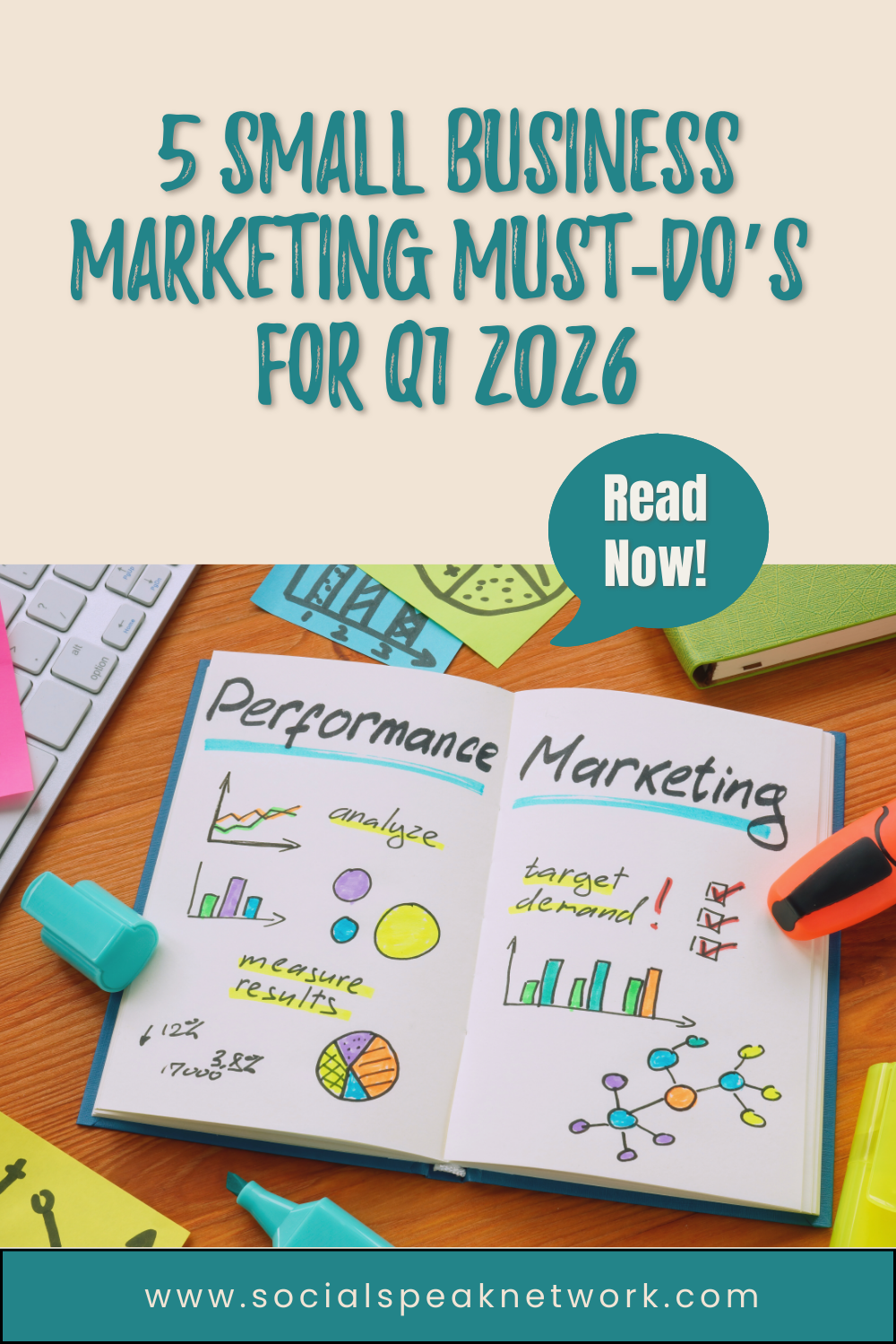
5 Small Business Marketing Must-Do’s in Q1 2026

January often comes with a mix of motivation and pressure.

You want to start the year strong.

You want marketing to finally “work.”

And suddenly, it feels like you should be doing everything at once.

Here’s the good news: Q1 is not about doing more… It’s about focusing on the right things.

If you want your marketing to feel manageable and actually move your business forward, these five must-dos will help you set a strong foundation for 2026 without burning out.


1. Set One Clear Marketing Goal for Q1

Before you think about content, platforms, or tools, get clear on this:

What is the primary goal of your marketing for Q1? You don’t need to have a long list. Just focus on one main goal. 

Example:

  • Build visibility with the right audience
  • Start more conversations
  • Improve lead quality
  • Strengthen brand awareness

When your goal is clear, decisions get easier. You stop chasing every idea and start choosing what actually supports that goal.

Action tip: Write down one marketing goal for Q1 and keep it visible. Every marketing decision should support that goal.


2. Choose Fewer Platforms and Commit

Many businesses struggle because they try to show up everywhere. Instagram, Facebook, email, blogs, videos… It adds up quickly.

Being present on fewer platforms and showing up consistently is more effective than spreading yourself too thin.

Here’s a better approach:

  • Choose 1–2 platforms where your audience actually spends time
  • Focus your energy there
  • Commit to showing up consistently, not perfectly

Being visible on fewer platforms builds more trust than being invisible on many. 

Action tip: Ask yourself:

  • Where does your audience already spend time?
  • Which platform fits your business and your schedule?
  • Where do you feel most comfortable showing up?

Pick one or two platforms and commit to those for Q1. If managing a platform feels stressful or forced, it’s likely not the right focus at this time.


3.  Set a Posting Rhythm You Can Maintain

Consistency does not mean posting every day. It means choosing a schedule you can keep even when business gets busy.

For many small businesses, that looks like:

  • Once a week
  • Twice a week
  • Three times a week

A simple, repeatable schedule builds trust with your audience and keeps you visible without burning out.

Action tip: Choose a posting schedule that still works during busy weeks. If it only works when things are “calm,” it’s not realistic. 

Start with the minimum you know you can maintain for the next 90 days. You can always add more later.


4. Focus on Message Clarity Before Content Volume

Posting more content won’t help if your message isn’t clear.

Before increasing content, make sure people can quickly understand:

  • Who you help
  • What problems you solve
  • Why it matters

Clear messaging makes your content easier to read, engage with, and trust.

Action tip: Review your recent posts and ask: “Would someone new immediately understand what we do after reading this?” If not, clarity is the priority, not more posts.


5. Track Important Metrics (Not Everything)

In Q1, your marketing efforts may not yield significant results yet, and that’s okay.

Early progress often shows up quietly:

  • More replies or comments
  • Better conversations
  • More relevant inquiries
  • More precise feedback from your audience

These are signals that your message is landing.

Action tip: Choose 2–3 things to track this quarter. Avoid obsessing over every metric. Check your metrics once a month and note what’s improving, not just what’s missing.


A Calmer Way to Approach Marketing in 2026

If marketing feels overwhelming right now, take a breath.

You don’t need to do everything. You don’t need to be everywhere. And you don’t need to have it all figured out at once.

Q1 is about setting direction, not perfection.

When you focus on a clear goal, choose fewer priorities, and build habits you can actually maintain, marketing starts to feel manageable again. Progress comes from small, intentional steps, not from trying to do it all at once.

And if you’re unsure where to start, or want help simplifying your strategy, you don’t have to figure it out alone. We’d love to help you create a plan that suits your business, your capabilities, and your objectives.

Book a free consultation and let’s talk through what makes the most sense for you right now.

Sometimes, the best next step is having the right conversation.

5 Small Business Marketing Must-Do’s in Q1 2026

5 Small Business Marketing Must-Do’s in Q1 2026
How to Get Your Business Holiday-Ready: A Marketing Checklist for Small Business Owners

October may feel quiet, but for small business owners, it’s the month to gear up.

The holiday season is just around the corner, and with it comes a flood of customers, campaigns, and competition. Whether you sell products or services, these last few months of the year can make a big difference in your bottom line.

The good news? You don’t need a huge marketing team or budget to stand out. You just need to plan early and execute smart.

Here’s a simple, practical checklist to help you plan ahead, boost sales, and stay one step ahead of your competition.


1. Refresh Your Brand Presence

First impressions matter, especially during the holidays when shoppers are comparing options faster than ever.

Start by checking the basics:

✅ Is your website updated?

✅ Are your hours, contact info, and product details correct?

✅ Do your visuals still represent your brand well?

This is also a great time to give your website and social pages a little festive refresh. Add a holiday banner, tweak your colors, or update your profile picture with a touch of festive cheer.

And don’t forget about mobile optimization. Most people browse and buy straight from their phones. If your site isn’t mobile-friendly, you could be losing sales before customers even reach checkout.

💡 Pro Tip: Update your homepage headline or hero image to reflect the Season. Even a small festive element makes your business feel active and current.


2. Plan Your Holiday Promotions Early

Last-minute marketing is stressful marketing. Start mapping out your promotions now so you can focus on selling later.

Decide what to offer. Will you give discounts, create bundles, or offer a limited-time product or service?

Pick your key dates. Mark your calendar for Black Friday, Small Business Saturday, and Cyber Monday. If you’re targeting local customers, think about community events too.

Prepare your marketing materials. Get your promo graphics, ad copies, and landing pages.

💡 Pro Tip: Don’t rely only on discounts. Focus on adding value instead, like free gift wrapping, early access, or loyalty rewards. These build excitement without cutting too deep into your profit.


3. Create a Holiday Content Calendar

Consistency beats chaos every time. Plan your content in advance so you’re not scrambling to post at the last minute. 

Create a simple calendar that outlines:

✅ What you’ll post each week

✅ Which platforms you’ll use

✅ Key dates or holidays to highlight

Include a mix of posts like product features, customer stories, gratitude messages, and even behind-the-scenes peeks of your team preparing for the Season. These make your brand more relatable and human.

And remember, you don’t have to post every day, just stay consistent. Scheduling tools like Meta Business Suite, Later, or Canva’s planner can help automate your posts.

💡 Pro Tip: Add fun themed days like “Thankful Thursday” or “Customer Appreciation Day.” They’re great for engagement and brand personality.


4. Optimize Your Ads for the Season

Ad competition heats up fast during Q4, and costs often rise, so every click needs to count.

Take time to revisit your ad strategy:

✅ Are you targeting the right audience?

✅ Does your copy use holiday-related keywords like gift ideas, Christmas sale, or holiday must-haves?

✅ Do your visuals reflect the Season and your brand vibe?

Run A/B tests early to see what performs best before you increase your ad spend. And don’t forget to retarget website visitors or past customers. These are your warmest leads who may need a slight nudge to come back.

💡 Pro Tip: Set aside time each week to review your ad performance. A few small tweaks can double your results.


5. Prepare Your Email Marketing

Your customers’ inboxes will be full, but great emails still get noticed.

Segment your list. Send personalized emails to returning customers, new leads, and VIP buyers.

Plan your sequence. Think teaser → launch → reminder → last call → thank you. This builds excitement and urgency.

Make it festive. Use holiday visuals, short copy, and a warm tone that feels personal.

Don’t forget your post-holiday email. Thank your customers and share what’s next—this builds loyalty beyond December.

💡 Pro Tip: Reward your best customers with early-bird access. Everyone loves feeling like an insider.


6. Strengthen Customer Experience

Big brands can outspend you, but they can’t outcare you. This is where small businesses shine.

Train your staff. Expect more orders or inquiries this holiday season? Make sure your team is ready to respond quickly and kindly.

Simplify the buying process. Reduce clicks at checkout, add clear “Buy Now” buttons, and display your shipping and return policies clearly.

Add personal touches. A short thank-you note, a small freebie, or a friendly follow-up message can turn one-time buyers into loyal fans.

💡 Pro Tip: People may forget your discounts, but they’ll always remember how you made them feel.


7. Analyze, Adjust, and Celebrate

Once the Season is over, take a moment to track and analyze your data.

Look at what worked well: 

✅Which products sold fastest? 

✅ Which ads performed best? 

✅ What feedback did customers give?

Document everything while it’s fresh in your mind. It’ll save you time next year. And don’t forget to celebrate. Take a moment to appreciate how far you’ve come.

💡 Pro Tip: Schedule a quick team meeting or send out a “holiday wins” email. Recognition goes a long way in keeping morale high.


Final Thoughts

The holiday season can be overwhelming, but it doesn’t have to be. With a bit of planning and a clear strategy, you can turn this time of year into your most profitable (and enjoyable) Season yet.

Need help creating a holiday marketing plan that drives real results? Our team can help you design campaigns that sell and stay true to your brand.

Schedule a free consultation today.


8 Evergreen Content Ideas You Can Use All Year Round

If you’ve ever sat in front of your laptop thinking, “What should I post this week?”. You’re not alone. 

Many small business owners feel stuck when it comes to showing up consistently on social media. You’re juggling a dozen other priorities, and coming up with fresh ideas day after day is exhausting.

Here’s the good news: You don’t need to reinvent the wheel whenever you post. That’s where evergreen content comes in.

In this article, we’re sharing eight evergreen content ideas you can reuse again and again to keep your feed active, your message clear, and your audience engaged without starting from scratch.


What Is Evergreen Content (and Why It Matters)?

Evergreen content is timeless content. It’s not tied to trends, seasons, or current events. It’s the kind of content that stays useful and relevant no matter when someone sees it.

Why evergreen content works:

  • Saves time and reduces stress
  • Keep your message consistent
  • Builds trust and brand recognition
  • Drives long-term engagement and visibility
  • It can be reused and repurposed again and again

Pro tip: You can schedule evergreen posts in advance and sprinkle them into your calendar regularly. That way, you’re always showing up, even on your busiest weeks.


8 Evergreen Content Ideas for Small Business Owners

Ready to simplify your content creation? Use these ideas to create relevant content, save time, and keep your audience engaged year-round.


1. Answer Frequently Asked Questions (FAQs)

Answer the common questions your target audience always asks. These posts are helpful, and they cut down on back-and-forth messages. They position you as a helpful expert and make your sales process smoother.

Examples:

  • “How soon should I book an appointment?”
  • “How long does it take to get results?”
  • “Do you offer payment plans?”

2. How-To Guides & Tips

People love quick wins. Share your knowledge with short, actionable advice your audience can actually use. Make it visual with a carousel or short video. Break it down into steps. Keep it simple.

Examples:

  • “How to Pick the Right Skincare for Your Skin Type”
  • “3 Simple Exercises to Improve Lower Back Pain”
  • “How to Prep Your AC for Summer in 5 Minutes”


3. Client Testimonials & Wins

Nothing builds trust like real people getting real results. Let your happy clients do the talking. Share their stories with permission and highlight the transformation. You can reuse these testimonials in carousels, reels, and pinned posts.

Examples:

  • Share before-and-after results
  • Screenshots of kind words from customers
  • Highlight a transformation story


4. Behind-the-Scenes Content

People love seeing the real you, not just the polished final product. Show the people, process, and passion behind your brand. These posts humanize your business and make you more relatable.

Examples:

  • Day in the life of a team member
  • A peek at your workspace
  • Your process in action (shipping orders, preparing materials)


5. Myths & Misconceptions

Bust the myths your audience believes. This shows your authority and clears up confusion that might be costing you sales.

Examples:

  • Myth: You need to post every day to grow.
    Truth: You just need to stick to a consistent posting schedule.
  • Myth: I need 10k followers to get clients.
    Truth: You can still get clients without a huge following. You need to build trust.
  • Myth: Social media doesn’t work for local businesses.
    Truth: It can drive foot traffic if used right.


6.  Meet the Team (or Reintroduce Yourself)

New followers are joining you all the time. Re-introduction posts allow them to get to know the people behind the brand.

Examples:

  • “Hi, I’m [Name], and here’s what I do!”
  • “Meet [Team Member], our [Job Title] and dog-lover-in-chief.”
  • “3 things you might not know about me…”


7. Core Values & Brand Story 

What do you stand for? Why did you start your business? What matters to you? These posts help your audience feel emotionally connected to your brand.

Examples:

  • “We started this business because…”
  • “Our mission is…”
  • “Here’s what we believe about [industry].”


8. Tools & Resources You Love

Share the behind-the-scenes tools or systems that help you run your business. These posts are easy to create and often spark engagement. Make it even more engaging by asking your audience what tools they use.

Examples:

  • Your go-to scheduling tool
  • A Canva template you swear by
  • Your favorite podcast, book, or small business hack


How to Make Evergreen Content Work Harder for You

The beauty of evergreen content is that you can reuse it again and again. Here’s how to get the most out of it:

  • Repurpose: Turn a blog into a Reel, a quote graphic, and a carousel. One idea = multiple formats.
  • Schedule in Advance: Use tools like Meta Business Suite, Later, or Buffer to plan your posts ahead of time.
  • Refresh and Repost: Update the caption or visuals every few months and share it again. Most followers won’t remember. And new ones have never seen it.


Social Media Doesn’t Have to Be Complicated

Evergreen content is the key to staying consistent without getting overwhelmed. It saves time, reduces stress, and ensures you always have something to share, even on your busiest weeks.

Need help creating evergreen content that actually converts? At Social Speak Network, we help small business owners build content strategies that work without the overwhelm. We’ll plan, write, design, and schedule evergreen posts that keep your brand top-of-mind so you can focus on growing your business.

Book a free consultation today.  Let’s make your social media work harder (and smarter) for your business.

8 Evergreen Content Ideas You Can Use All Year Round

8 Evergreen Content Ideas You Can Use All Year Round8 Evergreen Content Ideas You Can Use All Year Round

This is updated from a post on Oct 26, 2010.

One of the most important parts of being active in the social media world is taking responsibility for your Facebook, Twitter, and any other internet marketing outlets you have. When we put our posts out and we like other peoples posts that is a good start to taking responsibility. When we send out Newsletters or email marketing campaigns we want other people to read them right?

Well it is a two sided road; I mean we all have to put in our efforts to read other peoples stuff as well. My tip for that is picking your inner circle of people and people you have made a power partner and start by reading their newsletters and/or emails. The same thing goes with our social media posts. We want people reading our post, tweets, events, questions etc. also emailing us wanting to work with us or learn more about what we do. We have to do that with others. The one thing I always say about social media is it brings people, communities, and companies together all over the world.

So how do we do that? It is easy . . . we put together a weekly schedule and then we implement it into our routine just like checking emails, and making calls.

Monday- Using www.Hootsuite.com schedule your posts to go out onto your Facebook personal page, Facebook business page, Twitter, LinkedIn, Foursquare, and Ping.fm. Using my post before this one to help first create your strategy so you know what you need to post on your social media profiles and when. (Schedule an hour and a half to start)

Tuesday- Login to Facebook and add 10 people into your business list, research these people. Find people that have common interest or maybe looking for your services and put them into the business list you created. Then get onto Twitter or Twellow and search for your Keywords or location. You can search for people using keywords or type in keywords people would use to find YOU and add 50 people. (Schedule about 45 min to start, once you get the hang of it you can probably get it done in 30 min)

Wednesday– Spend some time on LinkedIn checking emails and finding people you may know and ask them to connect with you. (Schedule 45 min)

Thursday- Login to Facebook and add 10 people into your business list, research these people. Find people that have common interest or maybe looking for your services and put them into the business list you created. Then get onto Twitter or Twellow and search for your Keywords or location. You can search for people using keywords or type in keywords people would use to find YOU and add 50 people. (Schedule about 45 min to start, once you get the hang of it you can probably get it done in 30 min)

Friday – Repeat what you have done Monday, Tuesday, and Wednesday. We are going to add another step into today, Once you are done adding people on Facebook and Twitter you want to go back to Facebook and go to your page, under your logo you will find a tab that says “Suggest to Friends” Click on that and then click the drop down tab to your list you made once that list pulls up on the top right hand side it will say “Select All” hit that and then send invitations. What this is doing is asking all the people you have been adding as friends to become a fan of your page!

Now this is what I do and share with people you are more than welcome to move it around however it works for you. Please let me know if you have any questions or suggestions of things that have helped you. I look forward to hearing from you.

Putting together a weekly social media schedule: ne of the most important parts of being active in the social media world is taking responsibility for your Facebook, Twitter, and any other internet marketing outlets you have. When we put our posts out and we like other peoples posts that is a good start to taking responsibility. When we send out Newsletters or email marketing campaigns we want other people to read them right?

The other day I was speaking with a new client and she brought up an interesting point . . . have you ever thought of this? Years and years ago we used a “wall” to communicate with the world.

People would write on walls and rocks telling their stories, telling about their journey, what to expect and educating each other. Now millions of years later we have started to use a “wall” on Facebook and Twitter to communicate; sharing our stories now, what we have learned, how we can educate and help people across the world. Obviously our way now is a lot faster and e bit easier. Interesting how things come around.

What’s that saying, “don’t reinvent the wheel”?  Thinking of how a “Wall” has always been a way to communicate across the world to others, back then it took a lot longer and was much more artistic in a way.   Now we have the world at our finger tips and we are only a “wall” post away from communicating with people all over the world.

When I entered the Internet Marketing world it seemed so surreal to me, being able to send emails, instant messaging, pictures, documents, etc so fast and being able to do business with people all over the world.  They did not even have to be in the same city as me as the internet it allows us to do business everywhere! That is the beauty of Internet Marketing, we are able to now grow our businesses nationwide and build those relationships in order to do that.

Internet Marketing can work wonders for your business if you provide a service that you can do from anywhere or have an online store that people can order from anywhere. Have you ever read the book “The 4 hour work week” or “Beach Money”? These books talk about being able to have an online business where you can work from wherever you are and all you need is a computer and internet access.  They talk about setting your business up in such a way where you are earning residual income so you do not have to be sitting in front of the computer 24/7 working. If you set up your Internet Marketing plan correctly,  you can do this with your business as well!

I challenge you this week to take a look at your Internet Marketing strategy and see if it includes the following things:

  • Social Media Plan (Facebook, Facebook Page, Twitter, and LinkedIn)
  • Have a real blog (wordpress or blogger)
  • YouTube Channel
  • Posting Blogs and video blogs at least once a week
  • Using other online tools like; Google Maps, Yelp, Four Square, Plaxo etc.
  • Making sure you have your backlinks set up to your blog ( You can use Squidoo for this)
  • Educating people via your blog posts and social media posts

If you need help figuring out an Internet Marketing plan I would love to assist you. I look forward to seeing more of you online.

Power of the wall

4-keys-to-growing-your-small-businessEvery business is different, yet all have common goals – to grow and expand their business. The problem is, a lot of business owners them give up even before they reach goal. As an entrepreneur, you need to understand that growth is a long-term, ongoing and always evolving process.

You can be highly successful in your business if you live by these simple ideologies.

Look for new ways to wow your customers

As we welcome the New Year, you should take this opportunity to think of what you can do to impress your customers. Think about the different ways you can really delight, thrill and surprise your customers. Take the time to think of new ways to wow your customers.

Delegate some daily responsibilities

According to studies, 70% of small business owners prefer to do everything on their own. You need to understand, though, that running a small business is no small task. If you try to do everything on your own, you may find yourself swamped with work, stressed and exhausted. Worse, you may be missing out on a lot of business opportunities and time with your family.

As your business grows, you need to start letting go of day-to-day responsibilities and delegate some of these tasks to your team. This way, you can focus on tasks that have the biggest impact on the growth of your business.

Create high quality products

In today’s highly competitive business environment, the only way to thrive and survive is to attain and retain customer satisfaction. To do that, you should consistently deliver high quality products and services to your customers.

In the business world, quality is everything. Customers will continue to buy from you if you deliver quality products. If you do not, they will quickly look for alternatives.

Professional development

We live in a world that is quickly changing. None of us can afford to be stagnant in our knowledge. Regardless of the industry you’re in, make a commitment to continue learning and growing. Knowing the latest trends will help your business stay relevant and stay on top of these changes. Remember, learning is essential to stay on top of things.

The key to your future can be found in ongoing commitment to learning. After all, where you are today is a reflection of the skills and education that got you there.