Marketing articles often talk about understanding your buyer persona or your target market, but often times you need to read between the lines to find tactics that you can implement for your health care center.
In this article we take advice from some of the top marketing experts for medical center marketing and highlight how you can tailor your marketing towards your practice’s target market by:
Using interactive resources
Creating campaigns that are specifically geared towards immediate leads and long-term brand recognition
Creating an in depth FAQ section on your website to address both services and conditions.
Before diving into these tactics, it’s important to understand the strategy behind your buyer persona or target market. When first considered, we often to grouping all patients together and looking at broad identifiers. I’ve heard our clients proclaim our patients consist of men and women aged 40-65+. Honestly, this doesn’t do much. The goal should be to find sub-groups and niches within your specialties and communicate to the heart of that niche.
What is your Medical Practice Buyer Persona?
Rather than grouping all patients together, start by understanding your specialties. Let’s say you work for an orthopedic center and specialize in joint pain and back pain as two key conditions – who are the specific candidates you can target for these two specialties.
Chris Carr, CEO of Farotech, recommends thinking about what are people doing when they need your services. For example, if a specialty is shoulder pain, you could target baseball players, specifically pitchers, or you could target someone who does handy-work around the home and fell off a ladder. What other services, however, are these people going to need? You treat the individual who fell off a ladder, and they might not necessarily have other ailments. You treat the baseball player, and next thing you know they are coming back for knee pain, back pain, and other ailments they may have been putting off.
Another example is knee pain. Most people put off their decision to have knee surgery, are they grateful after they come in? Yes! After a good experience are they more open to considering intervention for their hip or their other knee? Yes! Having brand recognition for these individuals can greatly improve the customer (or patient) lifetime value, something all practices should strive to do. To understand this target market, you need to understand the emotional journey they go through as they take the steps to pick up the phone and call your practice.
The first exercise to understand your buyer persona is to write a list or create a spreadsheet with your practice’s specialties, what patients typically come in for these, and what other services they may need after the fact. Once you have completed this exercise, rank the specific buyer personas based on both low hanging fruit (or who will schedule calls quickly) and typical customer lifetime value (folks who often have more than one procedure once they schedule their first appointment).
Abby Thompson of Salted Stone recommends also performing a quarterly review of who is coming into your practice – what are their symptoms, how did they find you, etc. Actually speak with your patients to understand their journey and to further your understanding of your target markets outlined in the spreadsheet you’ve created.
Once you have a clear understanding of your patient personas, you can start integrating them into your medical practice digital marketing strategy.
3 Tested Tactics to Integrate Patient Journey in Digital Marketing Strategy
Tactic 1: Create Interactive Resources that speak to the main concerns, questions, and pain points of your niche target markets.
Some ideas to think about could be a step by step guide to exercises to do at home to build strength prior to a surgery or a video interview with a physician explaining the exact process used in a procedure. Capture the name and contact information of the individual interested in the resource and send them targeted information that brings them further along in their patient journey.
Tactic 2: Build advertising campaigns that are specifically geared towards immediate leads and long-term brand recognition.
As mentioned, some prospects are ready to call your practice right away whereas others take time to nurture. Daniel Goldberg, founder and CEO of Gold Medical Marketing, tends to emphasize with his clients that you can’t have the same goals for every campaign. Some advertising campaigns should be designed to capture leads immediately, but others need to align more with the patient journey.
Your practice needs to build brand recognition and instill trust with prospects before they are ready to pick up their phone for an initial consultation. Here, specifically think about display ads and retargeting campaigns.
Tactic 3: Create an in depth FAQ section on your website to address both services and conditions.
This is one of the most common techniques, and most valuable techniques for your practice to build an organic reach, create content that speaks to your buyer personas, and increase brand recognition.
Both Carr and John McAlpin, SEO Director of Cardinal Digital, highlight the importance of utilizing FAQ sections to interact with your buyer personas. Just as Thompson and Goldman recommend paying attention to the key concerns, questions, and pain points of your target patients, creating an FAQ section of your site or an FAQ section on each specialty can increase the effectiveness of your digital marketing strategy exponentially.
Carr recommends creating short videos to answer each question in addition to a written answer. These videos can then be repurposed as you send targeted emails to your buyers and can be shared online through social media and other channels. As you map out the full buyer-journey, each video will serve a specific purpose.
McAlpin on the other hand focuses on the technical SEO benefit to an FAQ section of your specialty page. Every specific question and answer creates an opportunity for your website to rank more prominently for Voice Searches. By appearing in organic search results you can build trust, brand recognition, grow your website traffic, and ultimately reduce your patient acquisition costs.
When pooled together, these tactics work to provide the answers to questions and settle the fears of your prospects as they move through their own patient journeys.
As you are working through ways to incorporate your buyer persona and patient journey, don’t hesitate to reach out for a complementary consultation. Our team works closely with marketing directors at healthcare centers to ensure their marketing is reaching the right prospects as they progress through their own journey. We use a combination of techniques from building brand loyalty to capturing lead contact information, and systematically converting prospects into patients as we help you to grow your practice’s bottom line.
https://socialspeaknetwork.com/wp-content/uploads/2019/04/Medical-Practice-Buyer-Persona-and-Digital-Marketing-Advice-for-Healthcare-Centers.jpg7201280Caitlin McDonaldhttps://socialspeaknetwork.com/wp-content/uploads/2018/04/SocialSpeak-Logo.pngCaitlin McDonald2019-04-03 07:39:292019-04-02 17:49:02Three Tested Ways To Integrate Your Patient Personas Into Your Medical Practice Digital Marketing Strategy
The health and wellness industry has been booming which is amazing! Companies and people are finally taking their health seriously and are looking for reliable resources to guide them and their staff to a more healthier lifestyle. Though that is great, it does mean that we are seeing more and more health and wellness companies pop up. So the question is, how do you become the “go-to” resource for your community?
Networking
Networking within your community is the best way to self-promote, create relationships, and see what your community is looking for in terms of a health and wellness resource. There are many great ways to connect through local networking:
Lunch and Learns– Set up times with local businesses to come in during lunch hours and present on a topic or provide demonstrations. Corporate health has been on the rise and companies are paying more for preventative care now more than ever. With you demonstrating what your services are or presenting on a common health issue that the company may address, the employees and upper management will start to see you as their resource and will most likely come to you for future needs.
Community workshops/events– These are great events to showcase what you offer and what your specialty is. It’s also a way to see what the local needs are in terms of services or topics they are interested in. The more you are seen in your community, answering questions and presenting on topics, the more people will remember you as the health and wellness person.
Webinars– Webinars can connect you to the people in your community who may not have the option to meet you one on one or attend an event you are at. They are can download the webinar and watch it when it’s convenient for them so you can reach a larger population and they can refer back to it anytime. Another great thing about webinars is that you can link them to your site and social media pages from the video to help drive traffic to your sites right away.
Content Upgrades
Content upgrades can give your local community a sample of what you offer. These can work for multiple types of health businesses from health coaches to clinics through different types of content upgrades:
Resource Guide to your Niche- This guide can show off some of the services you offer by offering information or a go-to guide on specific topics. People can download it and have material that will drive traffic back to your site for more information.
Cheatsheets, Challenges, and Checklists, Oh my! – All of these are great action-based materials. That means it gives your community something to follow up with or physically try. Challenges get people motivated, excited, and talking about your content and business. Checklists can be referenced over and over again. They are also easily updated to accommodate multiple topics. And who doesn’t like a cheat sheet that can help make their health journey a tad bit easier? Add items such any numbers, conversions, quick reference points for a health topic, etc.
Free Trial– Get people using your services with a trial run. This can give them a snapshot of what you do in your business and can spark interest.
Case Study– For more clinical businesses or businesses that want to show scientific benefits, case studies can be used as content upgrades. They give your community facts about the types of services you are offering, but, always make sure that you site the case study and check that it’s from a reputable source.
Social Media Content
We are living in a social media time. Most people, once they meet you, will look you up on social media. The content you post can have a huge impact on their impression of you and your business. Create an engaging and education-heavy environment through your media content:
Engaging Instagram stories– Using Instagram and Instagram stories can be an amazing way to engage your community. You can utilize IG Stories to post personal messages, ask questions, and create a buildup to an event. Followers can comment on your stories or you can respond in real-time when doing a Q&A session. To see how to use IG Stories more in depth, check out our previous blog: Using Instagram Story Tools to Engage your Viewers
Tagging other Resources– A great resource knows other resources in the area and since we can’t be an expert on everything, we need to work on gaining other reliable resources. You can tag them and lead your followers to other reputable resources in the area which builds relationships with residents as well as local businesses.
Videos to showcase your specialty– Social media videos can connect you with your followers through your work. You can post demos of what you do, testimonials of successful past customers, or anything that aligns with your specialty and what you are trying to accomplish through your business.
Professional Networking
Building relationships through community events is very beneficial but there is a whole other community you may be missing- the professional networking community. Corporate health and reaching the working community can open other doors for your business. There are also really fun ways to network with local businesses:
Trade Shows– These events can give you an insight into what the needs may be based on questions asked. It’s also an opportunity for you to meet locals and other business owners and while building relationships.
Hosting a Lecture Series– Hosting a lecture series for local businesses can give you a way to present what your business can offer their employees and why you should be their contact for all things health related. By setting up a series, you can display what you offer and continue to bring in new topics of interest when you come back. As a health resource, people will probably have many questions so following up the series with a Q&A can have a great impact on how you are received as an expert in your field.
Industry Happy Hours– These are fun ways to get business owners out in the town and be able to connect outside of work. These are great events to build relationships, see what the needs of businesses are, and have a little fun while doing it. They are low-pressure but be sure to have business cards or samples of what you do.
Join Organizations– By joining local organizations, you are showing the neighborhood that you are invested in the community and care about what happens in it. You will also get opportunities to be more involved in the local events. The more you can get out into the neighborhood, the more people will get to know your face and what your business stands for.
These are just some of the ways to that you can build up relationships, get involved in your community, and support the local people in their health journey. Relate to where your business is and fulfill a need. Once people start to see you around more, see that you are invested in the community, and see your passion/knowledge of what you do, you will start to become the first person they think of when they think of health topics.
https://socialspeaknetwork.com/wp-content/uploads/2019/03/How-to-be-the-Go-To-Health_Wellness-resource-for-your-local-audience.png315560Amber Irwinhttps://socialspeaknetwork.com/wp-content/uploads/2018/04/SocialSpeak-Logo.pngAmber Irwin2019-04-02 17:13:422019-04-02 17:13:42How to be the Go-To Health/Wellness resource for your local audience
Instagram is one of the fastest growing social media platforms and it is so important for your business to be utilizing this amazing tool!
In this blog, we will help you understand Instagram and how to master it for your business!
We will cover the following:
What Makes a Good Post
Hashtags
Strategy
Tools
Stories
About Instagram
Instagram is a social networking platform made for sharing photos and videos, you can only upload content from your smartphone or a third-party application. You can edit your profile, follow, and research via your computer, but cannot post.
Facebook owns Instagram, so, you will see some similarities. You have your profile and news feed, you can have multiple accounts, most people have a personal account and a business account.
When you post a photo or video on Instagram, it will be displayed on your profile. Your followers will then be able to see your post in their newsfeed. This also is the same for people you follow, you will be able to see their posts within your newsfeed similar to Facebook.
Instagram has a strong emphasis on mobile and visual sharing, a few things to point out with your Instagram account, links to websites do not work within the content area of the posts, most people will have a link to their website in their bio and tell their audience within the content to click on link in bio.
Instagram is all about building authentic followers and great for increasing engagement with your audience.
Let’s talk about what makes a good Instagram post and some guidelines to follow.
Instagram Posts
Now, that you have your business Instagram account all set up and you are ready to post, it is important to think about what makes a good Instagram post.
There are a few variables that go into a great Instagram account.
Here are 8 things to think of before you start posting:
1) Audience – You want to know who your target audience is and what they like. You will want to make sure you are giving them value in each post.
2) Length of post- With being able to have 2,200 characters to craft together just one Instagram post, that is a whole blog post if you think about it. When crafting together each Instagram post you want to think of the outcome for each post, you can share a blog on one Instagram post or full recipe and you will want to try shorter posts and longer posts to see what your audience prefers.
3) Call to Action – What is the outcome or goal for each Instagram post? Are you giving a tip, valuable content, asking a question and looking for sign-ups, wanting people to sign up for a product or service? What do these Call to Actions mean? Likes, comments, tags, shares, etc? You need to be clear about what those CTA (Call to Action) should be, they can be different for each post.
4) Hashtags – This is a little bit of trial and error, meaning do some research on http://hashtagify.me/ to find out the most popular hashtags that are going to be beneficial for your brand. Instagram also has an amazing internal hashtag research tool, if you open up Instagram and click on the search icon you can put in a #hashtag and see how many times it has been used. Some people say use your hashtags in your content of the post and some say put your hashtags in as a comment. We recommend both. Here’s why, if you put them in the content are people will be able to see the important words/ hashtags, then also utilize the comment area to add more, up to 30 if you would like.
5) Tag fellow followers – This is a great opportunity to gain more exposure. You want to find people that are in your tribe, power partners, cheerleaders, etc. On certain posts, you can tag your tribe for their followers to see and then in return, this helps grow your followers and helps your tribe grow theirs. It’s all about collaboration!
6) Brand – Instagram is a great platform to really allow you to show your brand. You can create images through Canva with your brand colors, fonts, and styles to make sure each image showcases your brand. A well branded Instagram account has a good flow and the images align together.
7) Schedule – When are you posting? When is it the best time for your audience to see your posts? Well, you may be surprised. According to Later the best times to post on Instagram by day of the week are:
8) Grammar – Instagram is just as important as any other social media platform, and since you are posting as your business grammar is important to pay attention to. I have found prewriting my Instagram posts either on a word doc, Google Doc or in an email, allows me to make sure I am not misspelling words and have correct punctuation. I found a tool called Grammarly this checks grammar, punctuation, and spelling. This tools has been a huge help for myself and our team!
What is a Hashtag?
An Instagram hashtag is a word or phrase comprised of letters, numbers, and/or emoji preceded by what was once referred to as the pound symbol (#). Instagram hashtags categorize content. Click on a hashtag and you’ll be able to browse posts that have been tagged with it. Attach one to your own photo or video and it will be discoverable to anyone searching the hashtag. How likely it is to be seen by other users depends on how often the hashtag is used, how popular your post is (does it already have a lot of likes and comments?), and how strong your following is. Hootsuite has a great guide to download detailing what an Instagram Hashtag is, click here to read more.
When and How to use a #Hashtag
• When you are talking about a hot topic like a keyword, example #SocialMediaTips #SocialMediaMarketing things that people are looking for.
• Look at the #Hashtags your competitors are using
• Look at what industry influencers and what #Hashtags they are using
• Anytime you post to Instagram you want to use between 3 and 30 per post
• You can insert your #Hashtags in the body of your content or also as a comment on your post
• Create brand #Hashtags #SocialSpeak #SocialSpeakNetwork
• Instagram now allows you to follow hashtags so you can keep up on the trends!
• BONUS Tip: Great tool to find #Hashtags check out Hashtagify
Three Questions to Think of:
1) What type of content do you want to share on Instagram?
What are your goals for your business Instagram account?
__________________________________________________
__________________________________________________
__________________________________________________
2) Who is your target audience? Are they on Instagram?
__________________________________________________
__________________________________________________
__________________________________________________
3) How will you integrate Instagram with your overall marketing plan? Are you going to promote products, workshops, events, services, tips etc?
When thinking of your strategy and goals, here are some things you want to think of:
Increased brand awareness
Show your company personality and team
Increase customer engagement and loyalty
Showcase products and services
Promote events or workshops
Share company or industry news
Build a more engaged community
Connect with influencers
Drive sales through traffic to website
Tools for Instagram
The tools are improving all the time for Instagram, the best way to post your content is manually through your tablet or mobile. There are third-party apps like Hootsuite, Buffer, and Later that you can put your posts into their system and then it will give you a push notification on your device when it is time to post to Instagram. This helps you schedule your posts out and easily post them to your account.
Here are a few tools we have found to make the Instagram strategy easier:
Trello – This lets you work more collaboratively and get more done. Trello’s boards, lists, and cards enable you to organize and prioritize your projects in a fun, flexible and rewarding way. You can create your posts in Trello for Instagram, upload your image and content using bullet points, emojis and spacing, the formatting will stay the same when you copy and paste it to Instagram.
Canva – Easily create beautiful designs + documents. Use Canvas drag-and-drop feature and professional layouts to design
consistently stunning graphics. Design eye-grabbing social media graphics, and more with thousands of beautiful layouts. In Canva you can also add your brand fonts and colors.
Buffer – Buffer for Instagram The easiest way to plan, track, and amplify your Instagram marketing. While Buffer can’t do the posting for you, we’re here at every step. As you may know, Instagram does not allow outside apps to post directly to Instagram. With Buffer’s Instagram support, you can create an Instagram reminder in the web or mobile app, and when it’s time to post, Buffer will send a notification to your phone that loads your photo into Instagram with your prewritten caption saved to your phone’s clipboard, ready to be pasted.
Hootsuite -Now you can schedule your Instagram posts and engage your followers with Hootsuite. Hootsuite lets you do more with Instagram. Schedule your Instagram posts Save time—and keep your social presence active—by easily scheduling your Instagram posts in advance. Monitor your brand, your competitors, and keywords to get the full picture of your space. Share the workload and have your Team Members post photos and reply to comments. Use a single dashboard Schedule and publish content directly to Instagram, Facebook, Twitter, and Google+ all at once, and engage with your followers across your social networks.
Later – Plan all your visual content from photos to videos Organize weekly and monthly visual content at a glance across social channels. Plan in calendar view Preview posts as they’ll actually appear. Schedule across platforms Queue up Instagram, Facebook, Twitter, and Pinterest. Optimize your workflow with Media library, Sync up from your computer, Drive & Dropbox. Organize all your media with labels and keep them all – Bulk upload to save time, Sync photos and videos from a desktop, Drive, or Dropbox. Label & organize your media, index visual gems for future reference with Labels. Work like a dream team brings creative minds together in Groups.
LinkTree – Linktree is a free tool for optimizing your Instagram traffic, whether you’re a blogger, an artist or run a content platform. You’ll get one bio link to house all the content you’re driving followers too. Let your content live longer than the feed.
Instagram Stories
Instagram Stories is a feature that lets users post photos and videos that vanish after 24 hours.
Here are 4 tips for great Instagram Stories:
1) Special Offers – Create a special offer just for your Instagram audience. If you have a special service or event you can create a code for a discount that ONLY your Instagram followers will be able to get and that offer will ONLY last for 24 hours. You can post a coupon or a teaser image to get the hype up before you post your story with some of the details, then give the code or discount in the Instagram Story video! Remember to give a direct link where they can redeem that discount!
2) Highlight a Creative Process – Show something in the process, maybe design, sketch, graphics, product. People LOVE to see how things are being made. If you are a home stager you can show before and after, decluttering. If you make jewelry you can show the creative process of how your items are made. This can also include a sneak peek to new items or new services.
3) Behind the Scenes – Since Instagram stories are temporary this is a great opportunity to show behind the scenes. Helping out in the community, setting up events, interviewing customers, giving tips on different processes that help you. Bringing that human feel to your brand. Similar to #2 as in highlighting something, but this type of video would be more focused around you as a business owner.
4) Instagram takeover – This is something you would do later on in the game, once you have developed a strong following and a good group of power partners. Instagram story takeovers are quick and easy, also a fun way to grow your followers. You exchange login information with a power partner or someone that can compliment your business and you do an Instagram story from their account! It lasts for a 24 hour period, the videos only stay up for 24 hours as well. This draws special attention from your followers. It shows your partnerships with other businesses and helps build that support and community.
Tip: When putting together an Instagram Story make sure you are adding VALUE! You can also add in #Hashtags, Links, Stickers and more! Have FUN with it!
Time to get started! Just remember these things:
1. Take advantage of free Instagram tools we mentioned in this ebook.
2. Cross promote Instagram posts as much as possible.
3. Keep your audience in mind when posting, you don’t want to overwhelm them.
4. Engage with your followers, like and comment on others posts also take time to share posts.
5. Use Hashtags
As you can see there is a lot to managing your Instagram account, it’s all about being clear and consistent. This platform is great to build authentic relationships and really grow your sales funnel.
https://socialspeaknetwork.com/wp-content/uploads/2019/03/How-to-Master-Instagram-for-your-Business.png800800Amber Irwinhttps://socialspeaknetwork.com/wp-content/uploads/2018/04/SocialSpeak-Logo.pngAmber Irwin2019-03-25 20:32:542019-03-25 20:32:54How to Master Instagram for your Business
Farotech is a comprehensive, growth-driven digital marketing agency that implements a systematic approach to lead generation, nurturing and conversion by utilizing scalable web design, cutting edge inbound strategies, and creative video development.
In this interview with CEO and founder, Chris Carr, we focused on inbound marketing, web design, and video marketing for the healthcare industry. We covered:
How Inbound Marketing, Web design, and video for large orthopedic brands relate to short-term and long-term strategic marketing decisions.
Current trends for wellness practices with SEO marketing in 2019.
Tactics that were expected to perform well or had a lot of hype, but failed to take hold in 2018.
The effect of video on digital marketing for healthcare.
The top 3 things that a wellness center should be doing online to see a return from their SEM efforts.
The top strategy that should be followed, but often marketing teams get wrong.
Marketing strategies Farotech is currently testing that many other agencies aren’t implementing for their clients.
Please be sure to subscribe to the Social Speak Podcast for more interviews with experts in digital marketing for health and wellness businesses. To learn more about Farotech, click here.
I had a blast during this interview with Chris, and was blown away by how in depth and actionable the information was that we discussed. Some key takeaways included:
Don’t just change your website if you think it can work better to reach the KPIs you’ve identified for your practice. Install software to create Heatmaps. These heatmaps show how prospects are engaging with your site and allow you to test different layouts and understand how design effects conversions. [6:50]
Dive deep into your buyer personas or patient personas. Your goal is to create content that creates an emotional connection about how their life can be after they come into your practice. Cast a wide net, but also tap into individual niches. [14:23] and [27:01]
Though you will benefit from a professional video on your homepage, lower cost, authentic videos for asset pages or pages that answer commonly asked questions about your specialties. These can then be repurposed for a variety of uses. [16:45]
Dive into both Local and Traditional SEO tactics. First consider the commonly used, but less competitive keywords to grow your domain authority, then progress to the more competitive keywords when writing your blog content. Additionally, create and follow an editorial calendar to be more Proactive in your marketing rather than reactive. [32:11]
Hiring a scalable team of specialists can be less expensive that hiring employees in house. [3:18]
Transcript of Podcast Episode with Chris Carr
Hello and welcome to the newest social speak podcast episode. My name’s Caitlin McDonald and I am one of the co-founders at Social Speak Network and today we are joined by Chris Carr, the owner and founder of Farotech, a Gold Star HubSpot partner. Farotech, is a comprehensive growth-driven, digital marketing agency that implements a systematic approach to lead generation, nurturing, and conversion by utilizing scalable web design cutting-edge inbound strategy, web design, and creative video development. So, let’s give Chris a warm welcome as he joins us on this podcast episode.
Caitlin McDonald: Chris, thank you so much for joining us today.
Chris Carr: Yeah, thank you, thank you for having me.
CM: To kick this off, tell us a little bit about your background in digital marketing.
CC: Well, I started Farotech in 2001, so it’s been nearly 18 years and we started out just as web development company. It was just myself and then, eventually one other individual. Now we have about 50 people working for our agency and we service companies throughout the United States in healthcare who are business to business, business to consumer, you name it. We started about 18 years ago, it started out as a web development company. And then the natural progression would be “Hey you know what, you guys create a really great website but nobody can find it.” And so we went from a web development company to really getting into SEO. And then the next progression after that was, “Hey, you create really great websites. I’m on the first page of Google, but for some reason my phone isn’t ringing, my email is not blowing up, what do I do about that?” And so we spent the latter half of the last 18 years really, talking about conversion science.
Hitting traffic at the wrong part of the buyers turning they’re not going to convert. So it was really important for us to solve the actual problem that they had not just give them marketing ease or marketing answers because that’s easy to do. The sales are down. I’m like, “Yeah but I got… Yeah, 100 Facebook likes.
CM: Right exactly, those vanity metrics aren’t going to cut it anymore.
CM: Your business, Farotech, focuses on inbound marketing, web design, and video for large orthopedic brands. Can you describe how the three of these relate to short-term and long-term strategic marketing decisions?
CC: Sure, well let me share my screen.
One of the things we try to do is, we try to really affect the hiring decision and reason why I’m saying that is that the average orthopedics practice usually might have one person who’s in charge of marketing. And when you see on the slide here, you can see my computer, correct? [3:18]
Marketing is moving extremely fast. The expectations have never been higher. Most marketing directors expect their health practice to be on the first page of Google. They expect it to be a thought leader. They expect you to have a social presence, you name it … Basically, the list goes on and on and usually what happens is orthopedics go and they hire a marketing professional or CMO or something like that, and we call that person, it’s a HubSpot term, but they call a Marketing Mary a Marketing Mary wakes up one day and realizes that all of this stuff is more than a one-person job. And so they need support.
And so what happens is, is that Mary usually finds a content writer and then they maybe tap on the shoulders of a social media vendor or something like that. All the PowerPoints and all design stuff still needs to be created. So maybe they might have a project manager doing that.
Then you have a web designer and basically you’ve stressed your web guy and everything has to look pretty with graphic design, what happens is you wake up one day and you got a lot of money going out the door. We sort of got the niche is we do what’s got a team-based solution and the team-based solution allows your marketing person to still stay in place, but we become your team behind that marketing person.
And so what happens here is with the really large or small practices need to scale, but they don’t want to hire five people to do so. So what they do is, is they hire an organization like ours that is scalable and we’re able to do all the things that they don’t have time to do.
A lot of times we bring our expertise and our approach to it, but sometimes it’s just that we have the time that they don’t have.
How does it affect the short-term, in the long term? Well, the short term is, is that we try to implement a strategy, but the long term is that we hope to be your solution to scaling your marketing team.
CM: Great, great. So providing those the quick positions that need to be filled, but also long-term growth of the team when the organization is growing as well.
CC: Yeah and then they like it because if they don’t like their writer, we can deal with it.
CM: Well let’s jump into trends. What current trends are you seeing for the health industry with inbound marketing in 2019?
Current Digital Marketing Trends for Orthopedics Practices in 2019
CC: There are a lot of trends and one of the things that I wanted to talk about is fighting the trends first and then adopting the trend second.
So usually what happens here is, let’s pretend like it a website company or a decision to basically take on a marketing campaign.
Usually what happens is that if you see you on the bottom left corner, you go and you create a really great website, right? [6:50]
Website Evolution for Orthopedics Clinics
And then what happens is, is that a lot of Orthopedic practices get really busy, and then they don’t continually evolve their website. And so a couple of years later if someone’s like, “Oh well, you know what, we really need to create a new website” and they do. Maybe two to five years later. They create another website in another website. But if you were really ask some hard questions, like What did you learn from website number one that made you decide that you needed website, number two, what about site number three?
And usually what happens is that they don’t really have a clean answer they just know that it has to be better than it is now, and obviously graphic design ages with time.
It’s pretty funny. I can look at a website and think oh look 2007. What our view is that every time you change that website or that campaign, it’s like reinventing the wheel.
But if you can basically be in a scenario, like you’re seeing here, you can develop a system and a foundation. If you look at the orange line, we recommend that orthopedic practice develop a strong foundation and then make micro adjustments along the way. learning and learning and learning and learning. And so, let me show you how we do some of that continual adjustment.
CM: And just for everybody listening to the podcast I will create a link that goes directly to this place of the video so you can see that graphic as well, so that will be down in the description. [8:20]
CC: So usually what happens here? So I go and I built that website. It’s the foundation, right?
I usually recommend that orthopedic practices put on heat mapping. This is about one of my clients, but this is their old website. You’ll notice that one of their critical buttons had no… Basically, no high balls on it. Or basically people’s mouse proofs as were going there, and they spent a tremendous amount of money and effort on these videos, but the people go into that, so they had to make adjustments, on the website and they did. Other things that I got graded on is how many appointments could I get for this organization?
You notice 15% of the audience. Did they scroll down far enough?
We do the same testing and mobile.
You look at all the clicks that they’re going to do, of a variety of different filters such as search terms. What part of the country or how long are they take to click? So the ore in a new drip marketing is going to be better to know it at 6 O’clock at night or 10 AM on a Tuesday morning.
We look at every KPI that they do, and we basically try to make adjustments on each of the smaller goals too.
We look at mouse movements to find out what parts of the website are confusing. We look at your forms to figure out why people aren’t converting.
We look at pages that aren’t converting and try to create attribution pages, and then later on, we’re going talk about video, but I’ll talk a little bit about it.
What we try to do is as we try to look at videos and we have a scale to figure out our videos too long or people dropping off at certain points.
So when you know all this usability data about your website essentially what you’re able to do is you’re able to create basically a system that if you imagine it’s like a spear you’re making this spear sharper and sharper.
Heatmaps help your practice to understand how you health center website helps you reach your digital marketing KPIs.
CM: That makes sense that absolutely makes sense. So creating new heat maps is actually something that any website can have on them. There are different apps out there, different softwares and programs out there that your team has access to and can just install a code on your website so you can start gaining traction and insights into how people are actually acting and reacting to your own website.
And so Chris, thank you so much for bringing that up. It’s so important, rather than having a new person, a new marketing director come in and say “we need a new website,” really think clearly about what those goals are and see how your websites currently performing compared to those goals. because you might be surprised that the thing that you think everybody’s clicking on not getting a single click.
CC: Yep, we’ve adjusted words on the home page and a five to 10% up-tick. Honestly, sometimes we did it by accident” on for measuring and so we’re like, “Okay good.”
CM: Exactly. And it might not work the same way the next time, but for that one center it works great.
So, you brought up video, so let’s jump into a video. Can you tell us how video effects, digital marketing and what you’re seeing with video right now?
Video Marketing for your Health Clinic
CC: Sure, well, I think the first thing you want to probably say we are using the word orthopedic practice but if you’re a healthcare and let’s just say it’s interchangeable, but I’m going to keep using that word.
So they were on a level playing field. Essentially, what you’re kind of doing here is, is that in terms of video, you need to realize that each practice is unique. So a lot of times it comes down to the quality of care, the quality of outcomes, the resources as the technology provided all that stuff. But at the end of the day if I tore my ACL I need my ACL fixed that. So one of the things that’s going to be really important is that you are not only your home page, but also your specialty pages really trying to display differentiation.
And so, we do this in a couple different ways. The first thing we want to be able to do a video is you need to know the way the audience thinks.
And what I mean by that is that there are different parts of your buyer’s journey, such as the beginning stages, you are in the awareness stage, and then later on, as the pain lingers on or you’re really in a spot where it’s critical, you’re in the decision level stage.
What we try to do from a video perspective is a video that’s neutral to each of those stages, but that explains how you’re different from other practices. Very simply – as simple as we can.
Use simple videos for your digital marketing – our attention span is only 7 seconds.
There’s this running joke that I tell our beat to death is that the average goldfish has an eight-second attention span and the average human has a Seven second attention span.
Essentially… we’re losing to gold fish.
So what that means is that it’s really important when they come to your website that you give them the information they need as quickly as possible, and in different formats, because some people are readers, some people are video watchers.
I personally am a video watcher, I don’t know what it is, but one of the other things that video gives you the power to do is, in my opinion, if you were to say what is in marketing is a race to emotion.
And earlier I can get you involved in that process, the more likely I’m going to get you to convert. So of course, they want to get their ACL fixed, that video is going to say, “Do you want to dance at your daughter’s wedding?”
It doesn’t matter why you’re here, what you want to be able to do is life beyond treatment.
So we try to create videos that are going to do that, but we use the technology in a really cool way as well. The first thing we do is we use a technology like this to find out how long videos should be. [14:23]
You’ll see that on the top right-hand side, you’ll see that this graph is dragging down to the right. Alright, you’ve seen the video over to the left. But through critical calls to action, whether it’s at the beginning of the video, the end of the video or even 15 seconds into the interview, I’m able to collect people’s information into our database, so we could drip market to them.
What’s really cool about this is I’m able to find out who’s watching my videos by name. So if you have these two case studies here you have Oliver, who watched 98% of the video.
Utilize drip marketing and remarketing to individuals based on how much of your video they watch
So if you’re going to talk about treatment options at the end of the video, Oliver knows the full story, now, 10 Bailey as you can see here an OR and she’s wrong a couple of times but he’s only watched 59% of the video.
So what our system will do is is that when Tim leaves the website, we’re going to be able to deliver emails about features and benefits and cost of progression in testimonials, things like that.
Yeah, there’s going to be this blanket statement. I do need to make early and so I do. You’ll get comments and crazy stuff, but I… Obviously, HIPAA does apply. So make sure that you’re getting counsel on how you communicate. We’re well versed in this but just know that we know, that heaters, not only to you but also to us as your agency, yes, is that an important thing to point out? You need to make sure that you are HIPAA-compliant with everything that you’re doing when it comes to collecting names and email addresses and re-marketing to them. But this is pretty incredible that you can even tailor that follow-up series based on how far they’ve watched that video.
CC: Look at kind of explain a little bit more on video.
So let’s say a patient is your site map in the buyer’s journey that I explained before using an ad, you’re going to have awareness, consideration, little content and decision level content.
We do something and lead core in which basically means we give visitors a certain level of points for every time that they come to our website, and they embrace it. Engage with marketing. So, what we’re able to do is we’re able to… We’re able to find ways where individuals come to our website and so they go to our hand and wrist page, assuming they’ve got a cookie on their computer, when they leave, the website and email automatically gets kicked out to them and that email we’ll have a video in it, that’s 30… 60 or 90 seconds long.
So what we’re trying to do is get video in the hands of as many people as possible, and if they haven’t gone deep enough into our website to get the critical assets, we create a system that if you’re not going to come down so we’re going to get it to you.
One other factor that I would say here is we also to try to develop these asset pages. [16:45]
What asset pages are, are all the most frequently asked questions or common objections about a certain treatment, area or something like that, but they’re all on one page. But what happens, this is the one they click on that answer that question we have a video that plays for them that is maybe 60 or 90 seconds long. What we’re doing is we’re giving them quick and simple information in a format that is digestible. Because it’s a video format I can use that asset on my website, I can use it in my social media, I can use it in my drip marketing, I can use it in apps, you name.
So the more video assets that I can create sort of the better scenario, that is a better outcome, I can have.
CM: And so, I’m going to stop you right there. So one thing that we hear time and time again, is to re-purpose content so video Chris is describing that video is such a great asset to have in your database because you can use it over and over again, you can use it on the website to answer question, social media, email marketing, and apps, really all of all of the different channels that you could be marketing on video fits in there. So thank you for bringing that up. Is so important to reiterate that don’t spend your energy trying to recreate something new for every single channel, you use the same thing that you’ve already created.
CC: That’s right, yeah.
I think one of the reasons why we always say that is because the research and the original writing is the most expensive part of the journey. So why do you keep repeating the most expensive parts when you’d rather be really solid on one critical area and then be in a scenario you’ve created great content that I can scale rather than just constantly… We use a phrase here we call “making the no nuts.
We were in a spot in 2015-2016 when the Google hadn’t totally grabbed a hold of quality versus quantity, we were at a spot as a company, we were putting out about a thousand content pieces a month.
And what I mean by that is that Don’t do what I did. My point is focus on great content.
CM: Okay, so were there any tactics that were expected to perform well or had a lot of hype but failed to take hold in 2018?
CC: Yeah, and nobody’s going to like this, but social media.
So if you were to check out some of the largest orthopedic brand in the States a ton of money goes into social media. [20:24]
This is a Forbes article and this talks about the… And if you’ll notice right here and he calls it the reach Apocalypse. A Jason was on to something. And it’s something that we’ve experienced essentially, what it means is, is that we go and we really try really, really hard to get Facebook likes or things like that, right?
The reality is, is that Facebook is a publicly traded company. And so let me read this one line here.
It says basically, organic reach. Which you’d think I’ve got a 1000 people to like my page everything I post a thousand people are going to see it. And you are in for a wild ride here. You would be lucky if it’s like 11% of the people seeing the content.
Organic Reach on Facebook Moves Inversely to Facebook’s Stock Price
I’ll read this. As organic reach dropped from approximately 12 to 6% (and now often at 1%) Facebook’s stock moved from nearly $50 to nearly $70, adding billions of dollars in marketing capitalization.
What does that mean? Facebook wins when they show your audience less of your materials.
The result is go on Facebook, go on social media, we’ll get your content to your audience. You just have to pay them to do it.
So all these companies, all these practices go, we have to get really big and social media.
Well, for what? Unless you’re willing to pay for social media, you’re not going to see results. Now, you absolutely have to do it, but you do not bet the farm on it.
I’d much rather my double my energy on SEO, paper advertising, content marketing, establishing yourself as a thought leader, PR, all that stuff, rather than resting all my hopes and dreams on social media.
CM: It’s one of those things that you still have to be on social media, but just don’t think it’s going to change your practice.
CC: This is the approach that we use [23:22].
Alright, so we believe for all practices that you need to know who your buyers are inside and out – your ideal buyer patient personas, then you want to be able to do a thing we call usability conversion notes. It was all that heat mapping stuff didn’t show – How are your clients resonating?
SEO, content strategy, lead nurturing, which most practices do not have. And I can talk about that social media, but only if you were on the pay-to-play, then you still do it but you just don’t do it nearly as hard. Have a really firm grasp on your analytics and your data.
Some value –added services, I usually call this video, and pay per click advertising budget provides it, yes, what you’ll notice here, as I’ve mentioned, almost everything in the marketing circle, if you believe in silver bullet marketing that says, “You know what, I’m just one SEO campaign away from it,” you’re wrong, you need the whole thing.
So if you were to make a cake and you just… I don’t know, I’m not a baker .. focus on one ingredient, but everything else was horrible. It’s going to taste terrible.
Yes, but we do it all the time, in marketing, because it’s sort of a path of least resistance type of stuff.
Don’t rely on just one marketing effort to grow your orthopeadic practice
CM: Yeah, and you hear of that one case where just focusing on email marketing transformed the practice, that’s one case, it’s not everybody. So maybe you’re going to find that one email sequence or the one way that you can use email to really transform your practice and I do believe email can transform your practice, but at the same point, you’re going to have to do all this other digital marketing to see what combination works for you in your own business.
CC: I would I couldn’t see it any better.
CM: Okay, so what are the top three things that medical centers, orthopedic Centers, should be doing online to see return from their digital marketing?
I think you kind of just nailed it on the head with this description right here, but are there three bullet points, things that marketing team should be focusing on?
CC: Yes, I… Let me show one [25:35] and then I’ll talk about two.
Obviously with orthopedics, you’re going to have a wide net, right, you’re going to… Let’s say, daily, you have multiple specialties at your organization, so that’s hips and joints, and spines, and other stuff like that. You want to cast as wide a net, as many patients as possible it.
And as many patients as possible to your practice, but other things that you want to be able to do is you want to be able to find niches within or communities within your group and get really solid with those communities. So there’s one of the large orthopedic practices is low kid in Philadelphia, one of our clients, one of the things that they do is that they find these sub-groups of these niches and they communicate right to the heart of that niche. They’ll do that with a number of different things. What they do is they create marketing materials directly to that niche.
So, right, not only do that, they also so market to the influencers. Because in behind a man with the pain, there’s a wife who’s tired of her in about.
Narrow down your audience to niches and then work to build influencer relationships and created tailored messaging that fits their buyer journey
So what happens here is that what we try to do and we recommend you do, would you probably won’t because it takes time, is is that you literally sit down and you have a really hard… A really deep dive into who are your buyer personas? [27:01]
Left hand side, we want to ask were really great questions about who are it patient personas, and I want to be able to find out is how do the answers to these critical questions change from one patient persona to the next patient persona.
Because what you don’t want to do is have a one-size-fits-all marketing plan. If I have a torn ACL, I don’t want to hear about your spine center.
I start hearing about knee pain and my conversion rates are going to go way up.
We want to basically find niches in communities and we want to market to them about the things that matter to them, most rather than just blanket. Due statement marketing that we hope that resonates with all.
CM: So do you feel as though it’s best to take your time, just go through all of these different patient personas, and then choose the one that you feel is that lowest hanging create all the resources for that and then slowly create all the other resources. If you don’t have the time or the budget to have a team like yours jump in and create everything at once.
CC: Well, obviously, you want to make sure that your foundation is good. So I talked about the wide net. Don’t go in unless you have the wide net.
Let’s pretend like you do have the wide net, what I would probably try to do is try to find organizations that would fit multiple buyer personas.
And what I mean by that is, let’s say hypothetically, I’m just going to use a random scenario here. Say I want to market specifically to roofers with bad knees or climbing a ladder. It’s a tough job.
A lot of individuals who have torn their ACL or hurt their knee really bad they get treatment, from a Northrop practice. So, you’re communicating to roofers and you’ve got them for needs. What’s great about… Well, not great, but let me rephrase this a tendency that also happens, this is that once they get their new fix their hips next. Same with baby boomers. Same thing with student athletes, or athletes.
So that the… Yeah, so if I market to a niche of baseball players because I’ve got a really great shoulder department, that’s a really great idea.
CM: So what are the next two things that you recommend?
CC: Obviously, we talked about video. What I would recommend you do is have a really strong home page video, but the other videos that you do well, it might feel like you’ve really lowered the bar. I would rather have a lot of content, even shot with an iPhone right that is very authentic.
Then you saving up all year long to create a 1000 videos over and over and over again, so you can buy a 20 microphone from Amazon, you connect it with an iPad, your iPhone. What I even recommend again, is there’s 15 the disease gambles so you don’t have shaky hands-on I but what I do is, is that I would just have these candid interviews with doctors in your practice or physicians.
Start to talk about just issues better in relevant at the time or tendencies that they say, “You know what, let’s say Lindsay Vohn, she takes a nose dive at the Olympics, right?”
Get a doctor, and says, “You know what, looks like your knees really banged up it’s like, “Well let me tell you, this is something the tendencies that we see with skiers because your feet are clamped in it. torques and then it’s the first thing to give because it’s a, it’s a pliable it’s plantings, like that. go a long way in a in…
So we talked about buyer personas, know your ideas, we talked about video. And then the other thing I would probably say that you would need to do is that you want to be good at two forms of SEO.
One is local SEO with your pin packs and your maps and then the other one is more organic SEO, and let me give you a real quick, I’ll give you my hand pitch on SEO real quick. [32:11]
Alright, I usually… What happens here is that if I’m a knee specialist I need to be found locally with these local impacts, and then I also want to be found organically.
Understand the difference between Local SEO and Traditional SEO
Now what happens is is that there’s a different science for local SEO than there is for traditional SEO, so if you’re going to work with a vendor make sure that they know the difference.
Okay, so, so when I’m talking about… obviously you want to be in a scenario where you’re getting the best keywords.
These are the keywords that everybody wants. Everybody’s going to type in to find your services.
The problem is, is you’re probably not the only orthopedic practice in town and there’s also national providers or at least real providers that have much deeper pockets than you, so they’re going to try to gobble up the sky screeners. These are the really big key words, right?
Yes, so what we recommend is to try to get found on the first page of Google for a number of other keywords, keywords that have really high visibility but with less competition, and what we’re able to do is that you’re able to reach a tipping point.
So if I’ve gotten clients on the first page of Google for hundreds of keywords, I’m increasing what’s called my domain authority. And then once your domain authority, reaches a certain level, you’ve essentially to earn the right to be heard in the eyes of Google.
That means is you can actually go after some of these skyscrapers later on because you’ve sort of earn that klout.
Other things you need to know is if there’s algorithm changes, and if you cheat to try to get to the top, you’re going to wake up one day and you’re going to see something like this.
CM: Now, when you are focusing on as is this in addition to the site structure, are you creating content that’s tailored directly towards those long-tail keywords that aren’t those big skyscrapers, but kind of those lower-tier ones that’s right, some longer-tail keywords are sort of the smaller buildings.
CC: Yeah, I so what happens here is, is that when you start to go after a lot of keywords here, I blocked out the name of this client, but when they found us, I basically they were promised around a 25% increase in the number of keywords on the first page of Google.
We’re able to increase that to 247%. It translates to traffic.
Yeah, no work word. You do the better to where you do it. Basically, it works.
So, this organization just their blog alone, we were able to get them to increase in entrances by 856% or 63000 people were reading their blog to now over 607,000.
I might say, “Well how do I know that’s even quality traffic? Well, I increase their pages by 639%, so people were staying on online 700% or 600% longer. What we believe is the more educated consumer usually converts.
CM: Yes, now with this, I can hear a lot of Marketing Directors seeing these numbers and saying, “Oh my gosh, there’s no way that I can do that.” Can you give us a perspective of how many new pieces of content you created for this organization?
Utilize Editorial Calendars to remain Pro-Active rather than Re-Active with your Inbound Marketing Efforts
CC: Yeah, now this was over three year. The first year, I was the mill. We do about three blogs a week. Those are all SEO optimized blogs, and stuff like that.
We write everything in collaborative documents.
Everything should be connected to an editorial calendar.
You would know, what’s going out in the next 30 days, 60 days, 90 days, a year or whatever it is. So you are proactive rather than reactive.
One of the major problems I see what practices they start out, they can get all fired up to get into marketing and then fires happen and then you look at their blog and it’s like the last blog was in 2017.
No, it just gets away from you. But if you live and die by an editorial calendar, you’re going to create content.
But what’s great about the content that you produce, is that a lot of companies will have technology that will allow you to optimize for a certain keyword and, you’re probably not going to have the in-house, but vendors basically marketing companies will say with technology like this that I’ll say, “you know what, before this contents even published Live to the web, I can see the rating here is poor. I can see that the readability is below the target, and just even the number of words on the page is less than the 840 where Target wooly using two out of the 20 keywords that need to be used.”
If I loaded this I published this piece of content I should have no hope that it’s going to be the competition, right? So this software is going to basically look at the top 10 results and it’s going to say, “You know what, you’re going to have to be critical adjustments.” It’s better to know this early rather then publish and pray.
CM: Yes, and that is one of the reasons why that editorial calendar is so important is that you can write that blog a month two months, however long before it needs to be published so that you have the time and you’re not feeling that “time Prince before you click Publish to actually look at these stats and everything, to say. Oh, you know what, if I just click publish, it’s not going to do anything for my business correct, yeah, right. So what is the top strategy that should be followed? But often, marketing teams get wrong?
CC: They try to do it all in-house.
Even if she’s working 180 hours a week, or is that possible at Ellen in A, the I alone the Lorimer is she doesn’t go home, she just works, right?
Yes, I can be able to be a specialist in SEO. It changes every day. She is not going to be a specialist in social media. It changes every hour. So what happens is, is that you need to make sure your marketing person is the quarterback who’s running a team of specialists and those specialists only focus on their area of expertise.
You can get a team-based system for the price of hiring one other employee.
If you imagine that Mary marketing is one employee and then the whole team is just another employee, the price you’re paying an initial team is about comparable to hiring a second employee, it’s scalable.
It’s profitable, and it’s fireable.
CM: Yeah, I oh yes, absolutely. shift the blame to someone else.
Oh goodness, let’s see… And I just have it just a couple more questions for you. You’ve shared so much valuable information for our listeners.
You founded Farotech and it’s now a top ranked inbound marketing agency. Do you want to just dive into your company and services a little bit, give a little pitch?
CC: I think the sales pitch that we would say is, is that we are truly partners. By being true than partners is if you’re looking at you, the company, you’re hiring to do your marketing as a vendor right, you’re always going to treat it like a vendor and the results are going to act like a vendor.
Now a partner is responsible for the things that you are responsible for. So if I’m the CMO and my job, my dependency is about getting appointments, making sure that critical physicians are seeing, you’re opening up a new practice, making sure that I have enough walk through traffic, digital traffic, whatever it is.
I want to make sure that as a partner that they’re on the line for the same things. And that is what we do and I, we sort of put ourselves in the line, we find out what matters to you most we bring strategy, we bring people but we bring accountability.
Yeah, and that’s the critical part for us is that our butts are on the line too and so if you’re going to walk out on the ledge we’re going to walk out there with… So you yeah, and so how do we plug ourselves? Would you really great work?
We obviously see we had really very results we work a really large brands, but we also work with some medium such brands as well.
But what’s exciting for us is just the transparency we have with our clients. It’s funny I got married and I had clients that weren’t even invited to the actual wedding come to the actual reception. I’ve got clients that call us and say, “Hey, what do we say about this particular treatment area?” We’re so ingrained that you know what I mean.
And so, then they do a critical they say they’re going to expand they come to us first, because not because we’re getting the commission, but they come to us first so they know what data they need to know before they make decisions, and that’s what I live. A good partnership looks like. And what I believe a good vendor looks like, and I think that’s what a good marketing company looks like.
One other thing is, is that I hire, I love the 99.9% of all my employees. I hire really great people that are passionate about their clients. That’s important because you’re going to spend, you spend most of your waking hours behind a desk, so right, so if you don’t love what you do don’t work here at Farotech and don’t work for my clients.
CM: Yeah, great, I love that. And then lastly, to wrap this up, are there any marketing strategies that your team is currently testing that you think other agencies might not be implementing for their clients?
CC: Yeah, one of the things that we’re trying to do right now is being a scenario where we’re doing a little bit more outbound email.
So here’s what happens. Let’s say, hypothetically, on your patient intake form they work for a really large provider, say a pharmaceutical company, right?
So oftentimes, we don’t go back and look at our database as the source or the well of where people are. And so what happens is I can go back and I make sure that I ask “Who is your employer?” And I also ask what your business title is. And the reason why I’m doing that is because if I know your employer and I’m able to get email addresses to your employers and do lunch and learns at your employers.
That’s a really good thing. So I want to be able to go to each of the large providers in my area and be that guy that practice, or that organization.
I want to be in a scenario where, let’s say, the medically, it’s a C-level executive, I can’t guarantee it. The people at the bottom of the totem pole are in the same place as the C-level executive is. So I want to know how quality is my list. And if their middle-of-the-road, or the title feels been on the road I freeze it.
Other things that it does is it says, you know what, if this guy went to my practice and his insurance basically he’s covered by his insurance at my practice basically his insurance is valid. I know that everybody else in that company.
That’s right, that’s right, and right. So I’ve been doing orthopedics for a long time, my wife has to drag me to go to the doctor’s office, drag me like literally, I know better. I know you have to figure that for every patient you have, there’s 10 patients that have nagging pain that are just like me, that just refuse to get there.
So if I’m going to get you a market and create really critical arguments for an idiot like me.
CM: Well Chris, thank you so much for your time, thank you for the valuable insights and information that you’ve been able to share. Are there any questions that you feel I should have asked that I didn’t?
CC: No, I think usually what happens is, is that the first question I get is, “How long does it take?
It really depends on how much do you want it? If you’re willing to put it in the hard work, and get your foundation straight and get your blogging straight and consistently stay proactive not reactive, and you can see how your results work by the 90-day mark, and you can know how it should progress.
If you are sitting in the dark, if you are not in a scenario where if you’re a reactive marketer we’ll never know when this is going to pay off.
Get that editorial calendar, get focused, work hard, and know what the next 90 days, six months, one year.
CM: Thank you again, Chris, it’s been such a pleasure having you on the show, thank you, I appreciate it. It was wonderful, it was a wonderful experience for me to know right I so thank you again to Chris with barite for joining us today it was such a pleasure hearing about his expertise and about some of those tactics that you should be implementing for your own health center.
So again, my name is Caitlin McDonald, and please tune in for a next episode of The Social speak podcast.
https://socialspeaknetwork.com/wp-content/uploads/2019/03/Copy-of-Copy-of-Social-Speak-Podcast-chris-carr.png7201280Caitlin McDonaldhttps://socialspeaknetwork.com/wp-content/uploads/2018/04/SocialSpeak-Logo.pngCaitlin McDonald2019-03-20 12:00:352019-04-22 23:01:58Behind the Scenes Look at How Your Orthopedic Practice Should Use Digital Marketing - Interview with Chris Carr founder for Farotech
John is a technical SEO expert who’s deeply engaged in the local and national SEO community. With over 15 years of web management experience, John has led digital strategy for many enterprise healthcare companies such as Epic Health Services, Aveanna Healthcare, Cornerstone Healthcare Group, and more!
Founded in 2009, Cardinal Digital Marketing has been ranked the #1 fastest growing agency in the Southeast (The Agency 100). In addition, they have been consecutively named on the Inc. 5000 list of fastest growing privately-held US companies in 2014 and 2015. The agency has also been a multi-year recipient of the Atlanta Business Chronicle’s Pacesetter Awards as well as selected as one of the 101 Best and Brightest Companies to Work For®.
Cardinal keeps pace with rapidly shifting trends in Digital Marketing, and develops engagement strategies that are not defined by a platform or a category, but leverage the best marketing vehicle to solve every unique challenge. They approach every situation with the client’s customer in mind and measure success not by increased traffic or impressions, but instead higher client profits.
Services offered include Search Engine Optimization, Pay Per Click Advertising, Social Media Management, Web Design & Development, Mobile Marketing, Online Reputation Management, Web Analytics, and more. What are your specialties?
In this interview we focused on SEO and search marketing for health and wellness businesses. We covered:
The difference between SEO and Search Marketing and how this differs from other types of digital marketing.
Current trends are you seeing for wellness practices with SEO marketing in 2019.
Tactics that were expected to perform well or had a lot of hype, but failed to take hold in 2018.
The top 3 things that a wellness center should be doing online to see a return from their SEM efforts.
The top strategy that should be followed, but often marketing teams get it wrong.
Marketing strategies your team is currently testing that you don’t think many other agencies are implementing for their clients.
Please be sure to subscribe to the Social Speak Podcast for more interviews with experts in digital marketing for health and wellness businesses.
Podcast Transcript:
Hello my name is Caitlin McDonald, and welcome to the most recent episode of the Social Speak podcast. I am so excited, today we are joined by SEO expert John McAlpin. Now, John works for Cardinal Digital Marketing. Founded in 2009, Cardinal digital marketing has been ranked number one of fastest growing agencies in the South East. In addition, they have consecutively been named on the Inc 5000 list of fastest growing privately held companies in 2014 and 2015.
Cardinal keeps pace with the rapidly shifting trends in digital marketing and develops engagement strategies that are not defined by a platform or a category, but leverage the best marketing vehicle to solve every unique challenge. They approach every situation with the client’s customer in mind, and measure success not by increased traffic or impressions, but instead, higher client profits. Services offered include search engine optimization, pay-per-click advertising, social media marketing, mobile marketing, online reputation management, web analytics and more.
Our guest, John is a technical SEO expert, who’s deeply engaged in the local and national SEO community. With over 15 years of web management experience John has led digital strategy for many enterprise healthcare companies such as Epic Health Services, Cornerstone Healthcare Group, and more so let’s give a warm welcome to John.
Caitlin: Welcome John, we’re so excited to have you on the show today.
To kick things off. Tell us a little bit about your background in digital marketing.
John: Sure, it actually started way back when I was 11. I started building websites when I was 11. I found it interesting and saw my dad doing it So, I found W3 schools and started teaching myself how to do all that. But at a professional portion of my career I started in the corporate side, mostly in a tech field, international e-commerce, and then I moved into healthcare and fell in love immediately. I was doing full digital strategy for a healthcare company, and then from there, I transitioned to a agency life and never looked back really. I love agency life. It’s nice to get a little mix of everything.
C: Yes, it definitely is. There’s always a new project to be working on … So John a key aspect of Cardinal digital focuses on SEO and search marketing. Can you describe how this differs from other types of digital marketing?
J: Sure, on it’s own this is a really interesting topic. A lot of people get confused about the actual true definition of SEM. I even heard people consider Social media as a part of SEM and so I think it’s really important to know the difference. Search engine marketing is any type of marketing that has to deal with a search engine. Specifically people refer to it with paid search, like PPC or CPC however you want to refer it to, or SEO. And so that’s essentially search engine marketing. While things like social media channels, have a search box that’s different than a search engine. It is important to note. And so search marketing really is just another form of inbound marketing and what’s unique about it compared to other things, is you’re catching both people during the discovery phase, where there’s no intent to purchase, and during the intent to purchase phase.
C: Great, great thank you for diving into that. So what current trends are you seeing for wellness practices with the SEO and SEM in 2019?
J: What people are in healthcare are starting to do is find alternative ways for people to book appointments. Traditionally it starts with a call then developed. Now we’ve got great technology to book appointments on the website, but now it’s gonna find alternative way to give people more options, to book appointments.
Something that we’re doing is Google My business is actually having features to help integrate their platforms truly need to visit your website, to book an appointment, you can even text or even other direct links. There are some other third-party industry sites like if they’re a directory that we can book appointment straight from there. For example, in the restaurant space Yelp, you can order straight from Yelp. And so, the future is hoping to get voice functionality working out. So all you’re a home assistant, such as Alexa, to help book appointments, that’s a future hope. I don’t know if you were gonna get there, in 2019, but it’s definitely in pain that see a lot of people going towards.
C: That’s pretty incredible. So I’d just be able to say “Alexa, schedule my appointment with this center,” and to be able to do it.
J: Right. I predicted to see a specific company, not a healthcare company, but a technology company developing an application. There’s a lot of partners with it, who are trying to work together to develop this type of technology, so I see it being… You signed up with a partner and they will add you to their list, of preferred vendors, and then you would be able to use their system. That’s the place I see this going.
C: That is incredible, that’s wonderful. Now, in a previous podcast episode, and this isn’t something that we talked about previously, but in a previous podcast episode one of our guest Abby was talking about how interactive websites is actually really helping out with SEO because people have more time on site. A lot of health care centers, direct people off-site to do the scheduling and booking. Is it better to have the scheduling tool actually embedded on your website, rather than directing someone off-site?
J: So, that’s an interesting topic because there’s a couple of things that you wanna think about here. Not just your SEO interactivity, but also how you track conversion. A lot and people who have booking on their site or using an Iframe, which means that your analytics may not be able to track.
And so, really it gets to the point where Google is aimed more to the user experience and that’s where people get that time-on-site type of metric, and technically it’s better to have people to book on your site versus off because it’s less steps to take an action, but in a perfect world we be able to develop software to have booking on our site, and have our own proprietary thing. But, not everyone has those kind of resources. And so it is really however you can get the job done. An Iframe will work. Just be careful about what you’re tracking. As marketers, it is hard for us, so we don’t always have the ability to track it. Cardinal specifically does a good job of working with a whole lot of vendors to make sure that we can get the information that you need, but a lot of agencies don’t have that reach or those resources so be careful.
C: Alright, so let’s jump to the next question, are there any tactics that were expected for well or had a lot of hype, but failed to really take hold in 2018?
J: Voice. I think, voice is gonna be a big one. It’s not the future. It’s now. Some data scientists are predicting that 50% of all searches, are gonna be voice by next year. And I think this is a little confusing because people are getting confused between Voice Search and Voice Assistance.
Asking for the weather, asking certain time or something like that. It’s just those are voice assistance not voice search. And so right now we don’t really have a good way to track search. Also, it is important to note that your Search Console data, a lot of these queries can be voice and Google won’t be telling you which are voice.
I’m sure they will, but they’re not telling you right now. It’s also important to know that as far as asking questions that come from your website, all answers are first position featured snippets. They wanted to be voice focus on getting those featured snippets ranking high. And it’s important to know that feature snippets can appear anywhere in the search and only 30% are in position one.
C: Is there any way to be able to do research about how voice searches and the phrases and terminology that people are using and search differ from me typing into a search engine for something?
J: So as far as tracking or as far as optimizing?
C: As far as optimizing.
J: Sure it’s really just answering commonly add questions that you can relate to your business. Anyone can really get a question answered, but that doesn’t really lead to a conversion or help your branding at all.
So if you really wanted to optimize for voice, currently, before the future hits, it’s really answer the questions as quickly as you can. One of two sentences, the question needs to be answered. A lot of people will try to think about word count, not word quality. So they add all of these filler words. Work to really answered the question directly, in a first two sentences. The rest of that page can be or filler content.
Yeah, and those first two sentences, then you can work your brand name and according to Dr. So and So, at whatever your business name, is, the flu can be treated if caught earlier.
That was a the brand recall there. They can go and search that later or if they just are searching that question online at all, on the paper knows your name at the features on it. Oh, the that’s who I heard that from. And they can follow group.
C: I assume that that’s going to be one of the answers to this next question, but what are the top three things that a wellness center should be doing online to see a return from their SEM efforts?
J: Actually, it’s not one of the three in a lot of the…
There a more important foundational things that people need to worry about. A as far as voice, yes. One of the things I focus on Q+ A answer format. Include all of your services include all of your conditions on separate pages and have a way to inter-link them, Focus on your internal in-between them, so that they can relate and people can learn more information.
One of the first things they need to do is focus on having clean citations and for people that don’t know is a caption. That’s just your directory listing thing about Google My Business, Yelp. And then also think about your industry-specific citations.
Rate My doctor and things like that.
These directories have a huge impact on voice search and how business appear – having a consistent citations in.
So there’s a lot of tools that help it is or you can do it manually, but a lot more work, but you can pay more to have is, will do it for us if a lot of out there for it so I think the biggest factor that wellness centers and we really need to focus on is the user experience.
You can do SEO to a crap site. But if it doesn’t convert and people are turned off by it, they can’t navigate through it, it doesn’t mean anything that is so important.
Yeah, you can put a Band-Aid on it. But it’s not going lead to the results that you need in the end. And I feel as though Google with its algorithm, says, “Well it’s ranking site’s higher that have that positive user experience. People are staying on the site longer, they’re going directly to it.”
C: And then, let’s see, what is the top strategy that should be followed but often marketing teams at these health and wellness centers get wrong or other agencies, just get wrong?
J: So SEO, technical SEO, that’s the first thing I noticed that it’s wrong, but really the biggest missed opportunity is having a holistic digital marketing strategy and having your teams to silo doing their own things, not so picking on the same goals or focus or when teams are working on different ways to achieve different tactics towards the same goal.
Specifically, they need to be blending to the technical side of SEO, PPC, social media and their content. Repurpose your content for different channels.
C: That’s great, that’s great. You work for Cardinal digital, which is a full service agency and one of the top-ranked inbound marketing agencies in the US. Tell us about your company and your services, because you do really merge all of those different silos together for work with your clients.
J: As a strategy partner, we use the term partner, because it really is a relationship that we try to build, we try to build long-term collaborative relationships with national enterprise healthcare companies, because not one company is the same as the other, and everyone deserves a customize strategy. There’s no recycled formula for everyone … See what works best for everyone. We also have a really strong paid media team, and extremely simple track or record merging all of our tactics that blended to re-All full welcome out strategy.
C: Are there any marketing strategies that your team is currently testing that you don’t think many other agencies are implementing for their clients?
J: Sure almost doing a lot of the same one-off tactics and traditional SEO things, and payments paid media, but one of the things that we do is that I’ve seen that I have not seen other agencies really focus on is develop cascading edge tracking software.
We’re trying to use every tool the book to make sure that we can unlock the most insights so we can do the best action because really we put the data in the hands of our clients.
This is what we’re seeing our recommendation and this is how we collaborate with our clients, so, but they are fully aware of every step and they can make the best position possible because we give them the best information possible, and that to be anything from, not just keyword tracking, but also heatmap tracking it seems… How users are actually interacting on their site, so we can have the full holistic US experience.
C: Definitely, definitely, that’s great. And then, John, is there anything that I should have asked but I didn’t?
J: Yes, a lot of questions, I don’t know. I think you have a great job…
C: Awesome, well thank you so much for joining us, has been such a pleasure learning about your experience, your take on SEO and SEM and some of what Cardinal Digital is doing for their clients. So thank you again for joining us today.
J: Thanks so much for having me.
C: Wow, thank you, thank you, thank you to John for joining us today. He shared such wonderful information and it’s no wonder Cardinal digital is such a top-ranked agency with talent like John.
We spoke today about optimizing your directory listings, including both services and conditions pages on your website, as well as how to increase your exposure for voice search by having an FAQ section on your website. All of these are simple tips that you’ll be able to implement on your wellness website to help out with SEO and SEM.
Thank you again for tuning in, thank you to our guest, John for joining us today, and I will see you on the next episode of The Social speak podcast.
https://socialspeaknetwork.com/wp-content/uploads/2019/03/Social-Speak-Podcast-John-McAlpin.png312820Caitlin McDonaldhttps://socialspeaknetwork.com/wp-content/uploads/2018/04/SocialSpeak-Logo.pngCaitlin McDonald2019-03-13 09:43:112019-03-04 20:57:50Search Engine Marketing vs Digital Marketing - Interview with John McAlpin of Cardinal Digital
How many of us spend more than an hour per month planning content for our social media platforms?
If you are anything like me or I should say how I was in the past 😉 I had all these great ideas and topics I wanted to talk about, pictures I would want to stage, videos I wanted to shoot, blogs I wanted to write, the list goes on, and then I would get caught up in work & life! Yep, and forget to implement all these awesome ideas.
In today’s day and age, it is so important for your business to have a clear and consistent plan with social media. As we all know social media is always changing or adjusting something if you don’t have a clear plan it is easy to get lost in mess.
It’s easy to say you are going to block time and put together your strategy for the year, but honestly, does that happen?
Each year I love to check out what the social media trends are going to be for the new year, and what the experts think will change, or what will be needed. We then as a team take that advice or tips and implement them it into our own marketing strategy.
But, did you get into business to follow social media trends? I don’t think so, that’s why you are here reading this blog now!
Your social media content strategy is something that does take time to plan, I am not saying it is going to be easy or happen in an hour, it does take a little leg work up front to really dive deep into your brand/business to identify which direction you need to go in. Listening to your audience, monitoring insights, analytics, and talking to your customers and/or clients.
Each social media platform has its own personality and your audience will engage with you differently on each platform. So it’s important to look at each platform as its own entity and create a content strategy around that platform. Now, some content will be able to go across multiple platforms, but if you do that, put that content out on different days.
I am not a huge fan of the same post going out at the same time to Facebook, Instagram, Linked, and Twitter you see it 4 times and that doesn’t give your audience any true value.
If you are sharing a blog post create a few different posts that you can put out to the social media platforms.
Before we dive into the 4 ways to create a strong social media content strategy, I wanted to talk a little bit about blogging and how that feeds into your social media content. This is a piece that is often overlooked, below we talk about setting goals, one area is building website traffic. If you are not blogging about valuable content on your website, what entices people to want to click over to your site?
We have put together a FREE Blog Sharing Checklist that you will also be able to implement into your social media content strategy.
So, let’s get started, today, we will be covering 4 areas to create a clear and consistent content strategy for your social media.
Let’s start with Goal setting
When it comes time to create your goals for your social media, you can think of SMART goals
SMART is an acronym for:
Specific: Your goals should be clear, simple and defined.
Measurable: This is where analytics come in. You want a goal that has one or more metrics.
Achievable: Is it achievable or is it not possible within your resources?
Realistic: With your current resources of time and money, is it possible to achieve your goals?
Time-sensitive: Every goal needs a time frame, whether it’s one year or several months.
We recommend you look at monthly, quarterly, and annual goals. You want to think of these different areas:
Brand awareness – with over a billion people on social media daily, yes daily, you can check those stats here, it can be a little difficult to stand out from the crowd. Looking at social media to help build brand awareness is a great idea. There are a few components to building brand awareness that we want to think about when writing down our goals.
New Leads – When it comes to social media people are always looking for the ROI, the key factor is what does ROI mean to you and your business? New leads can be new email signups, new clients, people that are looking at your shopping cart, subscribed to a content upgrade, or even blog followers. This is where the SMART goal setting comes into play, it’s important to be very clear on what the new leads mean to you.
Traffic to the website – This is a piece I love to monitor each month, it’s amazing how much traffic we get from our social media platforms. If you have Google Analytics on your website it monitors the traffic sources so you can see where people are coming to your website from. When it comes to setting a goal for website traffic, it helps to use % like I want my website traffic to grow by 35% of views coming from just social media platforms, or I want my website traffic to increase by 50% from sharing my blog posts to Pinterest etc.
Building community and brand authenticity – This is a big trend for social media right now, and I shouldn’t call it a trend but more of a value. It has been brought to the attention of business owners and brands all over that people/your audience want to know WHO you are. What your business or brand stands for, being a transparent and authentic business or brand allows you to create a loyal community. At the end of the day, our social media platforms are our online communities. I always think of social media as an online networking event. It takes time to build relationships and it’s a two-way street. You need to engage with your audience, ask questions, active listening, and much more to build this community. What does an authentic business or brand look like for you? How would a strong and loyal online community benefit you?
Content Strategy
Now, that you have your goals defined, it’s time to put the content together that your audience is looking for. With social media platforms saturated with all different types of content and updating less than every second, it can make it difficult to stick out from the crowd.
You want to give your audience value, content that leaves them wanting more, you are the expert in your industry and people want to do business with YOU!
How do you create a clear content strategy?
We must first define your brand’s voice:
Look at your company’s core values
What important to you?
What is your demographic, and how do they speak?
Then we can move into how to bring that voice into storytelling, let’s be real, people love stories! Every good business and brand has a good story behind it!
Humanize your brand
Share stories about your brand
Work on connecting with your audience on a deeper level
Share relevant content that relates back to your core values and brand
Now, we dive into keyword research and finding the pain points of your target audience. Finding out this information is NOT to create a bait and switch strategy, but again, to really connect with your audience on a deeper level and find out where their struggles are at so you can create valuable content around their needs.
Here are a few tools to help with keyword research:
How to find your audience’s pain points for you to solve:
Ask your current customers/clients
Create a survey and send to your email list
Ask your social media followers
You always want to have a good mix for your social media content strategy and being consistent. It’s great if you take the time to craft together this amazing post that gets a TON of engagement and then you post NOTHING for over a week, that one badass post serves NO purpose now.
Going back to the point I made earlier, keep your audience wanting more!
Types of content you want to create
You can do this by getting creative with your content.
1- Blog posts
2- Products
3- Videos
4- Company personality
5- Curated content or industry news
6- Gifs
7- Events or networking events
8- Original photos
9- Testimonials
10- FAQ
11- Content upgrades or free resources
12- Podcast or books
13- Company milestones
14- Inspirational quotes
15- Fan content
16- Infographics
17 – Employee/Owner stories
18- Power/Referral partners
19- Product reviews
20- National observances days, Nation # day, National Awareness day
I love getting creative and providing our audience with awesome content that they can implement into their business.
Content Calendar – bringing it all together
The fun part is creating the content, thinking of all the different topics, ideas, videos, pictures, etc you want to use for your social media strategy. The hard part is being consistent and having a plan. As you can see this is a process and it takes time.
Take some time and find a system that works for you, there are plenty of tools out there that we have used and recommend to help you and your team stay on the same page.
When I started on this blog I did a little research to a few bloggers/influencers to see where their struggles were with digital marketing and how they have overcome them.
I asked these 3 questions:
1) What are the top 3 struggles you have faced with your digital marketing strategy?
2) How have you found Social Media and Blogging to help your business?
3) Where do you feel you need to most support with your marketing on a monthly basis?
Our Responses:
Fit Bottomed Girls said the top 3 struggles they have faced in the digital marketing world have been – Getting through the digital noise and clutter, Defining a clear budget for marketing, and Converting readers to customers of our own products.
Since their business IS blogging social media and blogging play the most important role in their business, it has allowed them to establish a brand, a community, a voice, and a platform!
Tabitha Blue with Fresh Mommy Blog said her top 3 struggles she has faced in digital marketing is time – making the time for everything, putting all the ideas together and keeping it consistent, Once she writes the blog post, now what with writing captions for sharing blog posts to social – eye-grabbing and appealing that makes people want to click through to full blog, and lastly figuring out the right topics people want to learn about.
Again, this is a lifestyle blogger and her business revolves around her and the brand she has created. She has been able to empower mothers all over the world with her content.
Where she said she could use the most support was creating systems for sharing blog posts, best times and days to post along with having a consistent social media strategy. This is her happy place where motherhood, food, travel, design, and stylish little things collide. Tabitha is a certified life coach, mom of four and she wants to empower busy women + moms to feel organized to do more of what they love… and feel confident to do it in style! Website: https://freshmommyblog.com/ Email: hello@freshmommyblog.com
Dee Gautham Fitness said her top struggles with digital marketing are finding the balance between personal and business, writing posts around self-expression and still giving the reader enough value, writing purposeful content, and optimizing for revenue vs. followers and what’s that sweet spot.
Dee is a NASM Certified Personal Trainer, Nutritionist, Online Coach, published author, and speaker on women’s body image and self-confidence expert, she works with her clients in a group setting or one on one. She has found that Instagram has been the most beneficial to her brand and building brand awareness, really being able to connect and engage with her audience. She is only blogging twice per month but feels that is something that will grow as she grows more.
Where she said she needed the most support is having a consistent strategy with social media and blogging, self-expression and sales. The mission of Dee Gautham Fitness is to help women get in the best shape of their lives – physically AND mentally – so you can feel, look, and perform your best, and reach your highest potential in this world. https://deegautham.com/
In conclusion, you can see there is a theme about taking time to create the right content strategy and staying consistent with it. Once you do the leg work, in the beginning, it is easy to add more to it and adjust each quarter.
Don’t overwhelm yourself with trying to do a whole year at once, but work on a quarterly basis. Ask yourself, is it time to regain control of your marketing? We have the solution for you!
Often marketing managers and business owners feel as though the content they are creating doesn’t drive the business towards a set goal.
Content is created in a haphazard manner and there isn’t enough accountability or guidance to make sure each aspect of a digital marketing plan is as effective and efficient as possible.
We’re experts in content creation, SEO, email marketing, sales funnels, WordPress development, and social media. We also have exclusive access to new cutting-edge resources and trends in digital marketing.
Our clients rest easy knowing that their marketing efforts are being handled in the most efficient and effective ways possible for their business. With monthly accountability coaching and quarterly content calendars, we help you to make sure your entire team is following best practices and has access to training materials and tutorials.
Would you like to set up a FREE 30-minute consultation to learn more about this solution for your business or to see what pointers we can give you on your strategy?
https://socialspeaknetwork.com/wp-content/uploads/2019/03/What-Makes-a-Strong-Social-Media-Content-Strategy_.png800800Amber Irwinhttps://socialspeaknetwork.com/wp-content/uploads/2018/04/SocialSpeak-Logo.pngAmber Irwin2019-03-12 17:14:572019-03-12 17:20:25What Makes a Strong Social Media Content Strategy?
This week we have the privilege of speaking with Abby Thompson from Salted Stone, a Diamond Tier Partner with Hubspot. Salted Stone is a global agency with an award-winning team. They provide end-to-end solutions for clients focusing on strategic marketing programs, tactical support, and project engagements.
In our podcast, Abby and I took a deep dive into some of the key concerns for health and wellness centers when tackling Inbound Marketing.
In this episode, Abby provides insight into:
Current trends she is seeing for wellness practices with inbound marketing in 2019.
Tactics that were expected to perform well or had a lot of hype, but failed to take hold in 2018.
The top 3 things that a wellness center should be doing online to see a return from their digital marketing efforts.
What is the top strategy that should be followed, but often marketing teams get it wrong.
Inbound strategies Salted Stone is currently testing that you don’t think many other agencies are implementing for their clients.
Please subscribe to Social Speak Podcast for more interviews with experts in digital marketing for the health and wellness industry.
Before jumping into the transcript of the Podcast, I wanted to highlight eight key takeaways that you can implement in the digital marketing strategy for your wellness center.
8 Ways to Master Inbound Marketing in 2019 for your Wellness Center
Takeaway 1: Inbound marketing is a comprehensive journey. It is about creating opportunities for your target market to find you and interact with your brand in a way that encourages them to take action.
Takeaway 2:Current trends in Health and Wellness for Inbound Marketing in 2019 include building authenticity into how you position yourself online. For example, wellness brands are moving away from partnering with Influencers that alienate their target market and working more with people who welcomes and builds trust.
Takeaway 3: Not all technology trends played out in 2018. Salted Stone expected AI to be much more advanced for content creation, but it still is failing to create content that seems authentic to the brand. Additionally, be on the look out for more advanced functionality for Chat Bots in 2019.
Takeaway 4: Wellness centers should focus their digital marketing efforts on creating Interactive Content. Interactive content increases time on site, prospect engagement, and ultimately helps to build trust with your brand. Examples include: quizzes, calculators, dynamic landing pages, product or service walk-through videos, and more. In general, clinics with interactive content at the center of their digital strategy see a higher ROI than those who don’t emphasize interactive content.
Takeaway 5: Encourage user reviews and value the transparency and authenticity of both positive and negative reviews. Don’t hesitate to incentivize patients to leave reviews about their experience with your practice.
Takeaway 6: Track the correct KPI’s, such as your customer lifetime value to your customer acquisition cost ratio. Vanity or glamour metrics, such as the number of Likes or Shares a post receives, won’t move the needle when it comes to best marketing your practice online.
Takeaway 7: Marketing is not a one-size-fits all proposition. A health clinic in NY may find that different marketing tactics work to book appointments than a wellness center in OH. You need to dig deep and understand your ideal patient.
Takeaway 8: Don’t think you need to be everywhere online. Talk to and interview customers and prospects to find out where they spend their time. Then, focus your Inbound Marketing efforts on growing these channels. Be strategic about where you market yourself and what tools you use.
So, with that covered let’s jump into the Podcast to hear from Inbound Marketing specialist, Abby Thompson.
Inbound Marketing Tips Interview Transcript
Caitlin: Hello and welcome to the newest episode of The Social speak Network podcast. I’m Caitlin McDonald, and today I am joined by Abby Thompson. Abby is the Director of Marketing at Salted Stone, a global agency with an award-winning team of humans, and dogs, where she spends her days spearheading lead generation and strategic initiatives. Abby is a Boston native with a passion for mission-driven business development, branding, and technology. So please, let’s give a warm hello as we welcome Abby, to the podcast.
Abby we are so excited to have you on today, first to kick things off, can you tell us a little bit about your background in digital marketing?
Abby: Yes, absolutely, thank you so much for having me on. I’m excited to be here.
Prior to joining the team at Salted Stone, I was working with a sustainable and renewable energy education company based in Portland, Oregon. We offered online courses for engineers and professionals who wanted to learn more about solar and wind energy and sustainable building. I was responsible for assisting with editorial campaigns on our blog, social media marketing, sourcing, managing experts, building courses with them, and answering questions from prospective students, as well. I got a chance to handle initiatives that followed all ends of the buyer journey.
I created Inbound content for marketing purposes, and also used chatbots to qualify leads and even sell to site visitors, worked with the instructors to build a new courses, and then sold and cross-promoted to them.
It touched on marketing, sales and customer success, as well. After I left that company, I joined the team at Salted Stone about two years ago. I started as an intern and then I worked in our PR and earned media department and now I lead marketing specifically for the agency. I’m a little bit less client-facing now, and I’m really in charge of lead generation and strategic initiatives over here for our agency.
C: Awesome, I love it. So you’ve really been able to have your hands in all different aspects of digital marketing, and now you’re really just marketing the business, which is great.
A: I’ve got to work on the business and in the business which is really cool.
The Difference between Content Marketing, Digital Marketing, and Inbound Marketing
C: Salted Stone focuses on Inbound Marketing, can you describe how this differs from content marketing or digital marketing? There are so many catch phrases out there. What are they?
A: There are so many buzz words. From a high level, Inbound is a technique that really turns the old-school concept of pitching, advertising, and finding and courting leads or buyers on its head. So where in the past, you were always making cold calls, buying leads lists, trying to push your message with an outbound approach, now you’re creating opportunities for folks to find you and interact with your brand in a way that encourages them to ultimately take an action. So, of course, content marketing, content creation, and dissemination of the content that you create are a part of Inbound Marketing.
Certainly a tenant of Inbound is to write or design really helpful guides, blogs, e-books that folks will find and enjoy. And in that process, of course, they’ll get to know the product or solution that you offer, but Inbound is about a lot more than that, really. It’s ultimately about optimizing every domain you have on the web to move people closer to the point of sale, or to renew, or to evangelize your brand and come back again and tell others to come back again.
Whereas digital marketing itself, might be an umbrella in which a lot of these actions, fall, Inbound is really about creating a comprehensive journey. So say someone finds you on the internet because you have a great website that’s keyword optimized with good domain authority.
And maybe they’d spend some time clicking around, chat with someone on a live or scripted bot, look at the resources you might have to offer, download something, maybe they get enrolled in an email marketing nurture workflow and eventually, hopefully, you become your buyer. It’s really it’s a bigger picture, long-term mode of thinking for brands rather than just focusing on SEO for example, or a lot of folks, they just say, “Oh you know what, I’m going to blog…” It’s really much more comprehensive than that.
Flywheel Approach to Marketing from Hubspot
The folks over at HubSpot, who coined the term, they call it now the Fly Wheel way of thinking. Basically the customer is at the middle and then around the customer is sales, marketing and customer success alignment. So you’re making sure that from the point of time where they’re finding them on the internet to when they decide that they want to spend their money with you, you’re really making sure that they’re happy, that they love your product, still that you’re being consistent in your messaging, as soon as they become a client, and just making sure you’re investing in equal measure in all parts of that journey for them. That’s really what Inbound is about it.
Current Inbound Marketing Trends for Wellness Practices in 2019
C: Now, as you know we focused a lot with health care and health and wellness what current trends are you seeing for wellness practices with Inbound Marketing in 2019?
A: Yeah, absolutely, I think we undeniably live in the age of an elite and often unrelatable influencer or social media star, and I think prior to now, many brands have made the assumption that the star power of a person endorsing your product or your service is enough to persuade buyers. But the truth is most wellness or fitness influencers don’t really live life like your buyer does.
And I think you are sending a message with a little bit of dissonance there. And I think marketers have now really caught on that. It sends a sort of phony and unattainable message to have people who don’t live anything like your buyer promoting your product, or… So now I’m basically saying wherein companies embrace this idea, and really tailor they’re Inbound initiatives around fitting their initiatives into the lifestyle of the whole market. Not just that one demographic that can live like those influencers. And to me, that just makes business sense it. Why make your club, the club that only a few people feel they can connect to or join. Why not eliminate those sort of alienating messages and images and open your brand up to folks who want to spend money with you.
Because so many people in the past, if you’re just using sort of elite Influence or marketing, many people probably felt that they weren’t welcomed, or desired customers of your brand.
C: I love that, it’s creating a much more authentic presence for your business.
A: That’s right, And there’s so much to be set of course for using powerful influencers as sort of like an aspirational sort of token. I think that’s powerful still, of course, and there’s so many influencers that are fantastic and very real about their lives and everything, but I think I’m seeing a lot of wellness brands really understand that maybe it can be influencer with a little bit of user-generated content sprinkled in then showing real people using your product or your service ultimately, I think the best word of mouth, comes from your friend on Facebook, who’s probably not Kendall Jenner, with all due respect. I think the authenticity carries. I think people know it, and they recognize it, and they appreciate it.
Marketing Tactics that had Hype in 2018 but Failed to Take Hold
C: A great insight, thank you Abby.
What tactics that were expected to perform well or had a lot of hype around them but failed to take hold in 2018?
A: Beyond what I mentioned before, one that we’ve seen and it isn’t necessarily specific to the world of wellness or fitness, but really, it got a launch through marketing is the role of artificial intelligence in content creation, specifically.
The Role of Artificial Intelligence in Content Creation Still isn’t where it needs to be in 2019.
So I know at the onset of 2018 we were seeing all these new tools and software is being rolled out and we were expecting folks to be using more of those machine learning services that for example would turn out keyword packed blog posts or write ad copy for you.
It seems like the technology really is isn’t fully there yet, where the whole AI component, just isn’t quite sophisticated enough to write like a human and in many cases, it’s really quite expensive still.
So that’s something we figured we’d be coming up against a lot and contending with a lot and it just hasn’t taken all the way I think many people expect that it would.
C: Oh very interesting. A recent to study did just come out by co-schedule saying +67% or more of marketing directors felt like they didn’t have the technology that they needed in order to really have a robust content marketing strategy. [Actual Fact: Marketers who use automation tools say time is the biggest barrier to advanced marketing while those who don’t automate say that budget is their biggest barrier. (Openprise)]
It’s interesting that you’re talking about the AI and content creation and how it really doesn’t seem like it’s lived up to the hype. So it’s probably not the right product that the audience or the market is looking for.
A: Yeah, it’s true and we’ve seen a few examples and it’s almost the technology in some instances, when it’s applied incorrectly can create sort of no offense intended, but remarkably bad blog posts where you can tell that no human had any part in the creation of it, because it’s just a string of words that doesn’t really make a lot of sense when put together. I have faith that I’ll get there, it’s just it hasn’t taken off the way folks thought it would in 2018.
That goes back to that authentic presence too, do you want to just have a blog post out there or do you want to actually capture your voice, and your brand and draw people into your story?
C: Were there any other tactics that you were expecting to perform well last year and just didn’t live up to the hype?
Obviously, there’s still a lot to learn about, and this actually kind of still falls under the AI cannon, but there’s a lot for us to learn still about chat bots and about live chat and the things that it’s capable of. I certainly wouldn’t say that it didn’t perform or didn’t live up to the hype, but there certainly is a lot more to learn in terms of using chat bots to lead qualify and things like that. I expected that a lot of the products and tools would be a little bit more sophisticated at this point. And they still many of them still have a lot of components to be built out.
The Top Three Things a Wellness Center should be doing online to see a return from their Digital Marketing Efforts
C: Yes, absolutely a great point there. So let’s jump on to the next question, what are the top three things that a wellness center should be doing online to see a return from their digital marketing efforts?
A: Yes, great question. The first is in our opinion and what we’ve seen work for our agency and for our clients is just use interactive content.
Use Interactive Content on your website and in your marketing to see a return from your digital efforts
Offer quizzes, calculators, dynamic landing pages, blog posts with clickable interactive elements, products walk through. These have just proven to result in infinitely higher engagement. We’re seeing better conversion rates, and in some cases, they allow marketers to close more deals. Our statistics around adding interactive components to sales proposals and how that has increased the likelihood of people closing. These interactive component pieces also encourage folks to stay on your website or your page longer, and ultimately that’s beneficial for many reasons. They’re more likely to consume the information, they are likely to want to spend money on your product or service, but ultimately, time on page gets factored into how high up on a search engine results page you’re going to sit.
If folks are spending time, using a quiz or a calculator, clicking around, really enjoying that user experience, it is also going to factor into how you rank on Google or Bing, or any of those search engines.
Interactive Experiences creates an exceptional ROI for your healthcare center
So invest in interactive experiences from marketing to sales to success, it’s just an exceptional ROI because there are so many tools out there now that really enable users to make this type of content without breaking the bank.
We’re agency partners with a couple of really great tools that have enabled us to make this kind of content and do it quickly, but still make it beautiful and effective and genuinely helpful and interesting for folks who come to the site.
C: It’s almost as though five years ago or so, everyone was all about social media in order to have a conversation and to communicate with your prospects online. Now, it’s really about having a conversation with every single thing that you do online, whether it’s a calculator or questionnaire…
A: And let people have the power. I mean the cool thing about interactive content is that it enables the user to decide what they want. Blog posts and e-books have a very important place and they’re not to be overlooked but ultimately when people read them, the brand that they’re reading it through is talking at them.
There really is an opportunity for them to abandon that and just decide they’re going to do something else, but if you’re offering something like an interactive product walk through, and that’s if you have the software or if you have a physical product to great for both that’ll kind of enable folks to at their own leisure figure out what it is that they want to be learning more about.
And it also, on the back end, if you have great reporting set up, it really tells you where your visitors are spending the most of their time as well. So we’ve rolled out interactive components for software companies, or for physical products, and it’s enabled us to really see “Oh Wow. People are interested in the hardware” or people are interested in something we might not have even necessarily known would be a point of differentiation.
C: Yes, the power of data.
A: Yes, for sure!
C: Data driving every decision. So even if you have a strategy and a plan set up, the data may point in a completely different direction.
A: That’s right and you can’t fight the data.
C: We talked about the use of the interactive content. Are there any other efforts that wellness centers should really be focusing on?
Encourage User Reviews on Yelp, Amazon, G2 Crowd, and Google to Build Trust and Authority
A: The second thing I would say is to make sure that you’re encouraging user reviews on sites like Yelp, Amazon, G2 Crowd, Captara, Google and make sure you’re demonstrating those reviews in your marketing collateral. There’s remarkable power in social proof, what we call social proof. And we believe that consumers today really should look at user reviews, as a trustworthy source of insight. As marketers, we know that a lot of the content that we’re reading on the Internet has been funded or branded by a company looking to sell a service so it’s really important that consumers, today, take a look at what actual users are saying.
So we’ve been crafting review strategies on behalf of our clients, and for our own purposes for a while, and as long as we’re asking for honest feedback, and showcasing all truthful testimonials, even the ones that don’t really make you look like the best brand in the world.
Those bad reviews will happen, of course, we’re all people, but as long as you’re asking for that honest feedback, there’s no reason not to incentivize reviews as well. You can show them off on paid ads, and emails, on your web pages. People trust people, way more or then they trust brands and if authenticity is kind of the unintended theme of the day, there’s really no more authentic route to go than to just give people the choice, and the opportunity, to talk about your brand from a real-world perspective.
Make sure you track the correct KPI’s (Key Performance Indicators) to truly understand success in digital marketing
And then the final one is really to make sure that you’re tracking the right key profit indicators, KPIS, or Key Performance Indicators. We found that it’s so easy to pay close attention to what we would consider more like glamour metrics like engagement on a social post or identifying which of your email campaigns garnered the most clicks, but ultimately some of the more technical metrics will help you glean a solid picture of the return on your investment and really figure out where to invest that money going forward.
One of the ones we’ve been paying closer attention to now is looking at your customer lifetime value to your customer acquisition cost ratio. Which is kind of a mouthful, but it’s really important because it measures the relationship between the lifetime value of a customer, how much they’ll spend with you over time, and the cost of acquiring that customer. It’s pretty easy to determine with just a little bit of math. You just divide the average lifetime value in dollars by the average cost it took to get most customers through the door.
C: This is so powerful. Let’s take a step back for a second. So let’s say you are a marketing director at the healthcare group down the street.
A: Yeah, this seems like something very difficult to transact.
C: And for me, I love data, so I’m all were just jumping in. What tools should these health centers use?
Most health care centers do have some sort of custom or software where they are able to see and how many times somebody comes in the average cost of their visit, so that’s really adding that up over the whole life cycle of the patient that’s coming in. That would be the customer lifetime value correct?
Customer Lifetime Value to Customer Acquisition Cost Ratio = Average Lifetime Value of Patients / Average Cost to Get New Patient Booked
A: Yes, exactly. So that is going to be, whether it’s a service or a product, it’s really going to be throughout the lifetime of your customer. And that usually obviously, I mean life time with your brand, not the entirety of their life, but that value that they’re going to add in the entire time that they choose to work with you.
If you sell the products to see and how many times they’ve bought that product, if you tell a service, that’s how many times they’ve renewed or upgraded, it’s really just the amount of time that an individual is going to spend with your brand over the course of the time that they work with you.
C: And then in that acquisition cost is something that say they came through a paid advertisement, right?
A: And then there was a, the depending on the length of the selling cycle because of course it… It’s drastically different if you’re “B2B or “B2C it’s drastically different if you’re a software versus a service. That’s really going to vary quite a bit, but figuring out how you acquired that customer. We do this often by persona, we won’t look at an individual that it would be hyper-granular and a little bit difficult to make the patients so we’ll do it by persona. I will take a look at how much a certain group of people have made our clients and then we’ll pay attention to how much it caused to bring those people on.
And if it’s an instance where we know that a huge group of folks came through, say Instagram advertisements, we can break down the cost that we allocated towards Instagram ads, and compare that to the customer lifetime value by just dividing those two numbers.
C: You don’t need to have a person-A, person-B, person-C really, you’re looking at your practice as a whole, just to get a sense of what that percentage breakdown looks like in the ratio looks like there.
A: Exactly… And so we, for a real world example, we at Salted Stone, were a HubSpot Diamond Tier Partner, so we get a lot of leads and a lot of interest coming through the HubSpot partner directory. So if you know that a certain segment of our leads come through there and they spend X amount of money per year with us or over the course of their lifetime with us, we could take a look at what it cost us to have that directory listing at HubSpot, and to keep it maintained, and we can figure out that ratio. That to us has lead to some incredibly important business decisions. I mean, in a situation like this, it’s “Okay. We know that we have a lot of money coming in through that great partner directory. How do we make sure that we’re still adding value there? How do we make sure that we’re allocating our funds to keep that active?” So it’s really, it’s helped us inform some of the bigger decisions we’ve ever made.
Salted Stone as your Trusted Inbound Marketing Agency Partner
C: Yeah, that’s great. Now tell us a little bit more specifically about what you do as a Diamond Tier Partner with HubSpot. Tell us about your services and your company.
A: Yeah, absolutely. So I’ll give you the higher level picture of Salted Stone first and I’ll talk a little about our involvement with HubSpot, as well.
So we’ve been around for over a decade now, we’ve got to all over the globe, we have FAO teams in Australia, in the United States and in the Philippines, and hopefully within the coming year we’ll actually be spreading out even more. So that’s kind of exciting. We call ourselves, a lot of people ask what it means to be a full service digital agency, and we call ourselves that because ultimately we really do everything for our clients and we do it all in-house. So if you need a website, a marketing video, a custom CRM integration, I mean a direct mail campaign sale systems, even training for your business development, everything from logos to booths decor for a conference. You can come to us and we’ll take care of it all with the team that really gets to know the context of your industry and is deeply familiar with your goals, and that’s the benefit, really. I’ve also working with teams that keep everything in-house, is that they can share that information with each other.
For example, if we have a designer creating an infographic, for you that designer has been working with the account manager and the people who are focusing on your brand voice and the folks who help you identify what your new fonts are going to look like. I mean everything, we keep it all within the team, and that’s led us some really, really cool brand experiences for folks. Additionally, we scale our services up and down in terms of that scope size, so we can either be your fully embedded strategic partner where we’re basically your marketing agency of record or we can just produce a one-off deliverable for you.
So that’s a very long-winded just about Salted Stone, and we’ve been a Diamond Tier Partner, I want to say for about three years now. But we’ve been involved with the Hubspot ecosystem for closer to six or seven. Basically our CEO when we started off, we were just a Search Engine Optimization agency, we were doing a lot of work, but just making sure, websites were getting in on that early algorithm for Google and ranking highly, and then, we like everybody else, noticed the shift where folks for getting pretty tired of constantly being advertised too, and wanted to instead learn more and make decisions for themselves. That really empowered consumer mindset took hold at Salted Stone, for sure. So we decided to invest in Inbound and invest in HubSpot as a tool that we use and that we deploy for clients. And it’s been a really, really fantastic partnership. They just have an exceptional team, and exceptional product, and it’s been amazing working with them.
We certainly work with companies outside of HubSpot, as well, part of Salesforce, Marketo, really whatever folks need we’ll take care of it. So we’ve talked a lot about Inbound in this episode, and HubSpot is the parent of Inbound it’s where it all came from. So we’re really so thrilled to be connected with that with that organization.
Unknown Inbound Strategies that can put your Practice on the Map
C: Wonderful… And as a business, as a whole, are there any Inbound strategies that your team is currently testing but you don’t think other agencies are really implementing for their clients?
A: Yeah, a good question, and I actually, I talked to our strategist, all the time now that I’m not as client-facing as I used to be I talked to our strategies all the time, about some of the more outside the box initiatives, or things that they’re doing that they’re really excited about that’s working for their clients, and what always emerges is really one central theme and that’s Salted Stone works from where our clients’ businesses are at, from a maturity perspective, to move forward.
A lot of agencies take a sort of one-size-fits-all approach to strategy.
When you do that, you’re really not immersing yourself enough in the context of what needs to happen next in order for a company to grow. So we’ve worked with some B2B companies to combine what would be considered kind of more analog modern call center tactics with hyper-personalized, email workflows or retargeting.
We’ve done direct mail campaigns, we’ve been crafting strategic event or activation campaigns that use micro-influencers, so thought leaders of specific to spread a message. And those are folks would say, 20,000 followers, not 6 million followers, so we’re constantly gathering context, we’re constantly meeting companies where they’re at in their development and trying to set all these really realistic, but often still really aggressive goals instead of just making it a sort of canned approach to marketing and that’s not at all to put down those agencies that are taking that approach because of course, in many instances, is absolutely going to work. But I just… One thing that our team is really, really good at is making sure our clients understand where they’re at, and we do that through ways that I think sometimes surprise them a little. We do really comprehensive stakeholder and customer interviews, we talked to thought leaders and influencers in the industry sort of independent of our clients, we make sure that we paint a really complete picture of exactly where they’re at and make those steps really tangible for how they can be moving forward in a way that’s smart. That way they’re allocating budget towards things that have staying power towards growth that is sustainable and scalable, and I think that that’s one the… A lot, I see a lot of agencies not do quite quite as much, and maybe that’s less so a differentiator and it’s just me being very proud about the fact that it’s worked really.
I think it’s so important. I didn’t really understand where customers are now, and where they want go, understand their unique customer set. It is something I feel like a lot of agencies talk about, but don’t necessarily do.
I think often, even happens with sort of in-house marketing teams, as well. Where it’s kind of viewed as a nice-to-have, and not a need-to-have to keep refreshing your understanding of where you’re at in the market and who you’re selling to, and what they want. So I, I think there’s this idea in marketing that your key selling points are fixed and your buyers are always going to be looking for the same thing and your differentiator is always going to be the one that resonates, but that’s simply not the case. And you have to be constantly asking for feedback, for reviews, for honest discussion about who you are in the market, and ways you can be better reaching people and meeting their needs and I think… And taking that bespoke approach to work with our clients has just been better in the long run as well for a relationship with them too, because it garners trust when you’re able to just be honest and say “Here’s where you’re at, here’s what we suggest, let’s work together to make your goals or reality.”
C: Absolutely, that’s a breath of fresh air that you do that. Thank you to everybody in the industry.
A: Oh no, thank you, thank you so much.
The key marketing strategy most wellness centers get wrong
C: I meant to ask this earlier, actually. What is the top strategy besides not doing these customer reviews frequently enough, but what some… One strategy that should be followed by a Wellness Center, but often marketing teams just get it wrong or decide that it’s not a priority when it should be.
A: Yes, absolutely. So I would say the sort of top strategy that I see happening a lot, we do get a lot of clients who are very concerned with and rightfully so, because they’ve been showed messaging that indicates they should be, but they’ve been very concerned with making sure that they’re on every platform, all the time. That they’re pushing out content, that they are absolutely churning, they are investing in the newest technology, they’re on every feasible social media network, and that’s a message that we understandably take in and think we need to apply to our business, because all of these social networks, all of these tools, they’re trying to sell to us.
Of course, you’re going to believe that if your Pinterest profile and your YouTube account and your everything is not immediately up-to-date, you’re going to believe that you’re going to fall behind. But the truth is taking time to genuinely identify the channels that your leads are coming in by, or that your ideal audience is hanging out around that is so important and it leads to much better decisions for how to use your bandwidth and how to use your budget.
It’s easy to fall prey to the idea that if you are a software company, you have to be doing webinars.
It’s easy to open the idea that you need to be advertising on LinkedIn, but that might not necessarily be how folks are going to find you and how they want to interact with you.
I would say that a one-top strategy is just making sure you know your customer and you’re constantly updating your customer.
But be strategic about the way that you invest your money and your time and do it all feel like you need to be everywhere across the internet.
Don’t try to be everywhere online – choose those channels that already engage your target market and fully invest in nurturing relationships there
There are many markets where it doesn’t really make sense to keep an active Pinterest profiles, and there’s many markets where it makes sense to not run advertisements everywhere.
Just be strategic, how I have a really strong vendor evaluation in place as well. We certainly do in-house here, but we just have a checklist of things that If we’re deciding to work with a vendor, either for ourselves or to use with our clients, we’ll go through rounds of phone calls, demos, we’ll bring in different members of our teams, we’ll have comprehensive checklist to make sure that this investment we’re making is one that’s intelligent, scalable, and going to work for everybody. It’s so easy now to find all of these companies that claim to really be a the solution that’s going to get you a head, when the truth is if everyone saying, that it certainly can all be true. So, be strategic and don’t feel like you have to be everywhere.
It’s something that we see brands do a lot and while it often doesn’t necessarily hurt to have platforms everywhere, it’s just a lot of time and often a lot of resources and a lot of money that you could be directing towards something that brings in way more value and get you in front of the right people.
C: Yes, absolutely, and something just to tie on to that as well. If you do decide that Instagram or YouTube or LinkedIn, is going to be the place where you’re going to reach your customers stick to it, don’t just… It works, the strategy for two weeks or a month or even three months. Stick to it and pay attention to the data.
A: And hear people out, always trying to make sure that a lot of our e-commerce clients, and a lot of our B2C brands, we always make sure that, say if they are running a Facebook, is it integrated with marketplace is an integrative with shop.
If they’re running ads, are they doing it in a smart way? Are they constantly responding to messages from a customer support perspective? If folks have questions about a product or they need to return something, is that omni-channel operation set up correctly? Because if you’re going to be investing in something, social media marketing is just a great example because there’s so many things you can do, is it now if you go at any… So, if you are an ecommerce brand and you’re going to be investing in something like Instagram or Facebook, just to make sure you are truly doing it right, you’re listening to customers, you are constantly running searches for your brand name, and any sort of sentiment, run sentiment analysis, use listening tools just pick your avenues and make sure that you have made them as robust and sustainable as possible.
C: Great, great well… Abby, I am just blown away by the answers that you gave. Thank you for being so transparent about what your team is doing for clients as well as what clients should be doing for themselves with their own in-house marketing teams.
Is there anything that I should have asked but I didn’t?
A: No, this is perfect. I think it’s all really comprehensive grouping of questions, and it’s made me think so much about our business in a way that’s really cool. It’s been really fun to step back and think through how we do things here. So thank you so much for having me. This has been really great.
C: Wonderful, well we really appreciate you coming on the show, as a guest, and I will be sure to add the link to Salted Stone to the description as well, so listeners, if you want to go check out Salted Stone, I do urge you to. They are a great, great agency and as you know they take care of their clients.
Thank you again to Abby for joining the show from Salted Stone. We talked about a lot of really important topics for your healthcare practice, and your marketing team to follow. Really it is all about creating an authentic presence and tailoring your Marketing Strategies, directly towards the consumer and directly towards your ideal target market persona.
One of the things I loved, is tracking the correct KPI’s – What is that customer lifetime value? This is something in your tracking software, you’ll be able to pull that.
Just take even the number of clients that come in over the course of a year, and divide that by your profit or your revenue for the year, then take a look at all of your marketing expenses. This is just such a simple way to find that ratio between the customer lifetime value and the acquisition cost.
Go out there, make sure you’re focusing on a strategy that makes sense for your unique clients, your unique target market, and don’t try to do everything. Focus on what’s going to really make a difference and have an impact for your business.
So, thank you again to Abby and I will see next time on the Social Speak Podcast.
https://socialspeaknetwork.com/wp-content/uploads/2019/03/Copy-of-Social-Speak-Podcast.png312820Caitlin McDonaldhttps://socialspeaknetwork.com/wp-content/uploads/2018/04/SocialSpeak-Logo.pngCaitlin McDonald2019-03-06 12:15:132019-03-04 21:17:09Inbound Marketing in 2019 - Interview with Abby Thompson Marketing Director at Salted Stone
Instagram is by far my favorite social media outlet. I shamelessly could sit there for hours following tags, searching for new wellness accounts to follow, and seeing what people are up to. But the thing that always grabs my attention are the Instagram Stories. To me, they are by far the most engaging and intriguing part of Instagram.
Instagram Stories are a huge viewer engagement opportunity. They add a personal level that truly grabs your followers’ attention.
Involving your Audience
There are so many tools you can use on Instagram Stories to make your audience feel like they are a part of your journey or your daily life. Here are the top engaging tools that you can use to engage your viewers:
Poll
Ask me a Question
Countdowns
Swipe Up
Each of these tools either ask for an action step from your followers such as responding with a question of their own or giving you their opinion, or they encourage your followers to check back for the post/event that the countdown was for.
Poll
Poll is by far, my personal favorite when following stories. It gives me a chance to feel involved in the person’s post. Polls are great for hearing what your viewers want to see. Use polls to give options to them and see what they are interested in listening to. This will encourage them to continue following you and checking in for the content they feel they had a say in. As health professionals, there are so many topics to talk about so see what information is being asked for.
Ask a Question
This is a great tool for health and wellness companies. Most people that are interested in health have questions and if they are following you, they are interested in what you have to say. A trend right now for fitness/health professionals is a Q&A session via IG Stories using the “ask a question” feature. Set up a time to have your followers ask questions, post their questions in your stories and address their questions during the videos. This involves the person asking the question and gives your viewers answers to questions they may have as well. During these sessions, utilize hashtags and tags to increase engagement and give the viewers something to follow up on after your session is complete. You can also create the label for the question meaning you can dictate what direction you want the questions to go. This will keep the conversation and videos you make focused on your specialties.
Countdowns
The Countdown feature can be great for creating excitement for an upcoming event, product release, or follow up post. Blogs are great to use countdowns for as well. It creates a buzz about your content and with the help of another feature (see below), you can have the follow up post lead directly to your blog.
Swipe Up
This can be one of the most useful and easy features in terms of marketing. The Swipe Up feature is used to take a viewer directly to a site that you would like them to see. You can increase website traffic, send your viewers directly to a post you want to highlight, or for healthcare professionals, send viewers to a scheduling system to get started utilizing your business. Consumers want easy ways to find information and we love social media. The Swipe Up feature address both of these aspects. Please note that to utilize the “Swipe Up” feature, you must have a minimum number of 10,000 on your business account.
Using Stories to Increase Website Traffic
By utilizing these features, you engage your viewers, give them a voice, provide information, and direct them to the next step. These features create an interactive environment and spike curiosity in your business. It may start just as another Instagram account for them to follow, but, if you keep providing top information that is sought after and provide an engaging environment, those followers may become future clients.
https://socialspeaknetwork.com/wp-content/uploads/2019/02/How-to-Use-Instagram-Stories-to-Engage-your-Health-Minded-Followers-1.png800800Amber Irwinhttps://socialspeaknetwork.com/wp-content/uploads/2018/04/SocialSpeak-Logo.pngAmber Irwin2019-02-19 08:00:062019-02-19 21:21:12Using Instagram Story Tools to Engage your Viewers
At times, we all struggle to see results from your inbound marketing in health and wellness. Inbound marketing requires persistence and is not a strategy that leads to results immediately; it is a long-term digital marketing strategy that over time leads to an engaged and motivated audience.
Your business digital marketing strategy is the starting point to any content marketing or inbound strategy.
In this blog we’ll be taking a look at common KPI’s we see our health clients track, we discuss whether inbound marketing works for wellness practices, and the 5 keys to creating a strategy that works for your practice. Then the blog takes a quick look at technologies to use to manage your content marketing for healthcare and finishes up with an overview of how your content marketing strategy fits together with your content marketing plan.
A Content Marketing Strategy is Designed to Identify your Healthcare Goals.
We work with clients in healthcare and wellness and have found there to be some typical goals that are identified in their marketing strategies.
These goals, or key performance indicators of digital marketing (KPIs of digital marketing), commonly include:
Boost traffic to website
Increase trust
Increase qualified leads
Increase the number of repeat customers
Increase direct traffic from content
Once you have your goals identified for your content marketing strategy, it is important to put in place a tactical content marketing plan that identifies not only what types of content you will be creating for your wellness center, but also the frequency and who on your team is in charge of actually creating the content.
Typical tactical digital marketing plans include targeted content for:
Blogging
Social media
Email marketing, email campaigns, and email newsletters
Youtube videos
Podcasts
and more
Does inbound marketing for wellness practices work?
Where many businesses fall short and don’t see results with their inbound marketing is when they view each part of this content marketing plan as a separate vertical or separate marketing channel. Viewing each as a separate campaign causes the attention to efforts to switch from being centralized on the goals of your business and causes teams to often forget to integrate national events and national observances in their content marketing.
In our experience we have found a few key determinants in creating a content marketing strategy that will work for your business.
5 Keys to Creating a Successful Content Marketing Strategy for your Healthcare Center
Don’t view content marketing as a campaign. Campaigns have start and end dates, campaigns aren’t long term, and campaigns focus only on one aspect of marketing. Content marketing is a tactic that can impact larger processes in your organization. It can aid your sales team in closing deals, keep your patients and clients coming back for more treatments, and satisfy long term goals such as education, building trust, and standing out in the community.
Ask for insights from other departments as you build your strategy. Above, I’ve listed off some common goals that our clients identify within their content marketing strategies. As a marketing team, there may be clear KPI’s that you can measure, but what you’re your board or management want to see measured? In addition, where are other bottlenecks in the larger organizational scope? Often times we see practitioners and MD’s provide patients with handouts and checklists – could these be used as marketing collateral?
Plan to integrate content, stories, and research from others within your organization. While you are creating your marketing strategy, get commitment from the individuals you would like to see participate. Just through everyday interactions, you may know one or two people in your organization who would just shine on camera or who can break down complex topics into easy to understand, education blog posts.
Encourage your patients to share their stories. Use marketing as a way to showcase the transformations of your patients.
In your marketing strategy, clearly identify your brand persona and voice. One tactic we use with our clients as a way to identify this is to create a Persona for your brand. Are you a super hero? A working mom? Etc. Then, think of the specific language you should use in your marketing. Do you want to encourage your team to use slang or to stick to professional and technical terminology? Additionally, think about if there are there any adjectives, verbs, or phrases that are commonly used in the office or with patients? You may want these to appear in marketing content. Having clear guidelines allows any member of your team to write in a similar voice or edit and approve content written by another member of the team.
Whatever your strategy, write it down! According to CoSchedule’s recent Marketing Report, Marketers who document strategy are 538% more likely to report success than those who don’t. [CoSchedule]
What technology is needed for Content Marketing Management?
Key software to use for inbound and content marketing include Hubspot inbound, CoSchedule, and other project management tools online. To get started, however, you really only need a WordPress (or other easy to update CRM) website and MailChimp. This allows the avenue to share information and grow your email list for ongoing communication.
You Content Marketing Strategy is the Why Behind the content your team produces
As mentioned in our blog last month (Is your Content Marketing Plan Failing your Business) we discussed how your digital marketing strategy really is the framework for your business to follow. Now, the second piece of this includes the tactics that you actually will follow to reach your goals. These tactics are identified within your Content Marketing Plan.
How I view marketing strategy vs marketing plan is that the strategy remains fairly stagnant for a set period of time. The plan, on the other hand, can be changed based on performance and progress towards reaching the identified KPI’s.
As you are implementing the content marketing plan, you will be able to measure results, decide what is working, and make adjustments for the future. With this said, however, we do recommend sticking to a tactical content marketing plan for at least 6-12 months.
Yes, you will at times publish a video, blog, or social media post that leads to immediate results, but in general, processes take time.
Let’s Chat about your Health Center’s Content Marketing
Social Speak specializes in helping marketing teams in health and wellness clearly identify their content marketing strategy. We create comprehensive content marketing strategies, identify who in the organization or on the marketing team is best suited to create different types of marketing collateral, build out a comprehensive editorial calendar for your team to follow, and are there by your side coaching your team monthly on best practices to capture more leads, convert new prospects, and re-engage existing or past clients.
If you are working to grow your center to the next level and are interested in learning how content marketing can help you see the results you need, let’s chat.
https://socialspeaknetwork.com/wp-content/uploads/2019/02/How-to-Create-a-Content-Marketing-Plan-that-Works-your-Healthcare-Center.png450810Caitlin McDonaldhttps://socialspeaknetwork.com/wp-content/uploads/2018/04/SocialSpeak-Logo.pngCaitlin McDonald2019-02-04 21:29:112019-02-04 21:29:11See Results From Inbound Marketing Strategy - How to Create a Content Marketing Plan that Works your Healthcare Center
This blog breaks down the difference between a Content Marketing Strategy and a Content Plan. It then dives into National Observances that your team should consider integrating into its content or editorial calendar.
As we’ve worked with hundreds of businesses as they work with digital marketing to reach their business goals, we’ve found that more often than not there is a disconnect between what they are trying to accomplish and what actually gets done.
The reason?
A lack of planning for how to implement the content strategy causes content to be created in a vacuum. The content is not written to achieve a specific goal.
Originally I was going to write this blog to only focus on the difference between a Content Marketing Strategy and a Content Marketing Plan, but keeping your sights on external and national events is critical to participating as a relevant source of information in the digital world.
Let’s start by diving into a Content Marketing Strategy.
What is a Content Marketing Strategy?
A content marketing strategy is the Why behind the content you are creating. It includes identifying why your team is creating content, it is the vision you have for future content that is to be created.
This strategy should also identify who you are marking content for. Are some pieces of content designed specifically for prospects, referral partners, or clients? How can you differentiate between them? What are the goals of them? How will you position and use them online?
How to Create a Content Marketing Strategy
To start creating your Content Marketing Strategy, set your goals.
We recommend thinking first about the issues you may be facing as an organization and then set the goals as a way to solve these.
For example, we’ve worked with clients in the past who wished to use digital marketing to fill their schedule. After diving deeper, we recognized that they weren’t remarketing to or rebooking current clients as effectively as they could. As a way to capture low-hanging fruit, rather than creating content to educate and gain interest from folks whom had never heard of the client, we redesigned the content marketing strategy to focus on engaging with current and past clients.
Common goals of a Content Marketing Strategy include:
Increasing Revenue
Attracting leads
Lower costs
Better customers
Build an audience
Educate
Once you have identified a need in the organization and set a goal, it is easier to recognize alternative solutions to reach the goal.
Another aspect of the Content Strategy is identifying what tone you wish to take. For small businesses with only one or two content creators this can be easy. Do you speak in the first person, do you use past or present tense, are there branded keywords you should incorporate?
The last part of the content strategy is identifying which digital marketing networks to pursue and who to target on each network.
What is a Content Marketing Plan?
A content marketing plan is tactical – these are the actual steps you will take to implement the marketing strategy. In general, we never recommend creating a digital marketing content plan without first creating the strategy.
Why? You may realize after 6 months that the content you are creating has nothing to do with the goals you are trying to achieve!
We see this often with teams.
The director states that each week a blog needs to be written and at least 3 social media posts need to be published each week. However, the marketing experts creating the content don’t clearly understand how their piece fits in with the larger marketing strategy. What is the end goal of the content?
Key aspects to a Content Marketing Plan
The content marketing plan should include topics to cover, calls to action to include, specific promotions, who is responsible to creating various pieces of content, and how content will be published.
In our work, specifically the Roadmap to Digital Marketing, we recommend formatting the bulk of a content marketing plan like an editorial calendar.
An editorial calendar for digital marketing allows your team to easily see how content fits together and what topics should be talked about at certain times during the year (hence my inclusion of the National Observances list below).
Content Strategy and Content Marketing Working Together
As described above, a Content Strategy always comes first and the Content Marketing Plan is built based on the goals identified in the strategy.
One of my favorite examples of how a strategy and a plan work together is if an issue within an organization is that the close rate for new sales is lower than the industry average. The goal here may be to increase the close rate, boosting the bottom line.
After researching and surveying clients and prospects that decided to pursue another option, it becomes clear that the alternative tends to be a business with more name recognition.
How can content marketing help to shift the perspective and gain more trust? Here the strategy is to increase brand recognition and trust. The plan could be to create more videos with leadership and to incorporate blog posts that dive into company values.
This brings us to using relevant topics as a part of your marketing plan.
Being Relevant with your Content Marketing Increases the Effectiveness of your Digital Marketing Plan
If you are like 98% of our clients, one of the key goals identified in your content marketing strategy is to increase brand recognition and position your organization as an industry influencer.
Incorporating National Observances into your Marketing Plan is a key tactical decision your company can make to achieve this. Of course it is up to you and your team to decide which ones to highlight and how to incorporate them (podcasts, Instagram, Facebook, Youtube, promotions and sales, etc).
Some, such as New Years, Valentine’s Day, Mother’s Day, Father’s Day, the Fourth of July, Thanksgiving, and Christmas may all seem like obvious choices, but are they actually identified in a calendar?
Does someone on your team know that they are responsible for creating content 3-6 months in advance of these dates?
Then there are industry-specific days, weeks, and months. For example, if you are a health center and realize in February that it is American Heart Month, you are already late to the game.
You’ve missed the opportunity to reach new audiences by being a guest on a Podcast or having a guest blog post published in an industry journal.
Yes, you can still publish a last-minute blog to share on social media, but think of the opportunities you may have missed by not planning ahead.
National Observances to Consider for your Business
Here I’ve identified the top 3-5 National Observances for you to consider integrating into your marketing plan each month. The ones I’ve identified here are important, though some are a bit random. Our complete list of National Observances includes events for any type of business or industry.
Please enter your name and email for access to our full list of National Observances for 2019.
January Observances:
January 1: New Years Day
January 5: National Keto Day
January 24: National Compliment Day
3rd week in January: National Mocktail Week
National Blood Donor Month
February Observances:
February 4: National Hemp Day
February 14: Valentine’s Day
February 22: National Margarita Day
American Heart Month
Black History Month
March Observances:
National Employee Appreciation Day – First Friday in March
March 14: National Pi Day
March 26: National Spinach Day
Endometriosis Awareness Week – (First full week – Monday through Sunday)
National Brain Injury Awareness Month
National Women’s History Month
April Observances:
April 1: April Fools Day
April 8: National Zoo Lovers Day
April 21: Easter
National Child Abuse Awareness Month
National Parkinson’s Awareness Month
May Observances:
May 12: Mother’s Day
May 18: National HIV Vaccine Awareness Day
May 27: Memorial Day
Small Business Week – First Week in May
Celiac Disease Awareness Month
Melanoma Awareness Month
June Observances:
June 1: National Go Barefoot Day
June 12: National Peanut Butter Cookie Day
June 16: Father’s Day
LGBTQIA Pride Month
Men’s Health Month
July Observances:
July 4: Independence Day
July 12: National Simplicity Day
July 31: National Avocado Day
National Grilling Month
National Ice Cream Month
August Observances:
August 1: Respect for Parents Day
August 3: International Beer Day
August 19: National Soft Ice Cream Day
Simplify Your Life Week – First Week
Family Fun Month
September Observances:
September 2: Labor Day
September 8: National Suicide Prevention Month
September 13: National Kids Take over the Kitchen Day
September 30: National Chewing Gum Day
National Chewing Gum Day
National Suicide Prevention Month
October Observances:
October 28: National Chocolate Day
October 31: Halloween
Adopt A Shelter Dog Month
Breast Cancer Awareness Month
National Chiropractic Month
November Observances:
November 11: Veterans Day
November 22: Thanksgiving
November 24: Small Business Saturday
November 26: Cyber Monday
Adopt A Senior Pet Month
Gluten-Free Diet Awareness Month
National Alzheimer’s Disease Month
December Observances:
December 2: Chanukah
December 4: National Cookie Day
December 21: Winter Solstice
December 25: Christmas
National Human Rights Month
National Tie Month
As you build out your Digital Marketing Plan, we recommend downloading our complete list of National Observances. Start by deleting any cells or events that don’t apply to your business. Be sure, however, to think outside of the box.
Could you celebrate National Chocolate Chip Cookie day with the office?
Does anyone on your team support organizations that rely on the exposure of these National Observances?
Once observances have been identified for your business to highlight in the Content Plan, be sure to assign the observance to an individual. Make sure they consider the goals of creating content for the observance, specific promotions related to the day, partners to approach for joint marketing efforts, etc.
And of course, if this has been helpful for you, or if you’ve considered outside the box ideas to incorporate National Observances into your content plan, leave a comment below!
https://socialspeaknetwork.com/wp-content/uploads/2019/01/Is-your-Content-Marketing-Plan-Failing-your-Business.png10801080Caitlin McDonaldhttps://socialspeaknetwork.com/wp-content/uploads/2018/04/SocialSpeak-Logo.pngCaitlin McDonald2019-01-07 09:31:022019-01-14 21:20:52Is your Content Marketing Plan Failing your Business [Plus - 2019 National Observances Calendar]




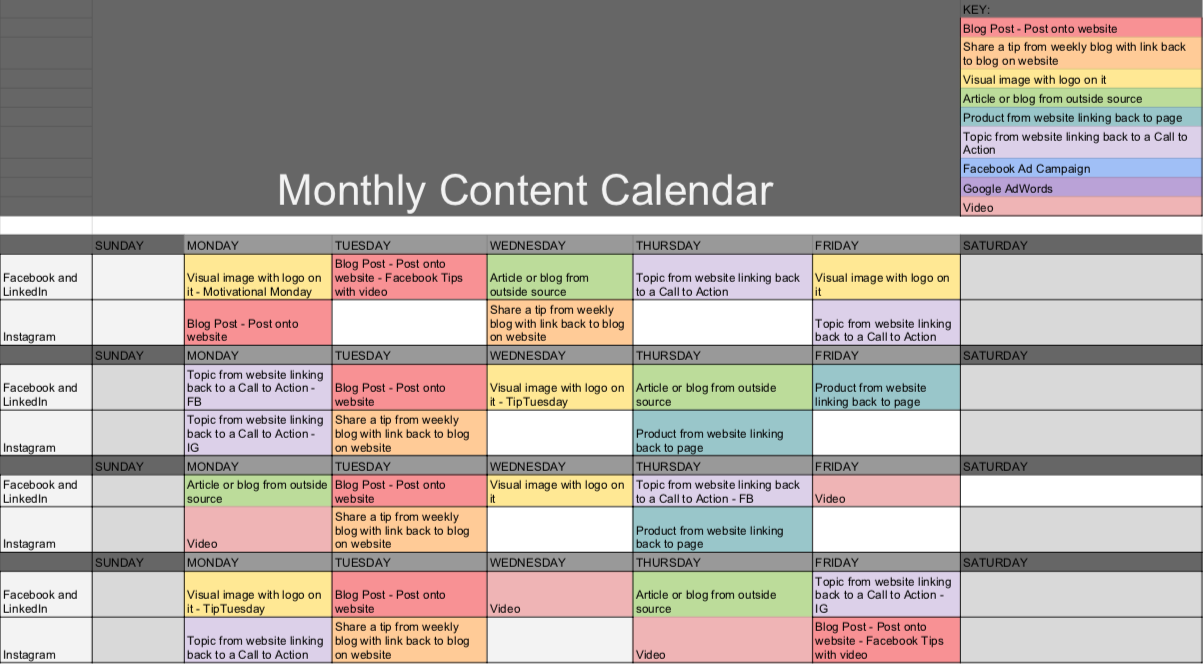
 Jennipher Walters CEO/Co-founder, Fit Bottomed World LLC
  This is her happy place where motherhood, food, travel, design, and stylish little things collide. Tabitha is a certified life coach, mom of four and she wants to empower busy women + moms to feel organized to do more of what they love… and feel confident to do it in style! Website: https://freshmommyblog.com/ Email:
  The mission of Dee Gautham Fitness is to help women get in the best shape of their lives – physically AND mentally – so you can feel, look, and perform your best, and reach your highest potential in this world. https://deegautham.com/