
Posts

How to Get More Local Customers Without Spending More on Ads

For many small business owners, getting more customers feels tied to one thing: spending more on ads. 

When sales slow down, the instinct is to increase the budget, try a new campaign, or test another platform. But more ad spend doesn’t always solve the problem.

In many cases, businesses already have enough visibility. People are finding them, visiting their pages, or even inquiring. The issue is what happens after that attention is captured.

If your marketing isn’t converting, adding more traffic only increases the cost of the problem. The good news is, you don’t always need more budget to get more customers. Often, you just need to make better use of the attention you’re already getting.


Why More Ad Spend Isn’t Always the Answer

Ads are designed to capture attention. They help people discover your business, click through, and learn more about your offer. But attention alone doesn’t create customers.

Traffic without conversion is wasted budget. If someone lands on your page and doesn’t understand what you offer or what to do next, they leave. Not because they’re not interested, but because the path isn’t clear.

Before increasing your ad spend, it’s worth stepping back and asking:

  • Is it immediately clear what we offer?
  • Do people know who our service is for?
  • Is the next step obvious and easy?

If the answer to any of these is unclear, that’s where the opportunity is. Addressing these issues usually brings better results than increasing traffic.


Make It Easier for Local Customers to Find You

Before trying to reach more people, make sure you’re visible where people are already looking.

Local customers don’t usually browse for long. They search with intent. They already know what they need; they’re simply deciding where to go.

This is where your presence matters most.

Make sure your business information is accurate, complete, and easy to find. This includes your contact details, business hours, photos, and reviews. Small inconsistencies can create doubt, and doubt often leads people to choose a different option.

You don’t need to be everywhere. You need to show up where decisions are already being made.


Clarify What You Do and Who You Help

Many businesses lose potential customers in the first few seconds. Not because people aren’t interested, but because they’re not sure what the business actually offers.

When someone visits your page, they’re quickly trying to answer a simple question: Is this for me? If your message is too broad or unclear, they move on. Remember, confusion is the fastest way to lose a customer.

Clear messaging comes down to three things:

  • who you help
  • what problem you solve
  • what outcome they can expect

You don’t need to provide all the details… You just need to say the right things clearly.

Turn Existing Attention Into Action

Many businesses assume they need more visibility. In reality, they often already have it. What’s missing is direction.

People are visiting your website, viewing your content, and checking your profile. But without a clear next step, that attention goes nowhere. This is where a simple shift makes a big difference.

Every key touchpoint should guide people toward action. Whether it’s your website, social media, or even a physical space, it should be obvious what someone should do next.

That might be calling, booking, messaging, or visiting. The action itself isn’t complicated, but it needs to be clear. If people have to figure it out, they usually won’t.

If you’re already getting views or engagement but not inquiries, the issue is often the type of content you’re posting. We break this down in more detail in our article on the types of posts that actually drive inquiries.

Not all content is designed to drive action. Some posts get attention, while others guide people toward a decision. Here are the types of posts that actually drive inquiries.

Use Social Media to Build Local Trust

Social media isn’t just for posting updates. For local businesses, it plays a key role in building familiarity.

People are more likely to choose a business they recognize. Not necessarily because it’s the cheapest or closest, but because it feels familiar. Your content helps create that familiarity over time.

You don’t need complex strategies. What matters is showing up consistently and giving people a sense of who you are, how you work, and what they can expect from you. This could include sharing your process, answering common questions, or interacting with customers. Over time, this builds recognition… and recognition builds trust.

Ask for and Use Reviews Strategically

Trust is one of the biggest factors in local decision-making.

Before choosing a business, people often look for reassurance. They want to know that others have had a positive experience. Reviews provide that reassurance.

Many businesses rely on reviews happening naturally. A more effective approach is to ask for them consistently, especially after a good experience. But collecting reviews is only part of it. Using them well matters just as much.

Highlighting real feedback in your content, website, or conversations helps reinforce your credibility. It shows that your business doesn’t just promise results, it delivers them.

Follow Up With Interested Leads

Not every customer decides right away. Some people inquire, ask questions, or show interest, but then pause. Many of these customers were actually interested, but they’re lost simply because there’s no follow-up.

It’s not always a lack of interest. Sometimes people get busy, distracted, or unsure. A simple follow-up can bring them back into the conversation. This doesn’t require a complicated system. It just requires consistency.

Responding promptly, checking in when needed, and making it easy to continue the conversation can make a significant difference. You don’t always need more leads. You need to convert the ones you already have.

How These Small Changes Add Up

None of these strategies require more spending. What they require is attention to what’s already happening in your business.

When you improve:

  • how people find you
  • how clearly you communicate
  • how easy it is to take action
  • how much trust you build
  • how well you follow up

your marketing becomes more effective as a whole.

Growth Doesn’t Always Require More Spending

More customers don’t always come from more ads. Often, they come from improving what’s already in place.

Before increasing your budget, take a step back and look at your current system. Small improvements in clarity, visibility, and follow-through can lead to meaningful growth.

If you’d like help improving your marketing without increasing your ad spend, we’d love to help.  Book a free consultation, and let’s talk about what makes the most sense for your business.

Sometimes, the smartest move isn’t doing more. It’s making what you already do work better.

The 5 Types of Posts That Actually Drive Inquiries (Not Just Likes)

Many business owners assume that if a post gets a lot of likes, it must be working. But likes don’t always mean buying intent.

Some people engage because they agree with the message. Others like the post because it was interesting, relatable, or entertaining. That’s valuable, but it doesn’t always lead to real business.

On the surface, the content appears to be “working.” They get likes, comments, and shares. But behind the scenes, it’s not leading to conversations, inquiries, or clients. The reason is simple: Not all content is designed to drive action.

Not every post needs to sell. Some posts are meant to get attention. Others are meant to build trust. But some posts are meant to move people closer to working with you. If your content is missing that last piece, you’ll stay visible, but not necessarily profitable.

What Makes a Post More Likely to Drive Inquiries?

Before we look at the types of posts, it helps to understand what actually leads someone to reach out.

People don’t inquire just because they liked a post. They inquire when they:

  • recognize their problem
  • trust that you understand it
  • believe you can help
  • and know what to do next

The problem is that most business owners stop at the first step—getting attention. They focus on getting attention but forget to guide people toward action.

A healthy content strategy needs both visibility content and conversion-focused content. Conversion-focused content continues the process. It builds clarity, reduces doubt, and makes the next step feel easy.

That’s the difference.

5 Types of Posts That Actually Drive Inquiries (Not Just Likes)

1. Problem-Aware Posts

Problem-aware posts speak directly to something your audience is already dealing with. These are the posts that stop someone mid-scroll because they feel seen and understood. They describe a frustration, a challenge, or a situation your audience is already experiencing, but may not have clearly articulated yet.

When someone reads a post and thinks, “That’s exactly what I’m dealing with,” they’re much more likely to keep reading, follow you, or reach out. This type of content helps people connect the dots between the problem they have and the solution you offer.

Examples of problem-aware posts include:

  • Why your marketing feels harder than it should
  • Why posting more isn’t bringing in more leads
  • Why your website gets traffic but no inquiries
  • What’s actually happening when your content isn’t converting

The key is to talk about the problem in a way that feels specific and real. Instead of trying to impress, they reflect reality. And when people feel understood, they’re more open to what you say next.

2. Educational Posts

Educational content helps people trust your expertise before they ever contact you. These posts answer questions, explain things clearly, or help your audience understand a confusing topic. This matters because most people are not ready to buy immediately.

Before they inquire, they want to know:

  • Do you understand the problem?
  • Can you explain it clearly?
  • Do you sound like someone who knows what they’re doing?

Educational content helps answer those questions.

Examples include:

  • How often should a small business post on social media?
  • What should you post if you’re short on time?
  • What makes a good website homepage?
  • What should you fix before creating more content?

The best educational posts are simple and easy to understand. You do not need to explain everything at once. In fact, shorter and clearer often works better.

One helpful insight is usually more valuable than trying to teach everything in a single post. Once someone recognizes their problem, the next question is usually: “Can this person actually help me?” Educational content answers that question.

These posts explain something clearly. They simplify a concept. They give your audience a better understanding of what’s going on—and what to do about it.

This might look like:

  • explaining how often a small business should post
  • breaking down why engagement doesn’t always lead to sales
  • sharing simple ways to improve messaging or content clarity

What makes these posts effective is not complexity, it’s clarity. When you can explain something in a way that feels easy to understand, you build trust quickly. And trust is what turns attention into interest.

3. Proof and Results Posts

People want reassurance before they buy.

Even if someone likes your content and believes you can help, they may still wonder:

  • Has this worked for other people?
  • What kind of results can I expect?
  • Can this business actually deliver?

That’s why proof-based content matters. Proof posts show real examples of your work, your process, or your client results.

This could include:

  • client testimonials
  • before-and-after examples
  • screenshots of feedback
  • case studies
  • project results

The good news is that proof does not need to be dramatic to be effective. You do not need to promise huge results or use flashy claims.

Sometimes, a simple testimonial about how you made the process easier, helped someone save time, or improved clarity is enough. People trust businesses that can show evidence, not just confidence.

4. Process and Behind-the-Scenes Posts

Many people hesitate to inquire because they are unsure what happens next.

They may be interested in your service, but they still have questions like:

  • What happens during the first call?
  • How does the process work?
  • Will this be complicated?
  • What should I expect?

Process content helps answer these questions. When you explain what it is like to work with you, people feel more comfortable reaching out. You remove some of the uncertainty that keeps people stuck.

Examples of this type of content include:

  • What happens during a free consultation
  • How to create a monthly content plan
  • What to expect when working with us
  • A behind-the-scenes look at your process

People are more likely to inquire when they know what the experience will look like. Familiarity builds trust.

5. Direct Offer and CTA Posts

Some people are already interested. They do not need more education or more proof. Rather, they need a clear next step. That is why direct offer posts are important. These posts explain what you offer, who it is for, and how people can get started.

Examples include:

  • Need help creating a content strategy?
  • Book a free consultation
  • We are now accepting new clients for February
  • Want help turning your content into leads?

Many businesses avoid this type of content because they worry about sounding too promotional. But if you never talk about your offer, people may not know what to do next. You do not need to sell in every post. But you do need to make it easy for ready buyers to take action.

Why Most Businesses Don’t Get Inquiries From Their Content

Many businesses post consistently, but still do not get inquiries. Usually, it is not because they are posting the wrong amount. But because they are posting too much engagement content and not enough conversion content.

Their content may be getting likes, views, and comments, but it isn’t building trust, providing proof, or guiding people toward the next step. This is also why consistency matters.

A single post rarely does all the work. Trust is built over time. When people repeatedly see helpful content, clear messaging, proof, and simple calls to action, they become much more likely to reach out.

If you have not read our article on Why Consistent Marketing Matters More Than Occasional Big Campaigns, it is worth reading next. It explains why showing up regularly builds more trust than only posting when you have something to sell.

Likes Are Nice, But Inquiries Matter More

Not every post has the same job. Some posts are meant to increase visibility. Others are meant to build trust. And some are meant to drive action. The strongest content strategy includes all three.

If you want more inquiries from your content, take a look at your recent posts and ask yourself: Are we only posting for engagement? Or are we helping people understand why they should work with us? When your content creates clarity, trust, and direction, inquiries become much more likely.

If you need help creating content that does more than get likes, we would love to help. Book a free consultation and let’s talk about how to create content that supports real business growth.


Why Consistent Marketing Matters More Than Occasional Big Campaigns

For many small businesses, marketing happens in bursts. There may be a major push when launching a new service, promoting a seasonal offer, or when sales slow down. Then, once things get busy again, marketing efforts often fade into the background.

This pattern can feel productive in the moment, especially when a campaign generates an increase in inquiries or sales. However, relying on occasional big promotions rarely leads to steady, long-term growth.

Businesses that grow consistently tend to follow a different approach. Instead of marketing only when they need immediate results, they maintain a regular presence that keeps them visible, builds trust, and attracts opportunities over time.

Let’s explore why consistent marketing is more effective than sporadic campaigns, and how small businesses can make it sustainable.


Why Occasional Big Campaigns Don’t Deliver Long-Term Results

People Forget About Your Business Quickly

Today’s consumers are exposed to countless pieces of content every day. Social feeds refresh constantly, inboxes fill up, and new competitors appear regularly. In this environment, attention is short-lived.

If you only publish content occasionally, potential customers may forget you exist. Even people who were interested at one point can move on to another provider who appears more visible and active.

When a need finally arises, customers usually choose the business they remember first, not necessarily the one that promoted itself months ago.

Trust Takes Repetition, Not One-Time Exposure

Most purchasing decisions involve some level of risk, especially when hiring a service provider or making a significant purchase. Before committing, people want reassurance that they are making a good choice.

Trust is rarely built through a single advertisement or announcement. It develops gradually through repeated exposure to helpful, credible information.

Seeing a business consistently share insights, updates, or useful resources signals stability and reliability. Over time, this familiarity reduces hesitation and makes customers more comfortable reaching out.

Inconsistent Marketing Creates Unpredictable Sales

Short-term campaigns often produce spikes in activity followed by long, quiet periods. While those peaks can feel encouraging, they do not create a stable pipeline of opportunities.

This unpredictability makes planning difficult. Staffing, inventory, and financial decisions become reactive instead of strategic. Business owners may find themselves alternating between being overwhelmed during busy periods and anxious during slow ones.

Consistent marketing helps smooth out these extremes by generating a steadier flow of interest.


What Consistent Marketing Actually Does for Your Business

Keeps You Visible to Potential Customers

Not everyone who sees your business today needs your services right away. Many people research options long before making a decision, while others may not have an immediate need at all.

Regular communication ensures that your business remains visible when the timing is right. It also allows new audiences to discover you continuously, rather than only during promotional bursts.

Being present consistently increases the likelihood that potential customers will think of you first when they are ready to act.

Builds Credibility and Authority

Businesses that communicate regularly appear more established and professional. Sharing helpful information, answering common questions, or showcasing your expertise demonstrates that you understand your field and care about your customers.

Over time, this positions your business as a trusted resource rather than just another option.

Authority is especially important for small businesses competing with larger companies. While big brands may have name recognition, smaller businesses can build strong reputations through consistent, meaningful engagement.

Generates Steady Leads Instead of Sudden Spikes

Consistent marketing doesn’t usually produce dramatic overnight results, but it creates something far more valuable: reliability.

When your business maintains visibility, trust, and accessibility, inquiries tend to arrive more regularly. This steady flow of opportunities makes it easier to plan, forecast, and grow with confidence.

Rather than scrambling to fill gaps between campaigns, you develop a system that supports ongoing demand.


What “Consistent Marketing” Really Means (And What It Doesn’t)

For many business owners, the idea of consistent marketing can feel overwhelming. Some assume it requires posting every day, producing large amounts of content, or constantly launching new campaigns.

It Doesn’t Mean Marketing Every Day

Trying to maintain an unrealistic marketing schedule often leads to frustration and burnout. When expectations are too high, businesses may start strong but quickly lose momentum.

Effective marketing should be sustainable. For many small businesses, posting on social media a few times per week, publishing occasional blog articles, or sending a monthly email newsletter can already create meaningful results.

It Means Showing Up Regularly

Consistency means maintaining a reliable presence. Whether it’s weekly updates, monthly blog posts, or periodic newsletters, the key is to create a schedule you can stick to over time.

When your audience sees that your business communicates regularly and reliably, it strengthens the perception that your brand is active, engaged, and dependable.


Simple Ways Small Businesses Can Stay Consistent

Maintaining consistent marketing doesn’t require a large team or a significant time investment. A few practical strategies can make the process much easier.

Create a Simple Marketing Plan

A basic marketing plan or content calendar helps remove the guesswork from your marketing efforts.

Instead of deciding what to post at the last minute, you can outline topics in advance and schedule content over time. This approach reduces stress while helping ensure your business maintains a steady presence.

Repurpose Content

One piece of content can often be used in multiple ways. For example, a blog article can be shared on social media, turned into several smaller posts, or included in an email newsletter.

Repurposing content allows you to stay visible without constantly creating new material from scratch.

Use Tools and Automation

Many digital tools make it easier to maintain consistent marketing. Social media scheduling platforms allow posts to be prepared in advance. Email marketing systems automate communication with subscribers. Websites and blog content continue attracting visitors long after they’re published.

These tools help marketing continue working in the background while you focus on running your business.


Sustainable Growth Comes From Showing Up Regularly

Small business owners already juggle countless responsibilities. Marketing should not feel like a constant emergency that demands attention only when sales decline.

By establishing a steady approach, marketing becomes part of your regular operations rather than a reactive task. Over time, this reduces stress and helps create more predictable growth.

Consistency also strengthens relationships with existing customers, encouraging repeat business and referrals, both of which are essential for long-term success.

If you’d like help creating a marketing strategy that supports steady business growth, schedule a free consultation with us. We’ll help you build a plan that keeps your business visible, credible, and connected with the customers you want to reach.


How to Create a Simple Marketing Plan for a Small Business in 2026

Many small business owners know they should have a marketing plan.

What usually stops them isn’t effort or motivation…  It’s confusion.

Marketing plans often feel complicated, time-consuming, and difficult to maintain, especially when you’re already busy running the business. Between serving clients, managing operations, and making daily decisions, planning marketing can feel like one more thing competing for your attention.

The truth is, a marketing plan doesn’t need to be complex to be effective.

A simple marketing plan gives you structure. It helps you make better decisions. And it keeps your marketing focused throughout the year—without adding pressure or stress.

This guide walks you through a clear, practical way to create a marketing plan you can actually use in 2026.

What a Simple Marketing Plan Is (and What It’s Not)

A simple marketing plan is meant to support you.

Its real value is in how it helps you think. When you have a plan, marketing decisions become easier. You’re no longer reacting to every new idea or trend. You have something to come back to when things feel noisy or overwhelming.

Why Simplicity Matters More Than Detail

At its best, a simple marketing plan acts as a reference point. It helps you stay focused when business gets busy and reminds you why you chose certain priorities in the first place.

Just as important, a simple marketing plan is not a long document you write once and forget. It’s not a list of every tactic you could try, and it’s not something so rigid that it can’t change. Think of it as a working document… One that evolves as your business does and helps you move forward with clarity instead of pressure.

Start With the Business, Not the Marketing

The most effective marketing plans don’t begin with content ideas or social platforms. They begin with the business itself.

Before deciding how you’ll market, you need to be clear on what you’re working toward this year. That doesn’t mean setting aggressive or unrealistic goals. It means understanding your direction.

  • Are you trying to grow? 
  • Stabilize? 
  • Improve the quality of your leads? 
  • Increase visibility in a specific market?

Your marketing exists to support these outcomes, not distract from them. When this direction is clear, marketing decisions stop feeling random. You can evaluate ideas based on whether they move the business forward, rather than whether they sound good in the moment.

A helpful way to ground this is to articulate, in one clear sentence, what success looks like for your business by the end of the year. That sentence becomes the anchor for your marketing plan.

Be Clear About Who You’re Trying to Reach

Marketing works best when you know who you’re speaking to.

You don’t need a detailed persona or complicated framework. What you do need is clarity about the people who benefit most from what you offer and why they seek it out.

When this isn’t clear, marketing often feels scattered. Messages become generic. Engagement feels inconsistent. And it becomes difficult to tell whether your efforts are working.

When you’re clear about your audience, everything improves. Your messaging becomes more focused. Content feels more relevant. And the right people are more likely to recognize themselves in what you share.

If you find yourself trying to speak to “everyone,” that’s usually a sign the audience needs to be narrowed. Clear audience focus leads to clearer marketing.

Choose Marketing Channels You Can Sustain

One of the most common reasons marketing plans fall apart is overcommitment.

It’s easy to feel like you need to be everywhere—especially when advice online makes it seem necessary. In reality, trying to manage too many channels often leads to inconsistent effort and burnout.

More Channels Don’t Mean Better Results

A simple marketing plan prioritizes sustainability over coverage. Instead of asking where you should be, it’s more useful to ask where your audience already spends time and what you can realistically maintain alongside everything else you’re responsible for.

For many small businesses, focusing on one primary channel and one supporting channel is enough. Showing up consistently in fewer places builds far more trust than showing up occasionally everywhere.

Decide What You’ll Talk About Before You Decide How Often to Post

Content creation becomes difficult when decisions are made week by week.

A simpler approach is to decide in advance what topics you’ll return to regularly. These topics usually come from the questions customers ask, the problems they need help understanding, and the concerns they have before working with you.

Content Is Easier When the Message Is Clear

When your core topics are clear, creating content feels less like starting from scratch every time. You’re reinforcing your expertise through repetition and clarity, rather than chasing new ideas just to stay visible.

This is how authority is built over time. Not through volume, but through consistent, focused messaging.

Set a Posting Rhythm That Fits Your Schedule

Consistency matters, but only when it’s realistic.

A posting schedule should work during busy weeks, not just ideal ones. While daily posting is often talked about as the goal, it isn’t sustainable for most small business owners.

A simple marketing plan chooses a rhythm that can be maintained over time. Whether that’s once a week or a few times a week matters far less than reliability.

Trust is built through steady presence. A realistic schedule makes it easier to stay consistent without resentment or exhaustion.

Decide How You’ll Measure Progress Without Overcomplicating It

Marketing progress doesn’t always show up immediately or loudly.

Instead of tracking everything, a simple marketing plan focuses on a few meaningful signals. These might include clearer conversations with prospects, more aligned inquiries, or increased engagement from the right people.

These indicators provide useful feedback without overwhelming you with data. They help you understand what’s resonating so you can adjust thoughtfully, rather than abandoning your efforts too quickly. Reviewing a small set of indicators monthly is often enough to stay grounded and informed.

Use the Plan as a Guide, Not a Rulebook

A marketing plan should support your business, not restrict it.

It’s meant to guide decisions, not lock you into a rigid path. Revisiting your plan quarterly allows you to adjust priorities, refine your approach, and stay aligned with where the business is now.

Small changes over time are far more effective than repeatedly starting over.

A Simple Plan Is Often the Most Effective One

You don’t need a complicated marketing plan to make meaningful progress in 2026.

What you need is clarity around where your business is headed, who you’re trying to reach, how you’ll show up consistently, and how you’ll evaluate what’s working.

When marketing feels structured and manageable, it becomes easier to sustain, which leads to long-term growth.

If you’d like help creating or refining a marketing plan that fits your business, your capacity, and your goals, we’re here to help.

Book a free consultation, and let’s talk through what makes the most sense for you. Sometimes, clarity comes faster through conversation than another round of guessing.

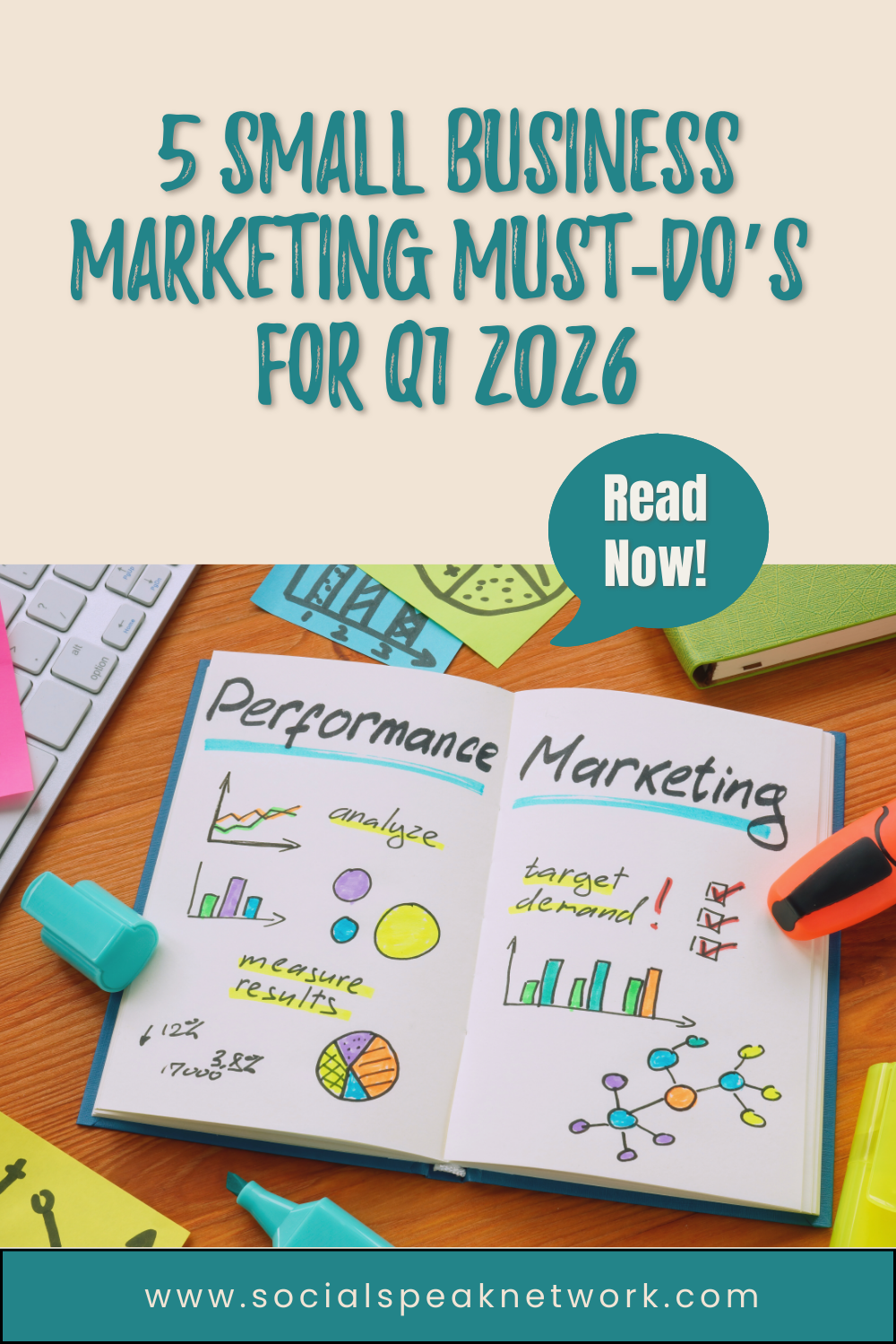
5 Small Business Marketing Must-Do’s in Q1 2026

January often comes with a mix of motivation and pressure.

You want to start the year strong.

You want marketing to finally “work.”

And suddenly, it feels like you should be doing everything at once.

Here’s the good news: Q1 is not about doing more… It’s about focusing on the right things.

If you want your marketing to feel manageable and actually move your business forward, these five must-dos will help you set a strong foundation for 2026 without burning out.


1. Set One Clear Marketing Goal for Q1

Before you think about content, platforms, or tools, get clear on this:

What is the primary goal of your marketing for Q1? You don’t need to have a long list. Just focus on one main goal. 

Example:

  • Build visibility with the right audience
  • Start more conversations
  • Improve lead quality
  • Strengthen brand awareness

When your goal is clear, decisions get easier. You stop chasing every idea and start choosing what actually supports that goal.

Action tip: Write down one marketing goal for Q1 and keep it visible. Every marketing decision should support that goal.


2. Choose Fewer Platforms and Commit

Many businesses struggle because they try to show up everywhere. Instagram, Facebook, email, blogs, videos… It adds up quickly.

Being present on fewer platforms and showing up consistently is more effective than spreading yourself too thin.

Here’s a better approach:

  • Choose 1–2 platforms where your audience actually spends time
  • Focus your energy there
  • Commit to showing up consistently, not perfectly

Being visible on fewer platforms builds more trust than being invisible on many. 

Action tip: Ask yourself:

  • Where does your audience already spend time?
  • Which platform fits your business and your schedule?
  • Where do you feel most comfortable showing up?

Pick one or two platforms and commit to those for Q1. If managing a platform feels stressful or forced, it’s likely not the right focus at this time.


3.  Set a Posting Rhythm You Can Maintain

Consistency does not mean posting every day. It means choosing a schedule you can keep even when business gets busy.

For many small businesses, that looks like:

  • Once a week
  • Twice a week
  • Three times a week

A simple, repeatable schedule builds trust with your audience and keeps you visible without burning out.

Action tip: Choose a posting schedule that still works during busy weeks. If it only works when things are “calm,” it’s not realistic. 

Start with the minimum you know you can maintain for the next 90 days. You can always add more later.


4. Focus on Message Clarity Before Content Volume

Posting more content won’t help if your message isn’t clear.

Before increasing content, make sure people can quickly understand:

  • Who you help
  • What problems you solve
  • Why it matters

Clear messaging makes your content easier to read, engage with, and trust.

Action tip: Review your recent posts and ask: “Would someone new immediately understand what we do after reading this?” If not, clarity is the priority, not more posts.


5. Track Important Metrics (Not Everything)

In Q1, your marketing efforts may not yield significant results yet, and that’s okay.

Early progress often shows up quietly:

  • More replies or comments
  • Better conversations
  • More relevant inquiries
  • More precise feedback from your audience

These are signals that your message is landing.

Action tip: Choose 2–3 things to track this quarter. Avoid obsessing over every metric. Check your metrics once a month and note what’s improving, not just what’s missing.


A Calmer Way to Approach Marketing in 2026

If marketing feels overwhelming right now, take a breath.

You don’t need to do everything. You don’t need to be everywhere. And you don’t need to have it all figured out at once.

Q1 is about setting direction, not perfection.

When you focus on a clear goal, choose fewer priorities, and build habits you can actually maintain, marketing starts to feel manageable again. Progress comes from small, intentional steps, not from trying to do it all at once.

And if you’re unsure where to start, or want help simplifying your strategy, you don’t have to figure it out alone. We’d love to help you create a plan that suits your business, your capabilities, and your objectives.

Book a free consultation and let’s talk through what makes the most sense for you right now.

Sometimes, the best next step is having the right conversation.

5 Small Business Marketing Must-Do’s in Q1 2026

5 Small Business Marketing Must-Do’s in Q1 2026
Year-End Digital Marketing Audit: 5 Steps to Set Yourself Up for Success in 2025

Did you know businesses that document their marketing strategy are 313% more likely to report success?

As 2024 comes to a close, it’s the perfect time not just to celebrate your wins, but also take a good look at what worked and what didn’t in your digital marketing. Think of it like a yearly check-up for your business, but instead of the doctor’s office, we’re looking at your website, social media, and everything in between!

By doing a digital marketing audit, you can find hidden opportunities, make smarter decisions, and get way better results from your marketing efforts.

Ready to dive in? Here’s your 5-step guide to a powerful year-end digital marketing audit. 

Step 1: Analyze Your 2024 Goals and Performance

Start by reviewing the goals you set at the beginning of 2024. Did you want more people to visit your website? Did you want to get more leads or make more sales? 

Now is the time to check if you hit those targets!

  • Did your website traffic go up?
  • How many new followers did you get on social media?
  • Did your paid ads bring in new customers?
  • Which campaigns delivered the best results?

By looking at these numbers, you can see what worked well and where you might need to make some changes. For example, if your Instagram grew a lot but your website traffic stayed the same, you may need to add more links to your website in your Instagram posts.

Create a simple report that summarizes your key numbers. This will help you see the big picture and spot areas where you really shined!

Step 2: Evaluate Your Content Strategy

Content is king! But not all content is created equal. It’s time to look closely at what worked and what didn’t in 2024.

Conduct a Content Audit

List down all the content you created this year (blog posts, videos, social media updates, etc.). 

For each piece of content, identify how it performed. Did it get a lot of views, shares, and engagement? Did it achieve its goal? (e.g., drive traffic to your website, generate leads, educate your audience)

Identify Top-Performing Content

Identify your best-performing content. What made it successful? Can you replicate those elements in future content?

Content Gaps 

Are there any types of content you haven’t explored? Maybe you need more videos, infographics, or in-depth guides?

Content Repurposing

Turn a high-performing blog post into an infographic, a series of social media posts, or a video. 

For instance, if your blog post on ‘5 Tips for Better Work-Life Balance’ received high traffic and engagement, you could repurpose it into an infographic, a podcast episode, or a social media carousel to continue reaching your audience in new formats. Repurposing content saves time and maximizes value.

Step 3: Audit Your Social Media Presence

Social media is often where customers first interact with your brand. A comprehensive review ensures your platforms stay relevant and impactful.

Platform Performance

Think of each social media platform as its own unique world. What works on Instagram might not fly on LinkedIn. You need to understand how each platform performs for your business to get the most out of your efforts.

For example, Instagram might see higher engagement during weekends, while LinkedIn posts might perform better mid-week. Use platform-specific insights to adjust your posting schedule for maximum impact.

Content Effectiveness

Creating great content is essential, but it’s only half the battle. You also need to ensure you’re posting the right content at the right time.

Take a look back at the content you’ve posted this year. Ask yourself these questions:

  • Are you posting regularly? 
  • What types of content performed best (images, videos, text posts, Stories)?
  • Which topics resonated most with your audience?
  • Did your content achieve its goals (e.g., drive traffic, generate leads, increase brand awareness)?

Step 4: Review Paid Advertising Efforts

Paid advertising can be a great way to reach new customers, but it’s important to ensure you’re getting a good return on your investment. 

Campaign Goals

Start by revisiting the goals you set for your ad campaigns. What were you trying to achieve? Was it website traffic, leads, or sales?  

Next, dive into the key metrics. 

  • Ad Spend: How much did you spend on your ads?
  • Cost-per-click (CPC): How much did you pay for each click on your ad?
  • Conversions: How many people took the desired action (e.g., made a purchase, filled out a form)?
  • Return on Investment (ROI): Are you making more money from your ads than you’re spending?

Analyze ROI and determine which strategies to scale. Eliminate ad spend on underperforming campaigns and reallocate to high-impact efforts.

Step 5: Refresh Your Website and SEO

Your website is your online home base. Make sure it’s optimized to attract visitors and convert them into customers.

Begin by analyzing your website traffic: 

  • How many people are visiting your website?
  • Where are they coming from?
  • Which pages are they visiting most?

Next, evaluate your SEO performance: 

  • Keyword Rankings: Where do you rank in search results for important keywords?
  • Backlinks: How many other websites are linking to yours?
  • Technical SEO: Is your website technically sound (fast loading speed, mobile-friendly, easy for search engines to crawl)?

Identify 3-5 underperforming pages on your website and give them a refresh. Optimize them with relevant keywords, improve the content, and add visuals.

Bonus Step: Create an Action Plan for 2025

The insights you gain from your audit are only valuable if you act on them. Create a detailed action plan for 2025 with specific, measurable goals.

Example Goals:

  • Increase blog traffic by 30% by publishing two articles per month.
  • Double Instagram engagement by focusing on video content.
  • Launch a targeted email campaign to improve customer retention.

Pro Tip: Break your goals into quarterly objectives to make them manageable and trackable.

Your Roadmap to a Successful 2025!

Congratulations! You’ve just taken a major step towards a successful 2025. By reflecting on your successes and addressing areas for growth, you’re well on your way to more engagement, leads, and conversions.

Remember, a digital marketing audit isn’t a one-time event. It’s an ongoing process of continuous improvement.

Need help auditing your digital marketing strategy or creating a powerful plan for 2025? Let’s work together to ensure your marketing efforts are aligned for maximum growth. Schedule a free consultation with us today!

Year-End Digital Marketing Audit 5 Steps to Set Yourself Up for Success in 2025

Year-End Digital Marketing Audit: 5 Steps to Set Yourself Up for Success in 2025Year-End Digital Marketing Audit: 5 Steps to Set Yourself Up for Success in 2025

The Ultimate Guide to Digital Marketing for Home Care Agencies

In today’s digital world, families seeking care for their loved ones turn to the internet for information and options. If your home care agency isn’t visible online, you’re missing out on a huge opportunity to connect with potential clients. 

Don’t worry if you haven’t started yet. It’s never too late to build a strong presence and start attracting more clients to your agency. By mastering digital marketing, you can effectively reach and engage potential clients, demonstrating the value and compassion of your services.

Understanding Your Target Audience

To market effectively, you must first understand who you’re talking to. For home care agencies, your audience typically includes seniors, their family members, and caregivers. 

Each of these groups has unique needs and concerns:

  • Seniors might be looking for reliable and compassionate care.
  • Family members often seek trustworthy and professional services for their loved ones.
  • Caregivers might look for agencies that offer support and resources.

By understanding these needs, it would be easier to tailor your message to your target audience’s needs and concernsnce.

Finding Your Niche

The home care industry is vast. Targeting everyone can dilute your message. Instead, focus on a specific area where your agency excels. This could be anything from dementia care and Alzheimer’s care to post-surgical care or companionship services. 

Specializing helps you refine your marketing messages to align perfectly with your target audience’s unique challenges and desires.

Creating a Trustworthy Brand

Building trust is essential in the home care industry. Your online presence should reflect your agency’s professionalism, compassion, and expertise.

Here’s how to do it:

  • Build a High-Quality Website: Your website is usually the first point of contact with potential clients. Make sure it is mobile-friendly, easy to navigate, and optimized for search engines. This means it should load quickly, have clear information, and be accessible on all devices.
  • Create Compelling Content: Regularly publishing informative and engaging content can drive potential clients to your website and position your agency as a trusted resource.
  • Share Testimonials and Case Studies: Share positive experiences from clients to build trust and credibility. Real stories and testimonials from satisfied clients can make your services more relatable and trustworthy.

Investing in Effective Digital Marketing Strategies

Now that you have a solid foundation, it’s time to explore different marketing strategies:

  • Website Optimization: Ensure your website highlights your services and includes client testimonials. It should also be easy to navigate and provide all the information potential clients need.
  • Search Engine Optimization (SEO): Use relevant keywords to help your website rank higher in search engine results. This helps local clients find you more quickly when they search for home care services.
  • Content Marketing: Write valuable content that addresses common questions and concerns about home care. This could be in the form of articles, guides, or videos that provide helpful information about home care, showcase your expertise, and help them understand the benefits of your services.
  • Social Media: Engage with your community on platforms like Facebook and LinkedIn. Share updates about your services, success stories, and helpful tips related to home care. It helps keep your agency top-of-mind and build a connection with your audience.

Emphasizing Outcomes Over Features

Instead of just listing the features of your services, focus on the positive outcomes and benefits clients will experience. 

Highlight how your services will improve the quality of life for your clients. For example, instead of just mentioning that you offer personal care, emphasize how your care enhances the quality of life and provides peace of mind for families.

Share stories of how you’ve helped clients achieve their goals, whether recovering from surgery, managing a chronic condition, or simply enjoying their golden years at home.

Leveraging Digital Marketing Expertise

While it’s possible to handle digital marketing on your own, working with experts can significantly benefit your agency.

Don’t hesitate to seek help from digital marketing professionals. They bring specialized knowledge and experience to maximize your online presence and achieve better results.

Look for a partner who understands the home care industry and can provide tailored strategies that align with your goals.

Customizing Your Digital Content

One size doesn’t fit all in marketing. To truly connect with potential clients, you must tailor your message to their challenges and pain points.

  • Create Client Personas: Develop detailed profiles of your ideal clients. This helps you understand who you’re talking to and how best to communicate with them.
  • Tailor Your Content: Write content that speaks directly to the needs and concerns of each persona. For example, if you’re targeting family caregivers, you might create content about managing caregiver burnout or choosing the right home care provider.
  • Personalize Your Communication: Leverage email marketing and other tools to send personalized messages to potential clients. Personalized content can boost your engagement and conversion rates.

Monitoring and Analyzing Results

Digital marketing is an ongoing process. Be sure to track your results and make adjustments as needed.

Use analytics tools to monitor lead generation, website traffic, and client acquisition. Analyze the data to see what’s working and what’s not, then refine your strategies accordingly.

Final Thoughts

Mastering digital marketing is essential for home care agencies looking to strengthen their online presence and grow their client base. Understanding your target audience, building a trustworthy brand, focusing on outcomes, and investing in effective strategies can improve your online visibility, attract potential clients, and grow your business.

Remember, digital marketing is an ongoing process. Regularly assess your marketing efforts, stay adaptable, and tweak your strategies to achieve long-term success.

Ready to elevate your digital marketing efforts and see actual results? Book a free consultation to discuss how we can tailor our strategies to meet your agency’s unique needs. 

Let us help you navigate the digital landscape and achieve your business goals.

The Ultimate Guide to Digital Marketing for Home Care Agencies

The Ultimate Guide to Digital Marketing for Home Care AgenciesThe Ultimate Guide to Digital Marketing for Home Care Agencies

5 Ways to Use Reviews in Your Marketing

Do you read product reviews before you purchase something new? Do you trust customer ratings better than the sales pitch of a seller?

From deciding which smartphone to buy to where to eat and finding a new doctor, at least 93% of people read through reviews before making a decision. The majority of them are interested in knowing what previous customers and clients have to say before making a purchase or booking an appointment.

How Impactful are Customer Reviews?

Customer reviews had become the layperson’s gauge for the trustworthiness of a product, service, or company. According to a Spiegel Medill research, products with reviews are 270% more likely to be bought than unreviewed ones. For more costly items, this probability increases to up to 380%. This simply shows how important and impactful customer reviews are.

Positive reviews can feel like a warm hug that validates the work that you do, but it does way more than that. It can establish your business’ credibility and trustworthiness to the general public. This can directly increase your market and translate to sales. It’s a waste of a free resource if you don’t use customer review in your sales plan.

How can you maximize the power of a review in your everyday marketing? Through what strategy can you use it in boosting your sales?

Let us give you some ideas.

Include them on all the pages of your website

Customer reviews should be on your website’s landing page. This is where you can create conversions and build a customer base. Since the landing page is dedicated for readers to make a transaction, seeing reviews and testimonials on this page can influence their actions.

Beyond the landing page, it will also benefit you to include at least one review or testimonial on each of the pages of your website. This way, no matter what page your readers are on, they are subtly assured of your good reputation with consumers just like them.

Share them on social media

It’s no secret how most of us rely on social media for information. Globally, at least 4 billion of us are on this platform. That’s a massive reach! This then becomes the perfect venue to share your customer reviews.

Reviews on social media are from random people. Your readers perceive them as unbiased. Most people take it as a personal recommendation rather than as a sales pitch. They are more likely to be persuaded by it.

Posting exceptional reviews and those from influencers and celebrities can boost not only your confidence but that of your potential consumers, too. Make use of your social media reach to highlight what others have to say about you.

Include it in your emails

Digital marketers can attest that until now, email marketing is still the most profitable tool out there. It can generate $44 for every $1 spent, so it only makes sense to use it in your marketing strategy.

Including customer reviews in your emails will increase your credibility off-site. Reviews in emails can give recipients an idea of the benefits they can get should they transact business with you. They would want to know more about you, and would thereby generate higher conversion rates.

Incorporate them in your marketing collateral 

On a non-digital platform, collaterals continue to be an effective marketing tool. Include snippets and shots of customer reviews on your posters, brochures, and flyers. You may even consider including it in your business card.

This can speak right to potential customers who are already within your vicinity. It increases the chance of an immediate direct response. If not immediately, since you’re targeting customers directly, they can quickly come back and finalize doing business with you.

Highlight it in your advertisements

Research shows that user-generated promotional materials get four times more click-through rates. The reviews you receive are already free user-generated content that the public intuitively trusts. Make the most of it by making it prominent in your video advertisements. Not only is this less costly, but it is also perceived as reliable by many.

Ensure that your business provides spaces for customer reviews, such as in your social media accounts and other reputable crowd-sourced review sites. Once you receive their feedback, you can now use them for purposes that best serve your market.

If you need help with digital marketing, we’re here to help. Book a free 30-minute consultation call with us and we’ll work together in create a marketing strategy that will get people through the door.

5 Ways to Use Reviews in Your Marketing

5 Ways to Use Reviews in Marketing Your Family Medicine Practice 5 Ways to Use Reviews in Marketing Your Health and Wellness Practice

5 Ways to Use Reviews in Marketing Your Mental Health Practice

Social Media Audit

How many of you created your business Facebook page well over a year ago? Or have had a Twitter account for more than a couple years? With social media being around for over 10 years, it is important to make sure your profiles are updated with your current brand image and message. It is key to be consistent in the digital marketing world from your website, social media profiles, to your marketing materials. Everything should have your brand colors, brand message, website, and logo.

In this video, we run through each platform on how to check your profiles to make sure they are updated!

Interested in learning more? Take a look at these videos: 

Tools for Entrepreneurs

Setting Your Business Up On Autopilot

Setting your Social Media Goals [Video]

how social speak was born

At the end of 2017 we, Caitlin & Amber, said that 2018 was going to be a year of change. Sometimes you just know in your gut that something is going to change. We knew this change was going to be for the better, we just didn’t know what the “change” would be!

For 7 years of being in business together and on our own for 10 years, we have worked hard at building our client’s brands, products, online communities, and businesses.

We are really good at what we do! The only problem with building everyone else’s businesses is you tend to put yours on the back burner.

Oh, we will make those videos later, we will write those blogs next week, oh, yeah that’s a good idea to have a coaching program – maybe next year . . . .

Long story short that “next year” came it’s called 2018!

We LOVE, LOVE, LOVE working with our clients and most of our clients have been with us since the beginning.

In December, Caitlin and myself had a talk about what we wanted to do differently in 2018.

How could we take our business to the next level?

We love being a resource to our communities and we both know so much about social media and digital marketing. We wanted to up our game and be able to provide MORE to our tribe!

Um, LIGHTBULB moment, it clicked for us.

What about if we create a website, a new educational platform, where our tribe can go for FREE, YES FREE, to search and find all the information they wanted to learn about social media and digital marketing . . .

Sounds great right?

Caitlin and I like to jump in feet first and not look back. When we have an idea, we are set on it we are making it happen!

We created a new website called Social Speak Network with a TON of information for our peeps, but we wanted to take it one step further . . . with all this awesome content, videos, and downloads, people were still asking on the “How-to.”

They love all the content but wanted to learn more hands-on how to implement it into their business and be held accountable for their digital marketing strategy.

That’s why we created our “Small Group Online Coaching Program” – a 6-month program for 3-5 business owners to really dive deep into their social media and digital marketing strategy, learn how to be successful online, grow their tribe, and learn new things!

Now, this is something that totally feeds our soul!

We are so very passionate about teaching others about social media and digital marketing and all the fun and cool things you can do! Isn’t awesome when you find your true meaning, your purpose, what you are supposed to be doing?

We want to help you create that too!

So, what does this mean for you???  What are we looking for? 

-> We want to invite you to our Facebook Group, this is the starting point, we post great information every day, you can ask questions, engage with other business owners and grow your tribe through this group!

-> We would also love your support if you would subscribe to our YouTube Channel 

-> We would LOVE to offer you is a FREE 30-minute consultation to answer any social media or digital marketing struggles you have been facing. You can email us at SocialSpeakNetwork@gmail.com to set up a time!

Interested in learning more? Take a look at these articles:

A day in the life of an Entrepreneur

Reaching and Attaining your Goals

How To Work SMART In 2018